What to Know Before Renting a Town Center Apartment
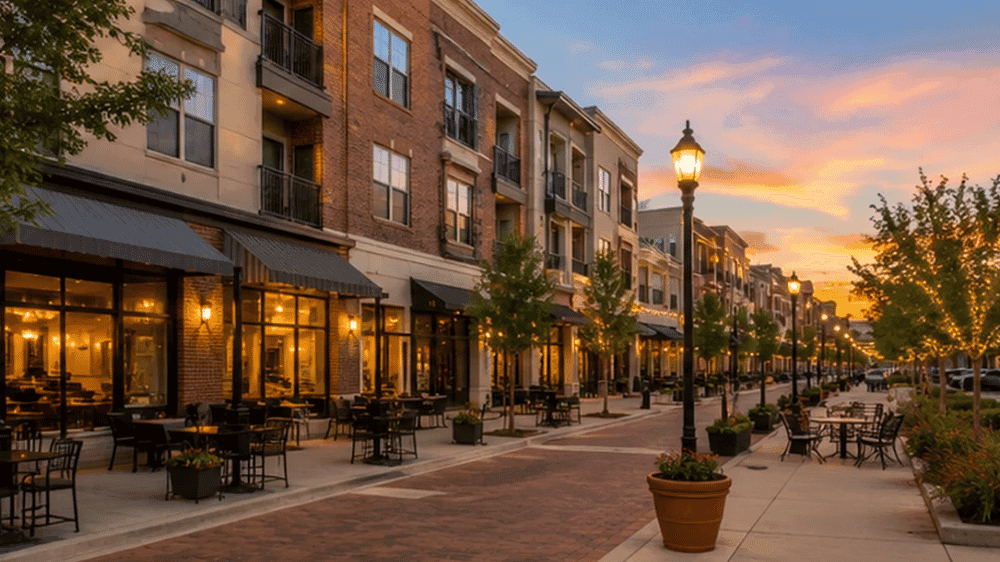
Town center apartments are residential communities located within or adjacent to mixed-use developments that combine retail, dining, and residential space in a single walkable area. Rent ranges from under $700/month to over $3,800/month.
Last reviewed: August 2026
What Are Town Center Apartments?
Town center apartments are residential communities located within or adjacent to mixed-use developments that combine retail, dining, and residential space in a single walkable area. Rent at town center properties ranges from under $700/month at income-restricted communities to over $3,800/month in high-cost suburban markets (as of Q3 2026).
The term has two meanings renters should understand. First, "Town Center Apartments" is a common marketing name used by individual apartment communities in dozens of cities. Second, it describes a housing category: apartments positioned near a planned retail or mixed-use district, typically in suburban or mid-size markets. A mixed-use development is a planned community that combines residential units with retail, dining, and sometimes office space in a single walkable area.
If you searched "town center apartments" looking for a specific property, add your city name to the search. If you are evaluating this housing type as a lifestyle choice, this article covers what to expect, what to compare, and where the tradeoffs are. brightplace's guide to renting an apartment covers the full process from application to move-in.
Search for town center apartments near you on brightplace.
What Do Town Center Apartment Communities Typically Include?
Most town center properties share a common amenity profile built around the walkable lifestyle promise. Pet-friendly policies are standard across nearly all reviewed properties. In-unit washer/dryer connections or full-size machines are typical. Private patios or balconies appear in most mid-market and luxury communities.
Fitness and recreation: On-site fitness centers, outdoor grilling areas, and dog parks are common. Some properties add community gardens, yoga studios, or resort-style pools.
Parking: Attached garages are available at several town center communities, including properties in Overland Park, KS and Warren, MI. This is a meaningful differentiator from standard garden-style apartments. Structured parking at town center apartments typically runs $75-$200/month separately from base rent, depending on the market (as of Q3 2026). An attached garage is a private enclosed parking structure connected directly to a residential unit or building.
Pet amenities: Dog parks appear at multiple reviewed properties. Pet deposits commonly range from $150 non-refundable, with monthly pet rent of $15-$25 based on animal weight (as of Q3 2026). For more on how pet costs work, see pet deposit vs. pet fee. If dog amenities specifically matter, see apartments with dog parks.
These features are typical but not universal. Always confirm amenities directly with the leasing office before applying.
What Do Town Center Apartments Cost Across Different Markets?
Rent at town center properties varies dramatically depending on market, property age, and whether the community is income-restricted or market-rate. Here is what brightplace found across four named markets:
Champaign, IL (affordable, LIHTC): 2BR from approximately $669/month (as of Q3 2026). Section 8 accepted. Utilities partially included. This is an income-restricted property funded through the Low Income Housing Tax Credit program.
Overland Park, KS (mid-market suburban): 1BR from approximately $1,039/month. 2BR from approximately $1,409/month (as of Q3 2026). Attached garages available. Dog park and community garden on-site.
Depew, NY (Buffalo metro, mid-market): 1BR from approximately $1,615/month. 2BR from approximately $1,817/month (as of Q3 2026). Suburban Buffalo market.
Lafayette, CA (Bay Area, high-cost): 1BR from approximately $3,685/month. 2BR from approximately $4,247/month (as of Q3 2026). BART transit access. Downtown adjacent.
This range matters. A renter searching "town center apartments" could be looking at a $669/month income-restricted unit or a $4,247/month Bay Area luxury apartment. Knowing which tier your target market falls into prevents wasted tours. For context on budgeting, see your true monthly cost as a renter.
brightplace lets you search apartment availability by neighborhood and location. See what is currently available near you at brightplace.ai.
What Location Tradeoffs Should You Know About?
Town center branding often implies walkable retail access, but the actual infrastructure varies significantly. Here is what to evaluate on a tour before signing.
Verify everyday walkability, not just dining. Many town center developments anchor with restaurants and entertainment but lack a grocery store, pharmacy, or everyday retail within walking distance. Ask whether you can walk to a grocery store in under 10 minutes. If the answer is no, the walkability is limited to dining and weekend browsing.
Check ground-floor retail occupancy. Mixed-use developments sometimes have vacant retail space at ground level. Unoccupied storefronts affect both the lifestyle promise and the noise profile of the community. Visit in person and walk the retail level before signing.
Assess noise from retail activity. Lower-floor units in town center communities can experience noise from restaurant patios, delivery trucks, and weekend foot traffic. Ask about specific floor and unit placement relative to the retail level. For a structured checklist of what to ask during a tour, see questions to ask when touring an apartment.
Factor in parking costs. Structured or attached garage parking at town center apartments typically adds $75-$200/month beyond base rent (as of Q3 2026). This is not always included in quoted rent figures. Confirm whether parking is included or separate before comparing prices with non-town-center alternatives.
Are There Affordable or Income-Restricted Town Center Apartments?
Yes. Some properties using the "town center" name are income-restricted affordable housing developments with rents set at percentages of Area Median Income. LIHTC (Low Income Housing Tax Credit) is a federal program that funds affordable housing construction by providing tax credits to developers who agree to rent units below market rate to income-qualifying tenants. Area Median Income (AMI) is the midpoint income level for a given geographic area, used to determine eligibility; most LIHTC properties serve households earning 60% of AMI or below.
The Champaign, IL Town Center property is one example: 2BR units from approximately $669/month (as of Q3 2026) with Section 8 Housing Choice Voucher acceptance. A Housing Choice Voucher (Section 8) is a federal rental assistance program that subsidizes rent for income-qualifying households. LIHTC properties are generally required to accept these vouchers.
Not all town center apartments are affordable. The label spans the full rent spectrum from income-restricted units to luxury Bay Area communities. If affordability matters, ask the leasing office directly whether the property participates in LIHTC or accepts housing vouchers. For more on how income restrictions work, see what does income restricted mean.
Are Pets Allowed in Town Center Apartments?
Pet-friendly policies are common across town center communities, but specifics vary by property. Based on reviewed properties, typical policies include weight limits up to 75 lbs (Overland Park, KS), non-refundable pet deposits of approximately $150, and monthly pet rent of $15-$25 based on animal weight (as of Q3 2026).
Breed restrictions commonly apply. Dog parks appear as a community amenity at multiple reviewed town center properties. Always confirm the full pet policy, including breed restrictions, weight limits, and total monthly pet costs, in writing before signing a lease. For a full breakdown of how pet costs work across rental properties, see pet deposit vs. pet fee.
Is an Apartment or Townhouse a Better Fit at a Town Center?
Town center apartment communities sometimes offer both traditional apartment layouts and townhouse-style units within the same property. The practical differences matter for how you live day to day.
Traditional apartments at town center communities typically offer more shared amenities (pools, fitness centers, dog parks, concierge services) but less private outdoor space. You share walls, hallways, and elevators.
Townhouse-style units within the same community may include private entrances, attached garages, and more square footage across multiple levels, but at higher monthly rent. Some properties in Warren, MI and Depew, NY offer multi-level units or private entrances that blend both formats.
The right choice depends on whether you prioritize shared amenities and lower rent (apartment) or private space and garage parking (townhouse). Ask the leasing office about both options if the property offers them. If you are evaluating lease flexibility, see month-to-month vs. 12-month lease.
How Do You Find Town Center Apartments in Your City?
Searching "town center apartments [city name]" surfaces named properties. But if you are looking for the town center lifestyle (walkable retail, mixed-use setting) rather than a specific brand name, search by proximity to a known mixed-use development address in your area.
brightplace searches apartment availability by neighborhood type and location context, including proximity to mixed-use town centers. See what is currently available near you at brightplace.ai. If you are exploring move-in specials, town center communities in competitive markets frequently offer concessions during slower leasing seasons.
Frequently Asked Questions About Town Center Apartments
1. What are town center apartments?
Town center apartments are residential communities located within or adjacent to mixed-use developments that combine retail, dining, and residential space. The term also serves as a common property name used by individual communities in dozens of cities. Rent ranges from under $700/month at income-restricted properties to over $3,800/month in high-cost markets (as of Q3 2026).
2. Are pets allowed in town center apartments?
Pet-friendly policies are common at town center communities, but specifics vary by property. Typical policies include weight limits up to 75 lbs, non-refundable pet deposits of approximately $150, and monthly pet rent of $15-$25 based on animal weight. Breed restrictions commonly apply. Confirm the full pet policy in writing before signing.
3. Is it cheaper to live in an apartment or a townhouse?
Traditional apartments at town center communities typically carry lower base rent than townhouse-style units in the same property. Townhouses offer more square footage, private entrances, and sometimes attached garages, but at a premium. The difference in a mid-market town center community can be $200-$400/month for comparable bedroom counts (as of Q3 2026).
4. Are there income-restricted or low-income town center apartments?
Yes. Some town center properties are funded through the LIHTC (Low Income Housing Tax Credit) program and rent units below market rate to income-qualifying tenants. The Champaign, IL Town Center property offers 2BR units from approximately $669/month and accepts Section 8 Housing Choice Vouchers (as of Q3 2026).
5. What amenities do most town center apartment communities include?
Common amenities include fitness centers, dog parks, outdoor grilling areas, in-unit washer/dryer, private balconies, and community gardens. Many properties also offer attached garage parking ($75-$200/month extra) and pet-friendly policies. Luxury communities may add resort-style pools and concierge services. Confirm specific amenities before touring.
6. How do I know if a town center apartment actually has walkable access to retail?
Visit in person and walk the retail level before signing. Check whether everyday retail (grocery, pharmacy) is within a 10-minute walk, not just dining and entertainment. Look for vacant storefronts, which affect both the lifestyle promise and noise levels. Ask the leasing office which retail tenants are confirmed and occupied.
7. What does LIHTC mean for apartment renters?
LIHTC (Low Income Housing Tax Credit) is a federal program that provides tax credits to developers who build affordable housing. In exchange, developers rent units below market rate to households earning at or below 60% of Area Median Income. Renters at LIHTC properties pay less than market rate but must meet income eligibility requirements.
8. How much does parking cost at town center apartments?
Structured or attached garage parking at town center communities typically costs $75-$200/month above base rent (as of Q3 2026). Surface lot parking may be included. Always ask whether parking is bundled into the quoted rent or charged separately, as this significantly affects total monthly housing cost.
9. What is the difference between a town center and a garden-style apartment?
Town center apartments are positioned within or adjacent to mixed-use retail developments, offering walkable access to shopping and dining. Garden-style apartments are standalone residential communities, typically 2-3 stories with surface parking and landscaped grounds. Town centers usually cost more per square foot but offer a walkable lifestyle that garden-style properties do not.
10. Are town center apartments louder than other apartments?
Lower-floor units in town center communities can experience more noise from restaurant patios, delivery trucks, and foot traffic compared to garden-style communities. Upper floors and units facing away from the retail level are typically quieter. Ask about specific unit placement relative to commercial activity during your tour.
brightplace shows apartment availability by neighborhood type. Search for town center communities near you at brightplace.ai.
How this article was made: brightplace used AI tools to help research, draft and update this article.