How Philadelphia Neighborhoods Compare for Renters
Philadelphia has more than 150 named neighborhoods, and the best neighborhoods in Philadelphia depend entirely on how you plan to live. Citywide, the median one-bedroom rent sits near $1,545 per month, but individual neighborhoods range from $1,300 to over $2,500.
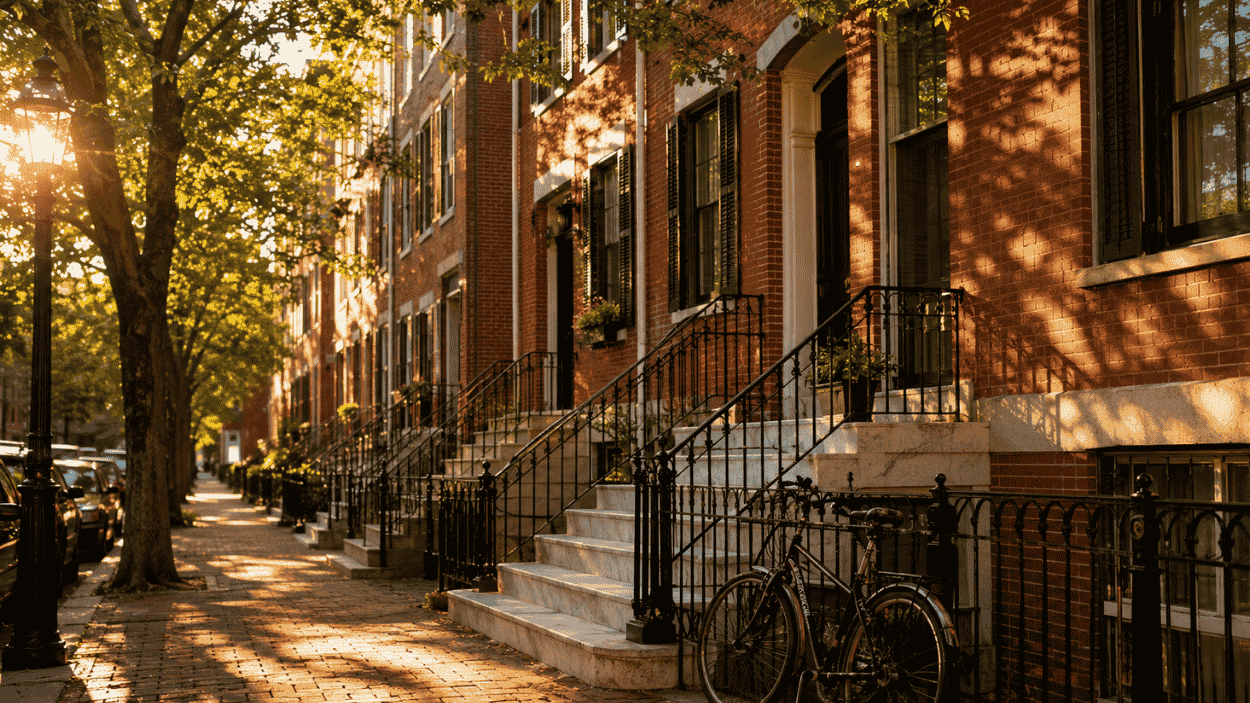
Philadelphia has more than 150 named neighborhoods, and the best neighborhoods in Philadelphia depend entirely on how you plan to live. Citywide, the median one-bedroom rent sits near $1,545 per month (as of Q3 2026), but individual neighborhoods range from $1,300 to over $2,500. This breakdown covers eight of the most-searched Philadelphia neighborhoods, organized by cost, transit access, and the daily routines they support.
What Should You Consider When Choosing a Philadelphia Neighborhood?
Three variables separate a good Philadelphia apartment search from a frustrating one: monthly budget, commute method, and daily infrastructure. Renters who nail all three tend to stay in place. Those who optimize for only one (usually price) often move within 12 months.
Philadelphia is a "block-by-block" city. Two streets in the same neighborhood can feel entirely different. A rowhouse is a style of home common throughout Philadelphia in which individual units share side walls with adjacent homes, typically two to three stories and 14 to 18 feet wide. These define the housing stock in most neighborhoods outside Center City. If you are renting for the first time, understanding prorated rent helps you budget for a mid-month move-in.
Based on what brightplace consistently sees from renters searching Philadelphia, the fastest way to narrow your options is to pick your transit line first, then filter by rent. The neighborhood sections below are organized to help you do exactly that.
Start your Philadelphia apartment search at brightplace.ai
What Is It Like to Rent in Fishtown?
Fishtown anchors its identity around Frankford Avenue, a commercial corridor packed with independent coffee shops, restaurants, and bars. One-bedroom rents in Fishtown currently range from $1,700 to $2,000 per month (as of Q3 2026), reflecting steady demand over the past two years.
The Market-Frankford Line, known locally as the El, is SEPTA's elevated and underground rapid transit line connecting West Philadelphia through Center City to the Northeast. From the Girard station in Fishtown, the ride to City Hall takes roughly 10 minutes. That commute speed, combined with walkable nightlife, makes Fishtown one of the best neighborhoods in Philadelphia for renters who want to live without a car.
The tradeoff: prices have climbed noticeably since 2020. Street parking on narrow residential blocks fills quickly. Ongoing construction on several infill lots adds noise on some streets. If your budget is under $1,700, Fishtown will be tight for a one-bedroom. Renters looking at lower price points may want to explore cheap one-bedroom apartments in adjacent neighborhoods.
How Does Rittenhouse Square Compare?
Rittenhouse Square is the most walkable central neighborhood in Philadelphia, with the majority of Center City employers reachable on foot. One-bedroom rents here range from $2,000 to $2,500 per month (as of Q3 2026), making it the priciest option on this list.
The neighborhood orbits Rittenhouse Square Park, which hosts a weekly farmers market and outdoor events from spring through fall. Walnut Street runs along the park's northern edge with retail and dining. Grocery access is strong: a Trader Joe's on 22nd Street and Di Bruno Bros. gourmet market are both within walking distance. SEPTA bus and trolley routes crisscross the area, though most residents walk.
The tradeoff: building quality varies significantly at similar price points. Some older high-rises charge premium rents without updated interiors. Limited street parking means car ownership adds a monthly garage cost of $200 to $350 (as of Q3 2026). Renters considering their first apartment should review questions to ask when touring an apartment before signing in this price range.
Is Graduate Hospital a Good Alternative to Rittenhouse?
Graduate Hospital sits roughly one mile southwest of Rittenhouse Square and functions as its more affordable neighbor. One-bedroom rents run $1,600 to $2,000 per month (as of Q3 2026). The housing stock is predominantly rowhouses, and many units include small rear patios or rooftop decks that are rare in Center City towers.
Marian Anderson Recreation Center provides green space. South Street restaurants are a short walk east, and Rittenhouse amenities are accessible on foot heading north. The Broad Street Line's Lombard-South station is the nearest subway stop, connecting to Center City in under five minutes. Renters with pets should check whether buildings charge a pet deposit or pet fee, as policies vary widely across Graduate Hospital's rowhouse stock.
The tradeoff: fewer dedicated transit options than Rittenhouse itself. The evening scene is quieter, which is either a feature or a limitation depending on your priorities. Renters who want residential calm within walking distance of Center City tend to stay here long-term. If you are weighing lease options, brightplace has a breakdown of month-to-month versus 12-month lease structures that applies directly to this neighborhood's rental market.
What Makes Fairmount Different from Other Philadelphia Neighborhoods?
Fairmount borders the Philadelphia Museum of Art, the Barnes Foundation, and Eastern State Penitentiary, but it functions as a residential neighborhood rather than a tourist zone. One-bedroom rents range from $1,500 to $1,900 per month (as of Q3 2026).
The Schuylkill River Trail runs along the neighborhood's western edge, providing a paved path for running, cycling, and walking that connects south to University City and north past Manayunk. Fairmount Avenue has a growing restaurant corridor. The neighborhood sits between SEPTA subway lines rather than directly on one, which creates a specific commute profile.
The tradeoff: walking or biking into Center City takes 15 to 30 minutes depending on your destination. The Broad Street Line's Fairmount station (formerly Girard) provides north-south subway access, but east-west connections require a bus or bike. Renters who value parks, green space, and a quieter pace within reach of Center City tend to favor Fairmount over denser options like Fishtown.
See what is available in Philadelphia on brightplace
How Does Northern Liberties Compare to Fishtown?
Northern Liberties sits adjacent to Fishtown, to the south and west, and shares the same Market-Frankford Line access via the Spring Garden station. One-bedroom rents range from $1,500 to $1,900 per month (as of Q3 2026), slightly below Fishtown's current range.
The Piazza at Schmidt's is the neighborhood's central outdoor gathering space, hosting seasonal events and surrounded by restaurants. The 2nd Street corridor anchors the dining and nightlife scene. Liberty Lands Park provides a community green space in the center of the neighborhood.
The tradeoff: the architectural character is mixed. Some blocks retain an industrial feel from the area's manufacturing history. Fishtown's restaurant density is higher. Renters who want the Fishtown lifestyle at a slightly lower price point often end up here. If you are comparing rental costs across cities, brightplace's analysis of affordable places to live provides useful context.
What Should Renters Know About University City?
University City has a dual identity: campus neighborhood for the University of Pennsylvania and Drexel University, and employment hub for Penn Medicine, CHOP, and HUP. One-bedroom rents range from $1,300 to $1,700 per month (as of Q3 2026), among the lowest on this list for central Philadelphia locations.
SEPTA, Philadelphia's regional public transit authority, operates buses, subway lines, and commuter rail throughout the city. University City is the only neighborhood on this list served by multiple transit modes: 30th Street Station provides Amtrak, Regional Rail, and subway-surface connections. Clark Park hosts a popular farmers market on weekends. The Schuylkill River Trail begins near the neighborhood's river edge.
The tradeoff: housing quality varies significantly between student-facing rentals and newer construction. Some blocks feel noticeably campus-oriented. Graduate students, medical residents, and hospital staff who work in the neighborhood benefit most. Renters who are evaluating their rent affordability will find University City among the more accessible options in central Philadelphia.
Is Manayunk Worth the Commute?
Manayunk sits northwest of Center City along the Schuylkill River, with Main Street running along the Manayunk Canal. One-bedroom rents range from $1,300 to $1,700 per month (as of Q3 2026). SEPTA Regional Rail, the commuter rail network distinct from the subway, connects the Manayunk station to Center City in approximately 20 minutes.
Main Street offers restaurants, bars, and shops in a walkable strip. Direct Schuylkill River Trail access makes Manayunk one of the best neighborhoods in Philadelphia for cyclists and runners. Wissahickon Valley Park, with more than 50 miles of trails, is accessible from the neighborhood's northern edge.
The tradeoff: daily errands beyond Main Street often require a car. The terrain is hilly, which makes walking difficult on residential streets above the commercial corridor. Nightlife options are more limited than Fishtown or Northern Liberties. Renters prioritizing outdoor access and lower rent accept the commute.
What Is Chestnut Hill Like for Renters?
Chestnut Hill is the most suburban-feeling neighborhood within Philadelphia city limits. One-bedroom rents range from $1,500 to $1,900 per month (as of Q3 2026). Germantown Avenue serves as the commercial spine, with independent shops, bakeries, and restaurants that give the neighborhood a small-town center.
Wissahickon Valley Park borders Chestnut Hill to the west. Morris Arboretum is within the neighborhood. Two SEPTA Regional Rail lines (Chestnut Hill East and Chestnut Hill West) provide a 35 to 45 minute commute to Center City.
The tradeoff: Chestnut Hill is the furthest from Center City on this list. Daily errands and social plans in Center City require more planning. Renters who want a quieter, greener environment and can tolerate the longer commute often find Chestnut Hill worth the distance. Understanding what income-restricted housing means can also help renters who qualify for assistance programs access this neighborhood at lower cost.
How Do Philadelphia Neighborhoods Compare Side by Side?
Rent ranges below reflect median asking rents for unfurnished one-bedroom apartments tracked by brightplace in Q3 2026. Actual rents vary by building type, condition, and lease timing.
Fishtown: $1,700 to $2,000/mo (as of Q3 2026). Center City commute: 10 minutes via the El. Fits renters who want walkable nightlife, food, and fast transit.
Rittenhouse Square: $2,000 to $2,500/mo (as of Q3 2026). Center City commute: walkable, under 0.5 miles. Fits renters who prioritize premium walkability and central amenities.
Graduate Hospital: $1,600 to $2,000/mo (as of Q3 2026). Center City commute: 15 to 20 minute walk. Fits renters seeking value near Center City with residential calm.
Fairmount: $1,500 to $1,900/mo (as of Q3 2026). Center City commute: 20 to 30 minute walk or bike. Fits renters who want museums, parks, and green space.
Northern Liberties: $1,500 to $1,900/mo (as of Q3 2026). Center City commute: 10 minutes via the El. Fits renters who want creative community and a settled neighborhood feel.
University City: $1,300 to $1,700/mo (as of Q3 2026). Center City commute: 5 to 10 minutes via SEPTA. Fits students, hospital workers, and academics.
Manayunk: $1,300 to $1,700/mo (as of Q3 2026). Center City commute: 20 minutes via Regional Rail. Fits cyclists, trail runners, and outdoor-focused renters.
Chestnut Hill: $1,500 to $1,900/mo (as of Q3 2026). Center City commute: 35 to 45 minutes via Regional Rail. Fits renters who want suburban character and green space.
Which SEPTA Lines Serve Which Philadelphia Neighborhoods?
Philadelphia's transit map determines where you can live without a car. Three lines cover the neighborhoods on this list.
The Market-Frankford Line (the El) serves Fishtown and Northern Liberties directly via Girard, Berks, and Spring Garden stations. It connects to 30th Street Station and the Center City employment cluster in approximately 12 to 15 minutes from Fishtown. This line runs every 10 minutes or less during the day.
The Broad Street Line runs north-south along Broad Street. It serves Fairmount (Fairmount station), Graduate Hospital (Lombard-South), and continues south through South Philadelphia to the stadiums complex. Center City access is direct and fast.
SEPTA Regional Rail is essential for Manayunk (Manayunk station, 20 minutes) and Chestnut Hill (Chestnut Hill East and West lines, 35 to 45 minutes). Regional Rail runs less frequently than the subway, so checking the schedule matters for daily commuters.
University City stands out as the only neighborhood on this list served by multiple transit modes, including 30th Street Station with Amtrak, Regional Rail, and SEPTA subway-surface lines.
Search Philadelphia apartments by neighborhood at brightplace.ai
What Do Most Neighborhood Guides Get Wrong About Philadelphia?
Philadelphia rewards renters who visit specific blocks before committing. Three realities matter more than most guides acknowledge.
The same neighborhood name can describe very different streets. Eastern Fishtown, closer to the Delaware River, has a different feel and price point than western Fishtown near the Frankford Avenue commercial corridor. Asking a landlord "which part of Fishtown" matters more than asking "is Fishtown good."
Parking is its own variable. Neighborhoods with narrow, one-way residential streets, including much of South Philadelphia and parts of Old City, require serious planning for car ownership. Some newer developments include off-street parking at additional monthly cost. Older rowhouse blocks typically do not. On blocks posted for permit parking, residents need a residential parking permit to park beyond the posted time limit.
The rental market moves at different speeds depending on the corridor. Frankford Avenue in Fishtown and 2nd Street in Northern Liberties generate multiple applications within days of posting. Outer neighborhoods like Manayunk and Chestnut Hill move more slowly, giving renters more time to compare options. Knowing how to rent an apartment in a competitive market helps in the faster corridors.
Frequently Asked Questions About Philadelphia Neighborhoods
What is the most affordable neighborhood in Philadelphia for renters?
University City and parts of South Philadelphia, including Point Breeze and Grays Ferry, typically have the lowest one-bedroom rents among relatively accessible neighborhoods, with some units available in the $1,200 to $1,400 per month range (as of Q3 2026). Northeast Philadelphia neighborhoods like Mayfair and Rhawnhurst offer even lower prices but require more car dependence for daily commuting.
Which Philadelphia neighborhoods are best for young professionals?
Fishtown, Northern Liberties, and Graduate Hospital are the most commonly chosen by young professionals relocating to Philadelphia. Fishtown offers the strongest restaurant and nightlife infrastructure with direct El train access. Graduate Hospital provides a quieter alternative close to Center City. Northern Liberties suits renters who want a creative community with slightly more residential calm.
Which neighborhoods in Philadelphia are best for families?
Chestnut Hill, Manayunk, and East Falls are frequently chosen by families for proximity to parks, larger housing stock, and quieter residential character. Chestnut Hill's access to Wissahickon Valley Park and the Morris Arboretum makes it especially attractive. These neighborhoods are further from Center City but offer more space per dollar than central options.
What is the best Philadelphia neighborhood for walking to work in Center City?
Rittenhouse Square is the most walkable Philadelphia neighborhood for Center City employees, with most major employers reachable on foot. Graduate Hospital and Washington Square West also provide easy walking commutes. Fishtown and Northern Liberties are walkable internally but typically require the El for Center City commutes, which adds roughly 10 minutes each way.
How does rent in Philadelphia compare to New York and Washington DC?
Philadelphia's average one-bedroom rent of approximately $1,545 per month (as of Q3 2026) is significantly lower than Manhattan ($3,500 or more) and below DC ($2,000 to $2,400). Even Rittenhouse Square, the most expensive central Philadelphia neighborhood, prices below equivalent DC or NYC central options. This cost difference is a primary driver of relocation to Philadelphia. The Consumer Financial Protection Bureau maintains resources for renters evaluating affordability across markets.
What should I know before renting in Philadelphia?
Philadelphia rowhouses often have steep, narrow interior staircases. Moving large furniture like king beds or sectional sofas into older buildings can require split box springs or disassembly. On-street parking requires a city residential permit. Most central neighborhoods have no dedicated parking for residents. The U.S. Department of Housing and Urban Development provides additional renter protections and assistance programs for those who qualify.
Is Philadelphia a walkable city for renters?
Philadelphia's walkability depends entirely on the neighborhood. Rittenhouse Square, Graduate Hospital, and Fishtown are highly walkable for daily errands and commuting. Fairmount and Northern Liberties are walkable with some gaps. Manayunk is walkable along Main Street but car-dependent beyond it. Chestnut Hill requires a car or Regional Rail for most trips outside the neighborhood.
What is the average rent in Philadelphia in 2026?
The median one-bedroom rent in Philadelphia is approximately $1,545 per month (as of Q3 2026), though this citywide figure masks wide neighborhood variation. Central neighborhoods like Rittenhouse Square exceed $2,000 per month. More affordable areas like University City, Manayunk, and parts of South Philadelphia start closer to $1,300 per month for a one-bedroom unit.
How do I get around Philadelphia without a car?
SEPTA operates buses, subway lines, trolleys, and regional rail throughout Philadelphia. The Market-Frankford Line and Broad Street Line form the subway backbone. Fishtown, Northern Liberties, University City, and Rittenhouse Square all support car-free living. Manayunk and Chestnut Hill rely on Regional Rail, which runs less frequently and limits spontaneous travel.
Which Philadelphia neighborhood has the best restaurant scene?
Fishtown and the East Passyunk Avenue corridor in South Philadelphia have the densest independent restaurant scenes in the city. Fishtown concentrates its dining along Frankford Avenue with a mix of casual and upscale options. East Passyunk has earned national recognition for its restaurant concentration. Rittenhouse Square offers high-end dining, and Northern Liberties rounds out the options along its 2nd Street corridor.
Last reviewed: August 2026
How this article was made: brightplace used AI tools to help research, draft and update this article.