Apartments with Terraces and Balconies: What Renters Should Know About Outdoor Space in 2026
A terrace adds 100 to 500 square feet of private outdoor space and commands a 10 to 30% rent premium as of Q3 2026. Balconies are smaller at 25 to 80 square feet.
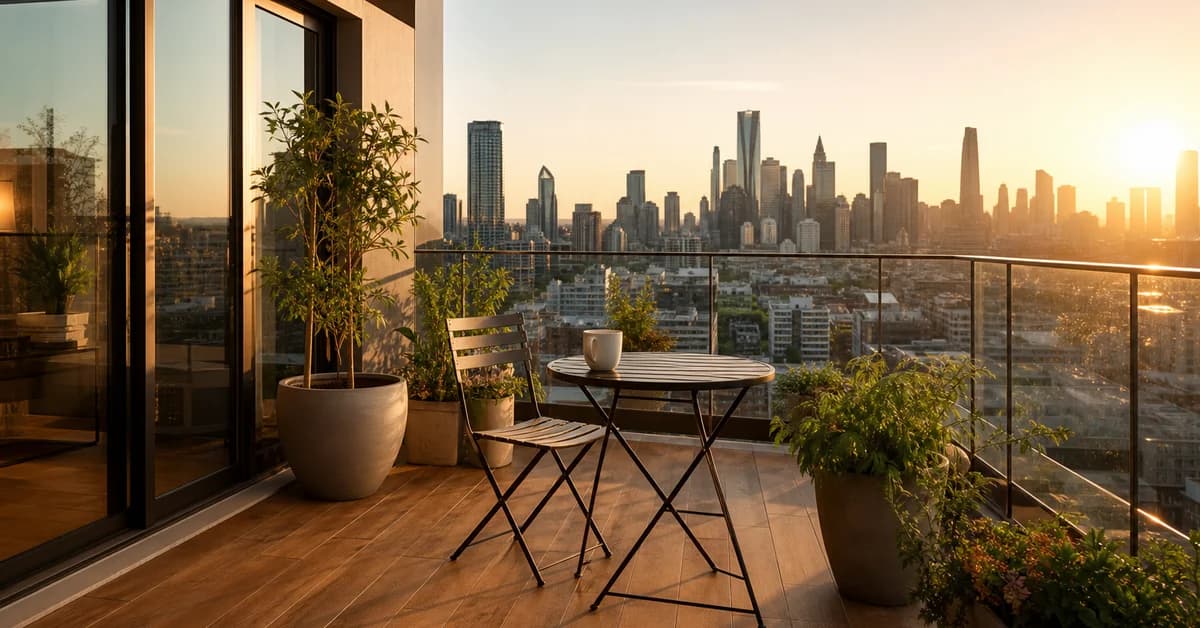
An apartment with terrace, balcony, or patio costs 10-30% more than a comparable unit without outdoor space (as of Q3 2026). That premium reaches 31% in Manhattan and drops to 5-15% in Sun Belt cities like Dallas and Phoenix. For renters deciding whether outdoor space is worth the extra cost, the type, size, and usability of that space matter more than simply having it. This guide breaks down definitions, rent premiums by city, lease restrictions, and specific communities across 10 states.
What Does a Terrace Apartment Mean?
A terrace apartment includes a private flat outdoor area that sits on a solid structure, such as a rooftop, building setback, or ground-level platform. Terraces are the largest type of apartment outdoor space and can function as a full extension of your living area. The distinction between terrace, balcony, patio, and Juliet balcony matters because each type offers a fundamentally different living experience, and the rent premium you pay should reflect the actual usability of the space.
Terrace: A flat, open outdoor area resting on a solid structure. Terraces range from 100 to 500+ square feet (as of Q3 2026 listings). They accommodate full outdoor furniture sets, dining tables, container gardens, and sometimes grills. Terraces appear most often on penthouses, ground-floor units, and buildings with architectural setbacks. A terrace does not protrude from the building; it sits on a flat surface.
Balcony: An elevated platform extending outward from the building facade, enclosed by a railing. Typical apartment balcony size runs 25-80 square feet. Most balconies fit one to two chairs and a small table. Balconies are standard on mid-rise and high-rise apartments above the ground floor. They provide views and fresh air but limited functional space.
Patio: A ground-level outdoor area, typically paved or concrete, accessed directly from a ground-floor or garden-level unit. Patios at garden-style apartment communities measure 50-200 square feet. They may include a small fenced perimeter. Patios are generally the most affordable outdoor space option.
Juliet balcony: A decorative railing mounted on a full-height window or door with no usable floor space. You cannot step onto a Juliet balcony. Listings sometimes advertise these as "balconies," which frustrates renters who expect actual outdoor space. A Juliet balcony provides ventilation and an aesthetic element, nothing more.
Search for apartments with outdoor space at app.brightplace.ai.
What Is the Difference Between a Balcony and a Terrace?
The core difference is structural: a balcony projects outward from the building, while a terrace rests on a flat surface like a rooftop or setback. This distinction affects size, usability, and how much extra rent you will pay. Here is how they compare across the dimensions that matter to renters.
Size: Balconies average 25-80 square feet. Terraces average 100-500+ square feet. The minimum usable size for a small table and two chairs is roughly 4 feet by 6 feet (24 square feet). Below that, you can fit one chair at most.
Structure: Balconies extend outward from an exterior wall and are supported by brackets or cantilevers. Terraces sit on top of a flat structural surface, giving them a more stable foundation that supports heavier furniture and planters.
Floor level: Balconies appear on upper floors of mid-rise and high-rise buildings. Terraces can be at any level: ground floor, mid-floor setbacks, or rooftops.
Usability: A typical balcony accommodates morning coffee for one. A terrace can host outdoor dining for four, container gardens, lounge seating, and sometimes cooking areas.
Cost: One square foot of outdoor space is valued at roughly 25-50% of indoor square-foot pricing in most markets. Terraces command higher total premiums than balconies because they are larger, but the per-square-foot premium is similar.
Availability: Balconies are far more common. Terraces are rarer and concentrated in luxury buildings, converted lofts, and newer mixed-use developments.
How Much More Do Apartments with Outdoor Space Cost?
Apartments with any private outdoor space rent for approximately 10-30% more than comparable units without it (as of Q3 2026). The premium varies dramatically by market, outdoor space type, and floor level. In supply-constrained cities where outdoor space is scarce, the premium is steep. In Sun Belt markets with abundant new construction, the gap narrows.
Manhattan: 31% premium for units with private outdoor space (as of Q3 2026). A 1BR with a balcony rents for roughly $500-$800/mo more than a comparable unit without one. Private terraces in penthouse or setback units command even higher premiums. New York carries the highest outdoor-space premium in the country because demand vastly exceeds supply.
Sun Belt cities (Dallas, Austin, Phoenix, Miami): 5-15% premium (as of Q3 2026). New construction in these markets routinely includes balconies and patios, which increases supply and keeps the premium lower. In Dallas, more than 23,000 apartment units include balconies. Austin has over 26,000.
Chicago: 10-20% premium (as of Q3 2026). Lakefront buildings with balconies are in high demand, but outdoor space is seasonal. Renters typically use a Chicago balcony four to five months per year, which compresses its effective value.
Denver: 10-20% premium (as of Q3 2026). Mountain views from balconies and terraces are a specific value driver in the Denver market. Units with west-facing balconies and unobstructed Front Range views sit at the top of that range.
Ground-floor patios: 5-10% premium across most markets (as of Q3 2026). Patios lack the elevation and views that make balconies and terraces valuable, but they offer easier access, more stable surfaces, and often more square footage per dollar.
One important detail: the premium reflects more than just the outdoor space itself. Units with terraces and balconies tend to be in newer or renovated buildings with higher-end finishes overall. Isolating the exact cost of the outdoor space alone is difficult. When calculating what percentage of your income should go to rent, factor in the outdoor-space premium as part of your true monthly cost, not as a separate line item. Renters who need help covering housing costs can explore HUD's rental assistance programs to understand what support is available.
What Can You Do on an Apartment Balcony or Terrace?
Most apartment leases allow outdoor furniture, container plants, and general relaxation on balconies and terraces. The restrictions matter more than the permissions, and most renters discover them after signing. Review the lease addendum for balcony and terrace rules before you commit. Violations can result in fines or lease penalties.
Typically allowed: Weather-resistant seating, small dining tables, container gardens and planters, outdoor rugs, string lights (battery-operated or solar), privacy screens, and yoga or exercise.
Commonly restricted: Charcoal and propane grills are prohibited on most apartment balconies due to fire codes. Some communities allow electric grills. Hanging anything over the railing (flags, banners, laundry) is usually prohibited. Satellite dishes, large storage items, and visible clotheslines are restricted at most properties. Some buildings enforce weight limits, particularly on older terraces.
Furnished terraces are increasingly common at luxury communities. Some properties provide built-in seating, planters, or cooking stations on terrace-level units. If you have pets and plan to use the balcony for fresh air, confirm the property's pet policy and any associated deposits or fees before signing.
The biggest practical complaint from renters about balcony usage is neighbor cigarette and marijuana smoke drifting between floors. Buildings with smoke-free policies rarely enforce them on outdoor spaces. If smoke sensitivity is a concern, ask the leasing office how balcony smoking rules are handled before signing your lease agreement. Ground-floor patios and upper-floor terraces with more physical separation from neighbors tend to have fewer issues. The CFPB's renter resource page covers your rights regarding lease terms and habitability standards.
Where Can You Find Apartments with Terraces and Balconies by State?
Outdoor space availability and style vary by region. Sun Belt states offer more balconies and patios in new construction, while Northeastern and Midwestern cities have fewer units with outdoor space, which drives premiums higher. Below is a state-by-state breakdown with specific communities and rent ranges.
Texas: Dallas, Austin, Houston, and San Antonio all have extensive new mid-rise inventory with balconies and patios. AMLI Fountain Place in Dallas offers 1BRs starting around $1,600/mo (as of Q3 2026) with select units featuring private balconies and floor-to-ceiling windows, plus a 45th-floor sky lounge terrace for all residents. AMLI Downtown in Austin has 1BRs starting near $1,700/mo (as of Q3 2026) with private balconies overlooking downtown. Suburban Texas communities increasingly include ground-floor patios in garden-style builds.
Florida: Year-round warm weather makes outdoor space usable 12 months, and availability is high. Gables Columbus Center in Miami starts at roughly $2,400/mo for a 1BR (as of Q3 2026) with private balconies and a resort-style pool deck terrace. Gables Ponce in Coral Gables starts near $2,200/mo (as of Q3 2026) with private balconies. Tampa and Orlando have more affordable options with patios and balconies in the $1,300-$1,700/mo range (as of Q3 2026).
California: Los Angeles and San Diego lead in rooftop terrace communal spaces. Equity Residential properties in Santa Monica offer 1BRs starting near $2,800/mo (as of Q3 2026) with select ocean-view balconies. LA's Arts District and Downtown feature loft-style units with private terraces. San Diego communities in Mission Beach and Pacific Beach include ground-floor patios within walking distance of the coast.
Georgia: Atlanta's Buckhead and Midtown neighborhoods have concentrated inventory. Cortland at Phipps Plaza in Buckhead starts around $1,700/mo for a 1BR (as of Q3 2026) with private balconies and a communal pool deck terrace. Cortland at the Battery in Smyrna starts near $1,500/mo (as of Q3 2026) with balconies and an outdoor sun deck.
North Carolina: Charlotte and Raleigh both have growing mid-rise communities with outdoor space. Cortland South End in Charlotte starts around $1,500/mo for a 1BR (as of Q3 2026) with private patios and balconies in a walkable neighborhood. Communities in Raleigh offer garden-style units with ground-floor patios starting near $1,300/mo (as of Q3 2026).
Arizona: Phoenix and Scottsdale offer outdoor space usable 9-10 months per year. Desert communities in the $1,200-$1,500/mo range (as of Q3 2026) include patios on ground-floor units. Luxury communities in Scottsdale feature oversized terraces with desert mountain views at higher price points.
Colorado: Denver's RiNo and River North districts feature newer builds with mountain-view balconies. Forge in RiNo starts near $1,700/mo for a 1BR (as of Q3 2026) with private balconies facing the Front Range. Traverse Apartments in Denver starts around $1,600/mo (as of Q3 2026) and includes a communal rooftop terrace with panoramic mountain views.
Tennessee: Nashville's building boom has produced distinctive outdoor space options. Alcove Nashville downtown starts near $1,800/mo for a 1BR (as of Q3 2026) and features four 75-foot alcove terraces integrated into the building's architecture. SkyHouse Nashville in Midtown offers studios from $1,500/mo (as of Q3 2026) with private balconies and a communal rooftop lounge.
New York: Manhattan has roughly 730+ apartments with balconies available at any given time, and private outdoor space carries the steepest premium in the country (31%). Terraces are most common in newer luxury high-rises and converted loft buildings. Brooklyn offers slightly more outdoor space at somewhat lower premiums, particularly in neighborhoods with mid-rise new construction. NYC renters can review HUD's Fair Housing guidelines to understand protections around housing access and amenity availability.
Illinois: Chicago's lakefront high-rises in Lincoln Park, Lakeview, and the West Loop frequently include balconies. Rooftop terraces are standard in new construction. The seasonal limitation (outdoor use roughly May through September) keeps premiums in check relative to year-round warm markets.
Use brightplace to filter apartments by outdoor space in any city.
What Should You Check About Outdoor Space During an Apartment Tour?
Bring a tape measure. Listing photos make balconies and terraces look larger than they are, and a space smaller than 4 feet by 6 feet will not fit a small table and two chairs. Outdoor space quality depends on dimensions, orientation, noise, privacy, and building rules, not just whether the space exists. Based on brightplace's review of renter feedback, these are the checks that prevent regret.
Ask the leasing office: Is this outdoor space private (exclusive to your unit) or communal (shared)? What are the exact dimensions? Which direction does it face? South-facing gets the most sun. East-facing catches morning light, which is ideal for coffee. West-facing can be uncomfortably hot in summer afternoons. North-facing stays cooler but gets less direct light.
Check for obstructions. HVAC units, utility equipment, and neighboring building walls within 20 feet eliminate privacy. Look up and down: can residents on floors above or below see directly into the space? Street-facing balconies on lower floors may be loud during rush hour. Visit at different times of day if possible.
Ask about restrictions before signing. Can you grill? (Most buildings prohibit charcoal and gas.) Are there weight limits for planters and furniture? Is there a drainage system for rain? Are electrical outlets available? Does the space have overhead coverage or a retractable awning? These details separate a balcony you will use from one that becomes outdoor storage.
For a complete list of questions, see brightplace's apartment tour checklist. If you are renting for the first time, the first apartment checklist covers what to evaluate beyond outdoor space.
Frequently Asked Questions About Apartments with Terraces and Balconies
What does a terrace apartment mean?
A terrace apartment includes a private outdoor flat area that rests on a solid structure like a rooftop or building setback. Terraces are larger than balconies, typically 100-500+ square feet, and can accommodate outdoor furniture, dining sets, and planters. They are most common in luxury buildings and converted lofts. The key distinction is that terraces sit on a flat surface rather than projecting outward from the building.
What is the difference between a balcony and a terrace?
A balcony extends outward from the building, is elevated, and typically measures 25-80 square feet. A terrace sits on a flat surface like a rooftop or architectural setback, is larger at 100-500+ square feet, and can be at any floor level. Terraces command higher rent premiums due to their larger usable space. Balconies are far more common in standard apartment buildings.
What does terrace level mean?
Terrace level refers to a floor in an apartment building that includes outdoor terrace space, often where the building has a setback from the floors above. These units gain additional outdoor square footage from the terrace area created by the architectural step-back. Terrace-level apartments are typically on lower to mid floors and often carry a premium because the terrace space can be substantial.
How much does a terrace add to apartment rent?
Apartments with terraces cost 15-30% more than comparable units without outdoor space (as of Q3 2026). In Manhattan, the premium reaches approximately 31%. In Sun Belt cities like Dallas and Phoenix, the premium is lower at 5-15% because outdoor space is more commonly available in new construction. Ground-floor patios carry the smallest premium at 5-10% in most markets.
Is a patio the same as a terrace?
No. A patio is a ground-level outdoor area, typically paved, accessed from a garden-level or ground-floor unit. A terrace is elevated and sits on a flat surface like a rooftop or building setback. Patios are more common at garden-style apartment communities and carry a smaller rent premium. Terraces are found in high-rise and luxury buildings and tend to be significantly larger.
What is a Juliet balcony in an apartment?
A Juliet balcony is a decorative railing installed on a full-height window or door with little to no usable floor space, often extending only a few inches from the wall. It allows the window to open fully for fresh air and light but does not provide standing or seating room. Juliet balconies are common in older buildings and European-style apartments. They are not true outdoor space.
Can you put furniture on an apartment balcony?
Yes, most apartment leases allow outdoor furniture on balconies and terraces. Choose weather-resistant pieces sized for the space. Common restrictions include no charcoal or gas grills, no items hung over railings, and no storage of large items. Some buildings restrict certain types of heavy planters. Always check your lease addendum for specific rules before purchasing outdoor furniture.
Are apartments with balconies more expensive?
Yes. Apartments with private balconies typically rent for 10-20% more than comparable units in the same building without balconies (as of Q3 2026). The premium is highest in cities where outdoor space is scarce, such as New York and Chicago, and lowest in Sun Belt markets like Dallas and Phoenix where balconies are standard in new construction.
What is private outdoor space in an apartment?
Private outdoor space means an outdoor area exclusively accessible to your unit, not shared with other residents. This includes private balconies, terraces, and patios attached to individual apartments. Communal outdoor spaces like rooftop decks, courtyards, and pool areas are shared by all residents. Private outdoor space commands a higher rent premium than communal alternatives because of the exclusivity.
Do apartments come with rooftop terraces?
Some do. Rooftop terraces are increasingly common at luxury high-rise apartments in cities like Dallas, Nashville, Miami, and Denver. Most rooftop spaces are communal and shared by all residents. Private rooftop terraces attached to specific penthouse or top-floor units are rare and carry significant rent premiums, often 25-40% above standard units (as of Q3 2026).
Can you grill on an apartment balcony?
Check your lease and local fire codes before buying a grill. Most apartment complexes prohibit charcoal and propane grills on balconies due to fire safety regulations. Some allow small electric grills. Many communities provide communal grilling stations near the pool, courtyard, or picnic areas as an alternative. Local ordinances vary by city, so confirm with both management and your municipality.
How big is a typical apartment balcony?
A typical apartment balcony measures 25-80 square feet, roughly 4-6 feet deep by 6-12 feet wide. This fits one to two chairs and a small table. The minimum usable size for a table and two chairs is about 4 feet by 6 feet. Luxury units may have balconies up to 100-150 square feet. Terraces are substantially larger at 100-500+ square feet.
brightplace helps you find apartments with balconies, terraces, and patios in any city. Start your search at app.brightplace.ai.
Reviewed by Katie Mikles, Content Director at brightplace
Last reviewed: September 2026