Where to Live in Dallas with Kids
Family friendly apartments in Dallas start around $1,100/mo for a 1BR and reach $2,400+ for a 3BR in top school districts like Plano ISD and Richardson ISD (as of Q3 2026).
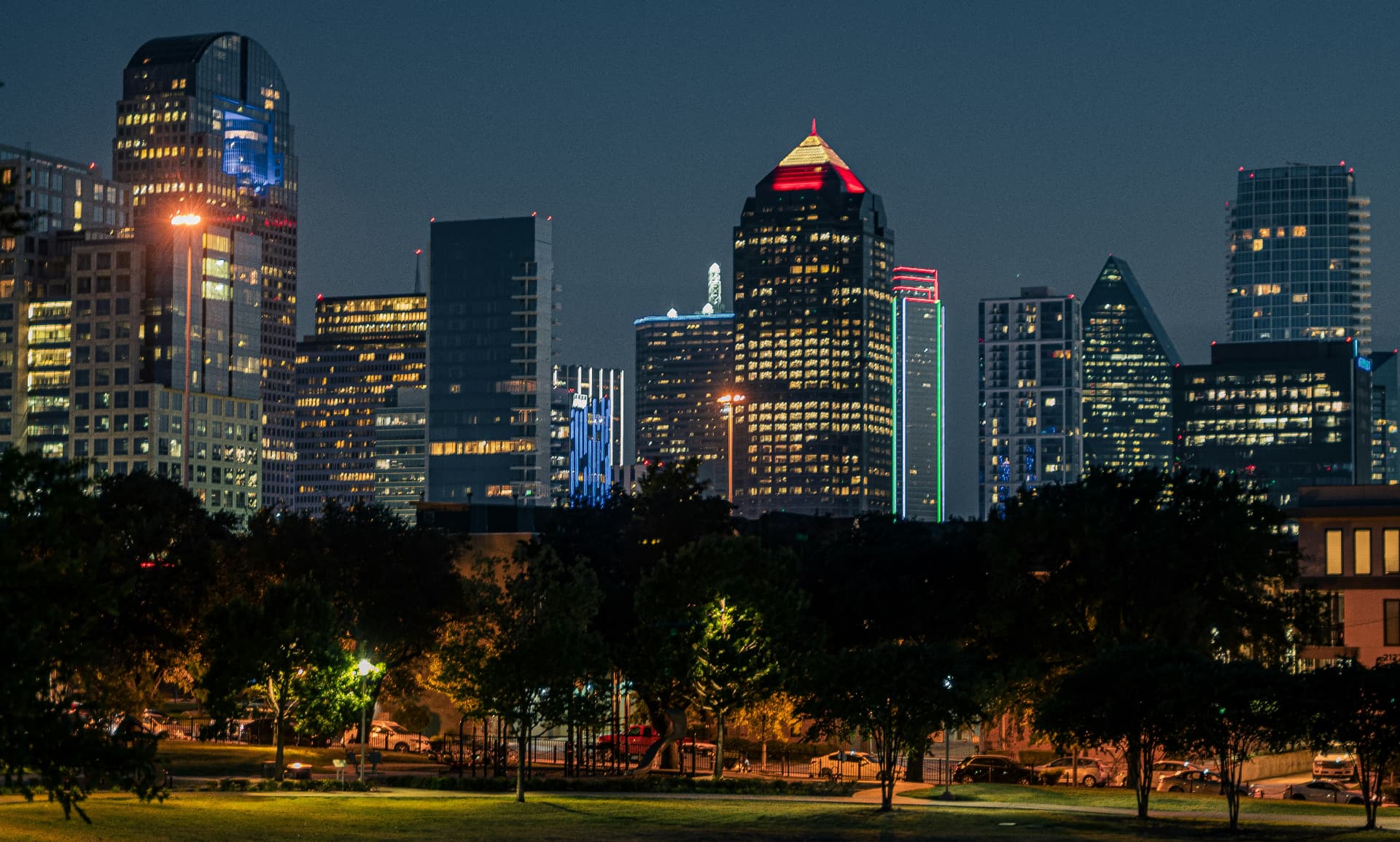
A brightplace neighborhood guide
Market
Dallas, TX
Lifestyle
Families / Renters
with Kids
Price Range
$1,100 - $2,400/mo
(as of Q3 2026)
Last Reviewed
September 2026
Family friendly apartments in Dallas start around $1,100 per month for a one-bedroom and reach $2,400 or more for a three-bedroom in top-rated school districts like Plano ISD and Richardson ISD (as of Q3 2026). The four neighborhoods in this guide give families with kids the strongest combination of school quality, park access, and manageable commutes across the DFW metro. If you are new to the apartment search process, the step-by-step renting guide covers what documents you need and what to expect at each stage.
The DFW metroplex is roughly the size of Connecticut. That context matters because when people say "Dallas," they often mean somewhere between Frisco (40 miles north) and Mansfield (25 miles south), and the experience of living in each of those places is completely different. This guide stays focused: intown Dallas neighborhoods plus Richardson and Plano, the two established inner suburbs where school district quality and family infrastructure are most consistently cited by renters who have already made the move.
A note on schools: school district boundaries in Texas do not always match city limits. A property with a Plano address might feed into Plano ISD, Dallas ISD, or Allen ISD depending on its precise location. The same is true in Richardson. Every building in this guide has its school district called out, but renters with school-age children should verify zoning directly with the district before signing a lease. The Texas State Law Library's landlord-tenant guide covers lease requirements including proof-of-residence documentation needed for school enrollment.
What Makes Lake Highlands a Strong Option for Family Friendly Apartments in Dallas?
Lake Highlands is one of the strongest intown options for renters searching for family friendly apartments in Dallas without fully committing to the suburbs. The neighborhood sits northeast of downtown, bounded roughly by Audelia Road to the east, NW Highway to the south, and the White Rock Creek Greenbelt to the west.
White Rock Lake, a 1,015-acre park with a 9-mile loop trail, a sailing club, a dog park, and fishing access, sits on the neighborhood's western edge and functions as the primary outdoor anchor. The streets are well-established, the tree canopy is mature, and the mix of single-family homes and apartment complexes gives renters more options than some of the newer suburban developments.
Lake Highlands High School draws a high proportion of local students within Dallas ISD. The honest caveat is that Dallas ISD, taken as a whole, is uneven. Lake Highlands specifically has a better track record than many parts of the district, but renters who are prioritizing school quality above all else tend to find Richardson ISD or Plano ISD a more consistent bet. Dallas ISD has earned a B rating at 85, up 9 points in four years, and offers specialty schools like the School for the Talented and Gifted (TAG) that rank nationally.
Rent in Lake Highlands runs lower than the established inner suburbs. One-bedroom apartments average around $1,064, and two-bedroom units average $1,417 (as of Q3 2026). Three-bedroom family-sized apartments reach approximately $1,826 (as of Q3 2026). Most apartment buildings here are smaller regional operators rather than national institutional owners, so due diligence on management quality matters more than in Richardson or Plano.
Best for: Families who want to stay intown Dallas, value park and lake access, and are comfortable with Dallas ISD rather than relocating to a suburban district.
Looking for family friendly apartments in Dallas across multiple neighborhoods? Search on brightplace to compare availability by commute, school district, and price.
Why Do Families Keep Choosing Richardson for Dallas-Area Rentals?
Richardson is the most-cited suburb in renter conversations about family friendly apartments in the Dallas metro. The reason is consistent: Richardson ISD is well-regarded, the neighborhood infrastructure is established, and the community has a genuine mixed-use feel that most Dallas suburbs have not developed. Richardson ISD serves more than 37,000 students across 55 campuses in a 46-square-mile district with a long-standing reputation for educational excellence.
The Canyon Creek area, a cluster of neighborhoods in eastern Richardson near Breckinridge Park, lands at the top of most lists. Breckinridge Park is 418 acres of trails, athletic fields, a disc golf course, a nature area, and a dog park. It is the kind of park that makes daily outdoor time with kids genuinely easy rather than a planned weekend event.
The Eisemann Center for Performing Arts anchors the cultural side of Richardson. CityLine, a mixed-use development with grocery, restaurants, and retail, gives the east side a walkable corridor that feels more like a neighborhood center than a strip mall. Richardson has a strong tech sector concentration with State Farm, Texas Instruments, Blue Cross Blue Shield, and numerous telecom companies operating here. DART rail connects Richardson to downtown Dallas in about 30 minutes.
Rents in Richardson run $1,100 to $2,100 (as of Q3 2026) depending on size and building age. The Canyon Creek and Alma Road corridors have strong institutional apartment inventory well-suited to families. This range makes Richardson one of the better values among family friendly apartments in Dallas for renters who want school district quality without Plano pricing. Families evaluating income-restricted options may also find LIHTC properties in this area.
Best for: Families prioritizing school district quality and established community feel, who want proximity to Dallas without paying Plano prices.
How Does Plano Compare for Families Who Want the Strongest School District?
If school district quality is the primary decision driver, Plano ISD is the most-cited answer in the Dallas metro (as of Q3 2026). It consistently ranks among the top suburban districts in Texas, and its reputation is durable enough that renters treat it as a baseline expectation. The western side of Plano along the Dallas North Tollway, including the Legacy corridor, has the densest concentration of family friendly apartments in the Dallas metro and is closest to the district's well-regarded elementary and middle schools.
Beyond the schools, west Plano has developed genuine family infrastructure. The Bluebonnet Trail, a paved multi-use path, connects several neighborhoods and parks. Windhaven Meadows Park has a dog park with walking trails and shaded paths. The Shops at Willow Bend and Legacy West give families retail and restaurant options without a long drive.
The tradeoff versus Richardson is price. Plano runs about 10 to 20 percent higher on rents for comparable square footage, and the suburb has a more polished feel. One-bedroom apartments in west Plano start around $1,389 (as of Q3 2026). Two and three-bedroom apartments with family-appropriate square footage run $1,800 to $2,400 (as of Q3 2026) in newer buildings. It also sits further north than Richardson, which matters if work or family is concentrated closer to downtown Dallas.
Best for: Families where school district quality is the single biggest factor, and who are willing to pay a bit more to be in Plano ISD.
Not sure which school district fits your situation? brightplace lets you search apartments by neighborhood and commute to compare Richardson, Plano, and Lake Highlands side by side.
What Should Families Know About Renting in Irving and Las Colinas?
Irving and Las Colinas occupy a different part of the family-renter market in Dallas: they are the value option for families who need to be within reasonable distance of DFW airport, downtown Dallas, or the mid-cities employment corridor but do not want to pay Plano or Richardson prices. Las Colinas, the master-planned area within Irving built around Lake Carolyn and the Canal District, has more of an urban-adjacent feel than most Dallas suburbs, with a walkable waterfront, restaurants, and a light rail connection to downtown via the Orange Line.
The school district situation in Irving is more complicated. Irving ISD has a wide range of schools, and quality varies by campus. Families with school-age children will want to research specific zoning through the Dallas County property records rather than assuming district-level consistency. For families whose kids are not yet school-age, or who are planning on private school, this is less of a factor.
The upside is real: rents run lower than comparable Plano buildings, DFW airport is 10 minutes away, and Las Colinas has enough amenity density that daily life does not feel suburban. One-bedroom apartments in Las Colinas start around $1,100 to $1,500 (as of Q3 2026). Two-bedroom units run $1,500 to $2,000 (as of Q3 2026). Families who need flexibility on budget and proximity to the airport tend to find Irving underrated among family friendly apartments in Dallas relative to the options further north.
Best for: Families prioritizing proximity to DFW airport, budget flexibility, or the mid-cities employment corridor, and who are comfortable doing school-level research rather than relying on district reputation.
How Do These Four Dallas Family Neighborhoods Compare on Cost and Schools?
The cost and school district picture across these four neighborhoods breaks down clearly. Here is a side-by-side comparison of family friendly apartments in Dallas by area (as of Q3 2026):
Lake Highlands (Dallas ISD): 1BR from $1,064, 2BR from $1,417, 3BR from $1,826. Intown location with White Rock Lake access. Dallas ISD rated B overall, with strong individual campuses in Lake Highlands.
Richardson (Richardson ISD): 1BR from $1,100, 2BR from $1,500, 3BR from $2,100. Best balance of school quality and value. Richardson ISD consistently recognized at state and national levels.
Plano (Plano ISD): 1BR from $1,389, 2BR from $1,800, 3BR from $2,400. Highest rents but strongest school district. Plano ISD ranks among the top suburban districts in Texas.
Irving / Las Colinas (Irving ISD): 1BR from $1,100, 2BR from $1,500, 3BR from $2,000. Best value and airport proximity. School quality varies by campus; research specific zoning.
The average rent for a family-sized apartment across the Dallas metro is $1,592 per month (as of Q3 2026), which puts Richardson and Irving/Las Colinas at or below the metro average, while Plano runs 10-20% above it.
One fact that surprises many relocating families: renting within a school district gives your children identical school access as buying a home there. In Texas, school enrollment is tied to your address, not homeownership. This means a family renting a $1,500 apartment in Richardson ISD has the same school options as a family who bought a $450,000 house on the same street. With the monthly gap between renting and buying in Dallas running over $1,000 per month (as of Q3 2026), renting in a strong school district is a financially rational choice, not a compromise.
Another budget consideration: families in Richardson can reduce from two cars to one by using DART rail for one parent's commute. That saves $400-$600 per month in car payments, insurance, gas, and parking. No other family neighborhood on this list offers that option at the same level.
What Are the Real Costs Beyond Rent for Dallas Families?
Base rent does not tell the full story for family friendly apartments in Dallas. Families should budget for additional monthly costs that add 15-25% on top of advertised rent. Understanding your true monthly cost prevents budget surprises after move-in.
Utilities (not included in most Dallas apartments): Electric runs $120-$200 per month in summer due to Texas heat (as of Q3 2026). Water and trash add $40-$80. Internet runs $50-$80.
Renter's insurance: Required by most Dallas apartment communities. Costs $15-$30 per month for a standard policy. Renters insurance covers your belongings and liability.
Childcare (often the largest cost after rent): Center-based infant care in Dallas averages $840 per month. Preschool averages $780 per month (as of Q3 2026). In the northern suburbs like Plano, Frisco, and Richardson, waitlists for rated programs run 3-9 months. Apply during pregnancy, not after move-in.
Pet fees (if applicable): Pet deposits run $200-$500, monthly pet rent $25-$75 per pet (as of Q3 2026). Breed restrictions vary by property. See the pet deposit vs pet fee breakdown for how these charges differ.
Parking: Covered parking adds $50-$150 per month at most Dallas apartment communities (as of Q3 2026). Garages run higher. Some communities include one surface spot free.
For a worked example, a family renting a 2BR in Richardson at $1,500 per month with one child in daycare will pay approximately $1,800-$1,950 for housing (rent + utilities + insurance + parking) plus $840 for childcare, bringing the real monthly family cost to roughly $2,640-$2,790 (as of Q3 2026). This rent-plus-childcare number is the real decision figure for Dallas families, and it explains why Richardson's 10-20% rent advantage over Plano matters so much. The CFPB's renter resource guide covers federal protections and budgeting tools for families navigating rental costs.
What Should Families Ask During an Apartment Tour in Dallas?
Touring family friendly apartments in Dallas with kids requires a different checklist than touring as a single renter. The apartment tour question guide covers general touring, but families should also ask specifically about these items:
School zoning verification: Ask which elementary, middle, and high school the unit is zoned for. The leasing office should be able to tell you. Verify independently with the school district before signing.
Playground and common area hours: Some communities restrict pool and playground hours. Ask when kids can use outdoor amenities and whether the pool has lifeguard hours during summer.
Noise policies and floor selection: Ground-floor units are easier with young kids (no stairs, no downstairs neighbors). Ask about noise complaint policies and whether the building has concrete vs. wood-frame construction between floors.
Childcare proximity: Dallas daycare waitlists in popular neighborhoods like Plano and Richardson can run 6-12 months. Start researching childcare before you sign a lease, not after.
Frequently Asked Questions About Family Friendly Apartments in Dallas
What is the average rent for a family-sized apartment in Dallas?
A two-bedroom apartment in Dallas averages $1,417 to $1,800 per month depending on neighborhood (as of Q3 2026). Three-bedroom units run $1,826 to $2,400. Richardson offers the best balance of school district quality and rent value, while Plano runs 10-20% higher for comparable square footage.
Which Dallas school district is best for renters with kids?
Plano ISD consistently ranks among the top suburban districts in Texas and is the most-cited answer among family renters. Richardson ISD is a close second with strong academics and lower rents. Dallas ISD has improved to a B rating and offers specialized magnet schools, though quality varies by campus more than in Plano or Richardson.
Are there family friendly apartments in Dallas under $1,500 per month?
Yes. Lake Highlands and Irving/Las Colinas both have two-bedroom family friendly apartments in Dallas starting below $1,500 per month (as of Q3 2026). Lake Highlands two-bedrooms average $1,417. Irving two-bedrooms start around $1,500. Richardson also has options starting near $1,500 for older but well-maintained buildings.
How far is Richardson from downtown Dallas?
Richardson is approximately 15 miles north of downtown Dallas. DART rail connects Richardson to downtown in about 30 minutes, with stations at Arapaho, Spring Valley, and Bush Turnpike. By car on US-75, the commute runs 20-40 minutes depending on traffic and time of day.
Do Dallas apartments require renters insurance?
Most institutional apartment communities in Dallas require renters insurance as a lease condition. Policies typically cost $15-$30 per month and cover personal belongings, liability, and temporary housing if the unit becomes uninhabitable. Some properties accept a liability-only waiver at a lower rate.
What are the hidden costs of renting in Dallas with kids?
Beyond rent, families in Dallas should budget for electricity ($120-$200 per month in summer), water and trash ($40-$80), renter's insurance ($15-$30), parking ($50-$150 for covered), and pet fees if applicable ($25-$75 monthly pet rent). These add-ons typically increase total housing costs by 15-25% over base rent (as of Q3 2026).
Is Lake Highlands a good area for families?
Lake Highlands is the strongest intown Dallas option for families who want urban proximity with park access. White Rock Lake's 1,015 acres and 9-mile trail provide daily outdoor space. The area is within Dallas ISD, which is uneven district-wide but has strong individual campuses in the Lake Highlands attendance zone specifically.
How do Plano and Richardson compare for family renters?
Both have strong school districts, but Plano ISD edges out Richardson ISD in statewide rankings and reputation. Richardson compensates with 10-20% lower rents, more community texture, and better DART rail connectivity. Families on a budget who still want a top-tier school district tend to find Richardson the better value.
Can I rent in a good Dallas school district without a car?
Richardson has the best transit access among these four neighborhoods, with multiple DART rail stations connecting to downtown Dallas. Lake Highlands has bus service but limited rail. Plano and Irving have some DART access but are largely car-dependent for daily errands, school drop-offs, and grocery runs.
What is the best time to search for family apartments in Dallas?
October through February offers the best selection and pricing when searching for family friendly apartments in Dallas. Summer months (June through August) see higher demand from relocating families and new hires, which tightens inventory and reduces concession availability. Starting your search 60-90 days before your target move-in date gives the best balance of options.
Are there income-restricted family apartments in Dallas?
Yes. Dallas has LIHTC (Low-Income Housing Tax Credit) properties in multiple neighborhoods that offer reduced rents for qualifying families. Income limits vary by property and household size. The HUD rental assistance page lists federal programs, and some Dallas-area communities participate in housing choice voucher programs.
What should I check about school zoning before signing a Dallas lease?
School district boundaries in Texas do not always match city limits. A property with a Richardson address might be zoned to Richardson ISD, Dallas ISD, or Plano ISD depending on exact location. Always verify school zoning directly with the school district using your specific apartment address before signing a lease. The leasing office may have outdated zoning information.
Ready to find family friendly apartments in Dallas that fit your school district, commute, and budget?
Start your search at brightplace.ai
Rent data reflects market estimates as of Q3 2026 and is subject to change. Verify current availability directly with each community.
Last reviewed: September 2026
brightplace neighborhood guide | dallas, tx | 2026
How this article was made: brightplace used AI tools to help research, draft and update this article.