
What to Know Before Renting in Little Italy / University Village
University Village and Little Italy are overlapping Near West Side neighborhoods 2.5 miles from the Loop. Here is what renters should know about rent ranges, transit, dining, and the honest tradeoffs before signing a lease.
Last reviewed: July 2026. Rent figures reflect Q2 2026 market conditions and should be verified directly with landlords.
What University Village and Little Italy Are (and Why the Name Matters)
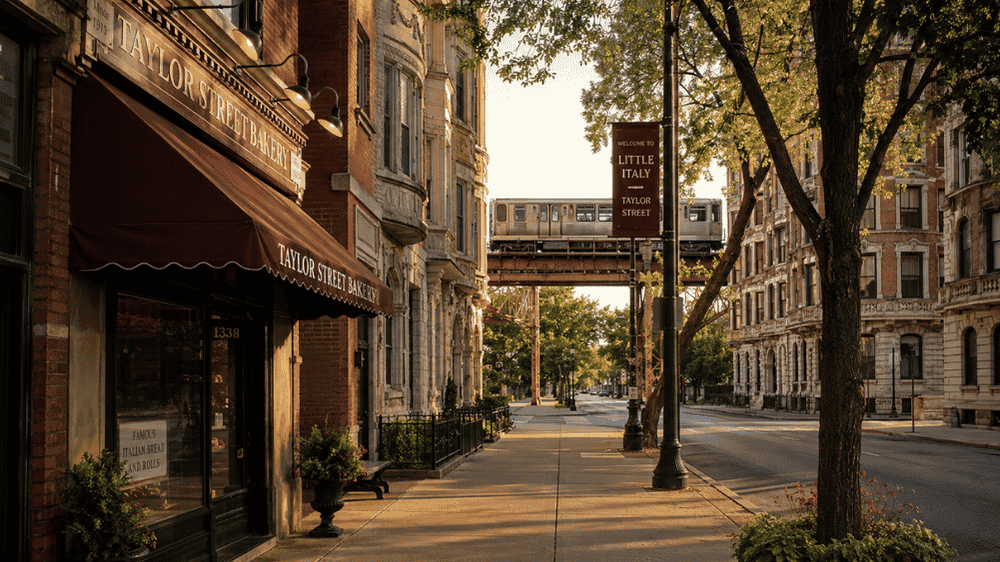
University Village and Little Italy are overlapping Near West Side neighborhoods centered on Taylor Street and the UIC campus, roughly 2.5 miles southwest of Chicago's Loop. Little Italy is the historic commercial corridor running along Taylor Street between Racine and Morgan, named for the Italian immigrant community that settled here in the late 19th century. University Village is the broader residential area that grew around the University of Illinois at Chicago's campus expansion. Renters use both names interchangeably when searching for apartments in the 60607 and 60608 zip codes.
UIC enrolls approximately 34,000 students (as of 2025-2026), making it the largest university in Chicago. The campus anchors the eastern half of the neighborhood and drives a significant share of rental demand. For renters new to the apartment search process, brightplace's guide to renting an apartment covers the fundamentals.
See current apartments available in University Village and Little Italy on brightplace.
Who Actually Lives Here
Four renter types define the neighborhood's residential character.
UIC graduate students and medical students make up the largest renter segment. Proximity to campus and the Blue Line make car ownership optional. Lease cycles here track the academic calendar, with most turnover in August.
Illinois Medical District healthcare workers are the second largest group. The Illinois Medical District is one of the largest urban medical districts in the United States, located on the western edge of University Village. It is home to Rush University Medical Center, UIC Hospital, the VA Medical Center, and more than 40 healthcare organizations. Living here means a walkable commute that would cost 40-60% more in the West Loop.
Young professionals priced out of the West Loop find comparable Blue Line access at rents running 25-40% lower (as of Q2 2026). The tradeoff is fewer coffee shops and restaurants per block.
Long-term residents with roots in the neighborhood's Italian-American heritage continue to live along Taylor Street and the surrounding blocks, particularly in the vintage courtyard buildings west of Ashland.
Rent Ranges in University Village and Little Italy
| Unit Type | Monthly Rent Range | Building Type |
|---|---|---|
| Studio | $1,200–$1,650/mo | Mostly vintage courtyard. Some utilities included. |
| 1 Bedroom | $1,500–$2,100/mo | Mixed. Widest availability. |
| 2 Bedroom | $1,900–$2,800/mo | Mixed. Higher end near UIC. |
| 3 Bedroom | $2,400–$3,400/mo | Predominantly newer construction. Limited stock. |
Parking adds $100–$200/mo when not included. All figures as of Q2 2026.
Rent in University Village and Little Italy splits into two building stock tiers. Vintage courtyard buildings, constructed between 1910 and 1950 with U-shaped layouts, hardwood floors, and radiator heat, sit at the lower end. Many lack central AC. Newer construction near the UIC campus carries higher rents and more amenities. Parking adds approximately $100-$200/month when not included in rent (as of Q2 2026).
Studio: $1,200-$1,650/mo (as of Q2 2026). Mostly vintage courtyard stock. Some utilities included.
1 Bedroom: $1,500-$2,100/mo (as of Q2 2026). Mixed building types. Widest availability.
2 Bedroom: $1,900-$2,800/mo (as of Q2 2026). Mixed. Higher end in UIC-adjacent newer buildings.
3 Bedroom: $2,400-$3,400/mo (as of Q2 2026). Predominantly newer construction. Limited stock.
Renters searching University Village on brightplace most frequently compare it against Pilsen and the West Loop. For a complete breakdown of costs beyond base rent, see brightplace's guide to your true monthly cost.
Search current listings in University Village and Little Italy at app.brightplace.ai.
Transit and Getting Around
The CTA Blue Line at UIC-Halsted station connects University Village to the Loop in approximately 12-15 minutes (as of Q2 2026). This is the neighborhood's primary transit advantage and the main reason renters choose it over further-out alternatives.
Additional transit options include the Polk Street Pink Line stop, CTA bus routes #8 Halsted, #126 Jackson, and #157 Taylor/Ogden. I-290 (Eisenhower Expressway) provides direct highway access west toward the suburbs.
The honest tradeoff: street parking on most blocks is permit-only or difficult. If you own a car, clarify whether a parking spot is included before signing. Biking connects to Pilsen and the broader trail network, though protected bike lanes within the neighborhood itself are limited. For renters considering other Chicago neighborhoods, brightplace's Chicago pet owners guide covers pet infrastructure across the metro.
What Taylor Street Actually Offers Day-to-Day
What Works Well
Taylor Street is the commercial spine of Little Italy, and its dining depth is the neighborhood's strongest daily-life asset. Scafuri Bakery has operated here since 1904. Tufano's Vernon Park Tap has served the neighborhood since 1930 and earned James Beard recognition. Pompei has been open since 1909. Conte di Savoia, an Italian grocery and deli, has been at Taylor Street since 1948. Mario's Italian Lemonade has been a seasonal institution since 1954.
Arrigo Park provides the primary green space for the neighborhood. Maxwell Street Market runs on Sundays with open-air vendors. The Jane Addams Hull House Museum and the National Public Housing Museum (opened 2025 at 919 S. Ada St.) add cultural infrastructure.
The Real Gaps
No major full-service grocery store sits within comfortable walking distance. This is the number-one renter complaint about the neighborhood. The nearest realistic option is Jewel-Osco on Roosevelt, approximately a 15-minute walk or short drive. Coffee shop density and remote-work-friendly spaces are limited compared to the West Loop. Renters who work from home full-time should factor this into their decision.
How University Village Compares to Nearby Neighborhoods
| Factor | Univ. Village / Little Italy | West Loop | Pilsen | Bridgeport |
|---|---|---|---|---|
| Rent Level | Mid | High | Lower | Low |
| Loop Transit | Excellent (Blue Line) | Excellent | Moderate | Limited |
| Grocery Access | Limited | Good | Moderate | Moderate |
| Dining Depth | Strong (Italian heritage) | Strong (upscale) | Strong (Mexican) | Moderate |
| Coffee / Remote Work | Limited | High | Moderate | Low |
As of Q2 2026. Rent and access assessments reflect current market conditions.
This comparison did not appear in substantive form on any top-ranking page for this keyword. Here is how University Village stacks up against the three neighborhoods renters compare it to most often.
Rent level: University Village is mid-range. West Loop is high. Pilsen is lower. Bridgeport is low (as of Q2 2026).
Loop transit: University Village has excellent Blue Line access. West Loop has excellent access. Pilsen has moderate access. Bridgeport has limited access.
Grocery access: University Village is limited (no walkable full-service grocery). West Loop is good. Pilsen is moderate. Bridgeport is moderate.
Dining depth: University Village has strong Italian heritage dining. West Loop has strong upscale dining. Pilsen has strong Mexican dining. Bridgeport is moderate.
Coffee and remote work: University Village is limited. West Loop has high density. Pilsen is moderate. Bridgeport is low.
Renters choose University Village despite the grocery gap for one primary reason: proximity to UIC, the Illinois Medical District, and the Loop at rents meaningfully below the West Loop. For healthcare workers at Rush or UIC Hospital, the math is straightforward.
The Illinois Medical District Advantage
The Illinois Medical District sits directly adjacent to University Village's western boundary. It encompasses more than 40 healthcare organizations, including Rush University Medical Center, the University of Illinois Hospital, and the Jesse Brown VA Medical Center. For nurses, residents, and support staff working shifts at these institutions, living in University Village means a walkable or 5-minute commute at rents that run 25-40% below equivalent West Loop units (as of Q2 2026).
No competitor page explains what this proximity means for specific renter types. For a healthcare worker earning $60,000-$90,000, the difference between a $2,200/month West Loop one-bedroom and a $1,650/month University Village one-bedroom is $6,600/year in rent savings alone.
What to Look for When Renting Here
Five building stock quirks are specific to this neighborhood.
- Vintage buildings often lack central AC. Verify the HVAC system before signing. Window units are common in pre-1960 walk-ups, and Chicago summers are hot.
- Closet space is limited in older stock. Buildings constructed before 1960 were not designed for modern storage needs. Tour the actual unit, not just the model.
- Parking is genuinely difficult. Most residential blocks require zone permits. If your lease does not include a spot, budget $100-$200/month for a rented space (as of Q2 2026).
- North-facing units on Harrison Street hear I-290. The Eisenhower Expressway runs along the neighborhood's northern edge. Road noise is real in certain buildings. Tour at different times of day.
- Management quality varies. The vintage walk-up stock is managed by dozens of small landlords with inconsistent maintenance standards. Research building management and read the lease carefully before committing. brightplace's guide to short-term lease agreements covers what to check in any lease.
Frequently Asked Questions About Renting in Little Italy / University Village
Is Little Italy in Chicago a good neighborhood?
Yes, for renters who prioritize walkable Italian dining, Blue Line transit to the Loop, and proximity to UIC or the Illinois Medical District. It is not the best fit for renters who need abundant grocery options within walking distance or a dense remote-work coffee shop culture. The neighborhood's strengths are specific and well-defined.
What is the most Italian neighborhood in Chicago?
Little Italy on Taylor Street is the historic center of Italian-American culture in Chicago. Scafuri Bakery (1904), Pompei (1909), Tufano's (1930), and Conte di Savoia (1948) anchor the corridor. The neighborhood retains more operating Italian heritage businesses per block than any other area in the city (as of Q2 2026).
What are typical rent prices in University Village / Little Italy?
Studios rent for $1,200-$1,650/month, one-bedrooms for $1,500-$2,100/month, and two-bedrooms for $1,900-$2,800/month (as of Q2 2026). Vintage courtyard buildings sit at the lower end. Newer UIC-adjacent construction sits at the upper end. Parking adds $100-$200/month when not included.
Is University Village a walkable neighborhood?
University Village is walkable for dining, coffee, and campus access along Taylor Street and the UIC campus corridor. Daily grocery runs are not walkable for most residents, as no full-service grocery store sits within comfortable walking distance. The nearest option is Jewel-Osco on Roosevelt Road, approximately 15 minutes on foot.
Which CTA lines serve University Village and Little Italy?
The CTA Blue Line at UIC-Halsted station is the primary transit connection, reaching the Loop in 12-15 minutes. The Polk Street Pink Line stop provides a second rail option. CTA bus routes #8 Halsted, #126 Jackson, and #157 Taylor/Ogden serve the neighborhood (as of Q2 2026).
How far is University Village from downtown Chicago?
University Village sits approximately 2.5 miles southwest of the Loop. By Blue Line from UIC-Halsted station, the trip takes 12-15 minutes. By car, expect 10-20 minutes depending on traffic and time of day. I-290 provides direct highway access for drivers heading west toward the suburbs.
See what is currently available in University Village and Little Italy on brightplace.