Brooklyn Neighborhoods: A Practical Renter's Orientation
Brooklyn contains more than 70 distinct neighborhoods spread across 71 square miles, with median one-bedroom rents ranging from roughly $2,000 in Bay Ridge to $5,900 in DUMBO. This guide organizes the major brooklyn neighborhoods by geography, rent, and subway access so renters can narrow a shortlist based on commute time, monthly cost, and daily infrastructure.
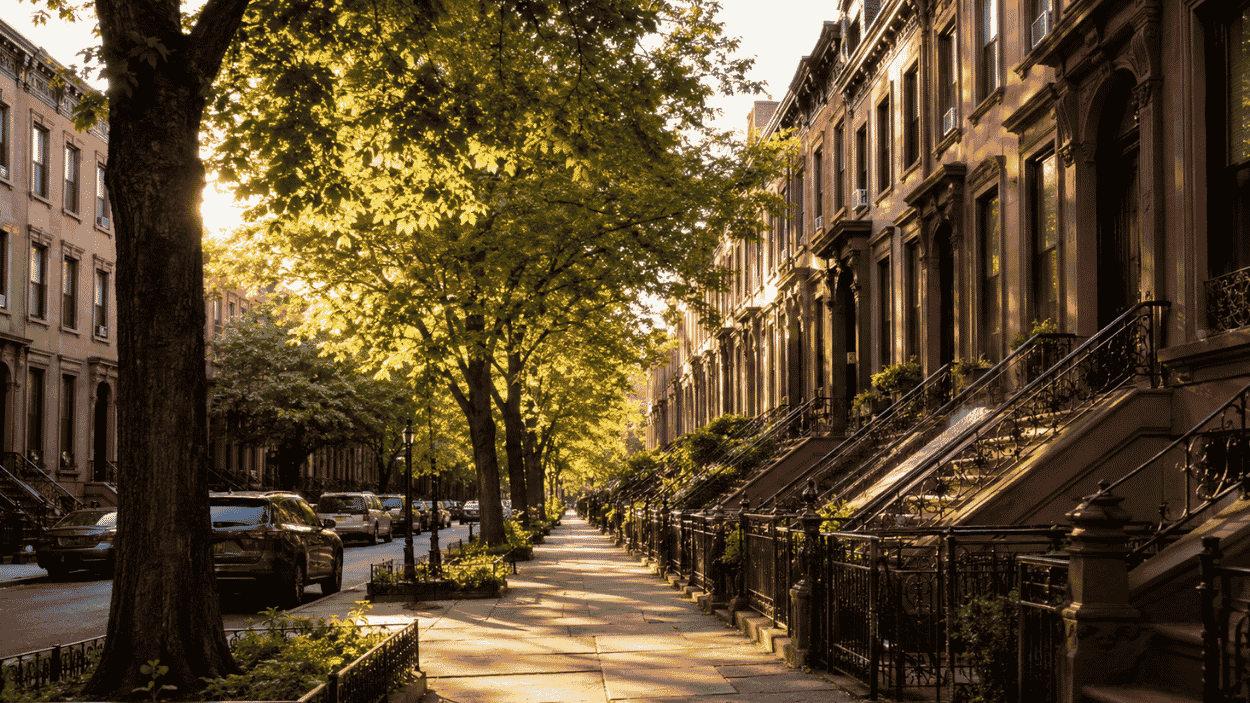
Brooklyn contains more than 70 distinct neighborhoods spread across 71 square miles, with median one-bedroom rents ranging from roughly $2,000 in Bay Ridge to $5,900 in DUMBO (as of Q3 2026). This guide organizes the major brooklyn neighborhoods by geography, rent, and subway access so renters comparing options can narrow a shortlist based on what actually matters: commute time, monthly cost, and daily infrastructure.
How Do Brooklyn Neighborhoods Work for Renters?
Brooklyn splits into two practical halves that shape every apartment search. North Brooklyn (Williamsburg, Greenpoint, Bushwick) connects to Manhattan via the L train. South Brooklyn (Park Slope, Crown Heights, Prospect Heights, Bed-Stuy) revolves around Prospect Park and the 2/3/4/5 and B/Q train lines. Traveling between these halves takes 45 to 60 minutes by subway, and the G train is the only direct connection.
This geography matters because your commute, social life, and daily errands will stay within whichever half you choose. Renters who fall for a Williamsburg apartment but work near Downtown Brooklyn quickly discover a frustrating crosstown commute. Pick the half where your life will actually be.
A managed building is a rental building operated by a professional property management company, typically offering in-unit laundry, maintenance guarantees, and streamlined leasing. Brownstone walk-ups, by contrast, are individually owned buildings with character, steep stairs, and variable landlord responsiveness. If you are renting an apartment for the first time, understanding which building type you prefer helps narrow your search before you start touring.
Start your Brooklyn apartment search at brightplace.ai
What Does Each Brooklyn Neighborhood Cost?
Rent ranges reflect median asking rents for unfurnished one-bedroom apartments tracked in Q3 2026. Actual rents vary by building type, floor, and lease timing.
Williamsburg: $4,800 to $5,200/mo (as of Q3 2026). L train to Union Square in 15 minutes. Waterfront dining, rooftop bars, managed high-rises along Kent Avenue. Tradeoff: highest rents in the borough outside DUMBO.
Greenpoint: $4,200 to $4,600/mo (as of Q3 2026). Coffee shops, independent bookstores, and a strong restaurant corridor along Manhattan Avenue. Tradeoff: G train only, which runs infrequently and does not connect directly to Manhattan.
Bushwick: $2,800 to $3,400/mo (as of Q3 2026). L train and M train access. Gallery spaces, late-night dining, and warehouse conversions. The most affordable of the three northern areas, and a strong option for renters looking for cheap one-bedroom apartments. Tradeoff: longer commute to Midtown (35 to 45 minutes).
Park Slope: $3,200 to $3,800/mo (as of Q3 2026). Prospect Park on the eastern edge. F/G/R trains to Midtown in 25 to 35 minutes. Strong restaurant and retail strip along 5th and 7th Avenues. Tradeoff: premium pricing and limited nightlife compared to North Brooklyn.
Crown Heights: $3,000 to $3,500/mo (as of Q3 2026). Franklin Avenue dining corridor. The 2/3 express trains reach Midtown in approximately 30 minutes, making this one of the faster commutes in the borough. Strong value relative to Park Slope, which sits just to the west. Renters deciding between a month-to-month or 12-month lease will find both options available here.
Prospect Heights: $3,200 to $3,800/mo (as of Q3 2026). Bordered by Prospect Park and the Brooklyn Museum. B/Q trains and 2/3 trains available. Tradeoff: smaller neighborhood with limited inventory.
Fort Greene / Clinton Hill: $3,800 to $4,500/mo (as of Q3 2026). Brooklyn Academy of Music, Pratt Institute, Fort Greene Park. C train and G train access. A mix of brownstones and newer managed buildings. Slightly more affordable than Williamsburg with comparable dining options.
Bed-Stuy: $2,800 to $3,200/mo (as of Q3 2026). Iconic brownstone architecture. A/C and J/M/Z trains. The largest geographic footprint of any Brooklyn neighborhood, which means block-by-block variation in building stock and walkability. Walk the specific block before committing.
Downtown Brooklyn: $4,200 to $5,100/mo (as of Q3 2026). The most transit-connected neighborhood in the borough, with nearly every subway line within a few blocks. Highest concentration of amenity-rich managed buildings. Tradeoff: urban density with limited green space.
DUMBO: $5,400 to $5,900/mo (as of Q3 2026). Cobblestone streets, Manhattan Bridge views, Brooklyn Bridge Park. F train and A/C trains nearby. The most expensive neighborhood in the borough. Best for renters who prioritize waterfront access and can absorb the cost.
Bay Ridge: $2,000 to $2,500/mo (as of Q3 2026). R train only (45 to 60 minutes to Midtown). Waterfront parks along Shore Road, local dining along 3rd Avenue. Small-city feel within the borough. Tradeoff: long commute and limited nightlife.
Sunset Park: $2,300 to $2,700/mo (as of Q3 2026). D/N/R trains. Strong restaurant scene along 5th and 8th Avenues. Closer to Midtown than Bay Ridge. Tradeoff: fewer managed buildings and limited retail compared to North Brooklyn.
Flatbush: $2,200 to $2,800/mo (as of Q3 2026). B/Q trains to Midtown in 30 to 40 minutes. Strong Caribbean and West Indian restaurant corridors along Flatbush Avenue and Church Avenue. Large geographic area requiring block-level research. Renters searching for affordable rent options will find this among the most budget-friendly areas with direct Manhattan subway access.
brightplace search data shows renters in early 2026 most frequently compared Crown Heights, Bed-Stuy, and Bushwick as their shortlist trio, likely because these three neighborhoods hit the intersection of subway access and sub-$3,500 rent.
Why Does the North/South Divide Matter?
The G train is Brooklyn's only subway line running north-south through the borough, and it operates on a limited schedule. Renters living in Williamsburg who need to reach Park Slope face a 45-minute trip requiring a transfer. This is not a minor inconvenience. If your workplace, gym, or closest friends sit in one half of Brooklyn, your apartment should be in that half. This single factor eliminates half the borough's neighborhoods from most searches and simplifies the decision considerably.
Search Brooklyn apartments on brightplace
What Should Renters Know Before Searching in Brooklyn?
The MTA subway map is your primary search tool. Verify your commute before falling for a neighborhood. A beautiful brownstone means little if you spend 90 minutes each way getting to work. New York City's tenant protection laws provide important rights regardless of which neighborhood you choose.
Since the FARE Act took effect in June 2025, landlord-hired brokers in New York City can no longer charge tenants a broker fee. You only pay a broker fee if you independently hire your own tenant's broker to assist your search. The NYC Department of Consumer and Worker Protection enforces this law, and violations can result in penalties up to $2,000. This change has reduced upfront move-in costs across Brooklyn significantly. For more on understanding prorated rent and other lease costs, check brightplace's renter resources.
Brownstone apartments offer exposed brick, high ceilings, and architectural character. The tradeoff includes walk-up stairs (often four or five flights), radiator heat, and individual landlords with varying maintenance response times. Managed buildings in Downtown Brooklyn and along the Williamsburg waterfront offer elevators, in-unit laundry, and 24-hour maintenance at a rent premium. Knowing the right questions to ask when touring an apartment will help you evaluate either building type efficiently.
Block-by-block variation is real in Crown Heights, Bed-Stuy, Bushwick, and Flatbush. A building two blocks from the subway feels different from one eight blocks away. Always walk the specific block, at multiple times of day, before signing a lease. Renters considering apartments with no credit check requirements may find more options with individual landlords in these neighborhoods than in managed high-rises.
Renters unfamiliar with their rights should review HUD's rental assistance resources before signing. Brooklyn's borough-wide median one-bedroom rent of approximately $3,981 (as of Q3 2026) is a misleading number. The range between Bay Ridge at $2,000 and DUMBO at $5,900 is larger than the gap between the average Brooklyn apartment and the average Manhattan one-bedroom. Focus on neighborhood-level data, not borough averages.
For a detailed breakdown of specific brooklyn neighborhoods including per-building data and rent histories, see brightplace's full Brooklyn neighborhood guide.
Search Brooklyn apartments on brightplace
Frequently Asked Questions About Brooklyn Neighborhoods
What is the most affordable neighborhood in Brooklyn for renters?
Bay Ridge, Flatbush, and Sunset Park consistently offer the lowest median one-bedroom rents in Brooklyn, ranging from approximately $2,000 to $2,800 (as of Q3 2026). These neighborhoods sit further from Manhattan and require longer commute times, but they provide significantly more space per dollar than central or North Brooklyn options.
Which Brooklyn neighborhood has the shortest commute to Manhattan?
Downtown Brooklyn is the most transit-connected neighborhood in the borough, with access to nearly every subway line and a commute to the Financial District of under 10 minutes. Brooklyn Heights and DUMBO also offer sub-15-minute commutes. Williamsburg reaches Union Square via the L train in approximately 15 minutes.
What is the difference between North Brooklyn and South Brooklyn?
North Brooklyn includes Williamsburg, Greenpoint, and Bushwick, connected via the L train corridor to Manhattan's East Side. South Brooklyn includes Park Slope, Crown Heights, Prospect Heights, and Bed-Stuy, organized around Prospect Park and the 2/3/4/5 and B/Q trains. Traveling between the two halves takes 45 to 60 minutes, so renters should choose the half closest to their daily routine.
Which Brooklyn neighborhoods have the most managed apartment buildings?
Downtown Brooklyn has the highest concentration of managed, amenity-rich apartment buildings in the borough. The Williamsburg waterfront along Kent Avenue and Fort Greene also have significant managed building inventory. These buildings typically offer in-unit laundry, elevators, fitness centers, and streamlined online leasing.
Do I need to pay a broker fee when renting in Brooklyn?
Since the FARE Act took effect in June 2025, landlord-hired brokers can no longer charge tenants a fee. You only pay a broker fee if you independently hire your own tenant's broker. This applies across all five NYC boroughs. The change has meaningfully reduced the upfront cost of renting in Brooklyn for most tenants.
Which Brooklyn neighborhoods are closest to Prospect Park?
Park Slope, Prospect Heights, Windsor Terrace, Crown Heights, and Prospect Lefferts Gardens all border Prospect Park directly. Park Slope lines the western edge with the most established restaurant and retail corridors. Prospect Heights borders the northern side near the Brooklyn Museum. Crown Heights runs along the eastern perimeter with more affordable rent options.
How much does a one-bedroom apartment cost in Brooklyn?
Brooklyn's borough-wide median one-bedroom rent is approximately $3,981 (as of Q3 2026), but the actual range spans $2,000 in Bay Ridge to $5,900 in DUMBO. Neighborhoods like Crown Heights, Bed-Stuy, and Bushwick cluster between $2,800 and $3,500, making them the most common entry point for renters moving to the borough.
Is Bushwick a good neighborhood for renters?
Bushwick offers one-bedroom apartments between $2,800 and $3,400 (as of Q3 2026), making it the most affordable option in North Brooklyn. L and M train access connects the neighborhood to Manhattan in 35 to 45 minutes. The tradeoff is a longer commute and fewer grocery and retail options compared to Williamsburg or Park Slope.
What are the most popular Brooklyn neighborhoods for young professionals?
Williamsburg, Crown Heights, Bushwick, and Fort Greene are the most frequently searched brooklyn neighborhoods among renters in their twenties and thirties, based on brightplace search data from early 2026. These neighborhoods offer a combination of dining, nightlife, coffee shops, coworking proximity, and direct subway access to Manhattan's major employment centers.
Can I rent in Brooklyn without a car?
Most Brooklyn neighborhoods inside the subway network are fully functional without a car. Neighborhoods with the strongest car-free infrastructure include Downtown Brooklyn, Williamsburg, Park Slope, Fort Greene, and Crown Heights, all of which have dense grocery, dining, and transit options within walking distance. Bay Ridge and parts of Flatbush may require a car for some errands.
How this article was made: brightplace used AI tools to help research, draft and update this article.