.png)

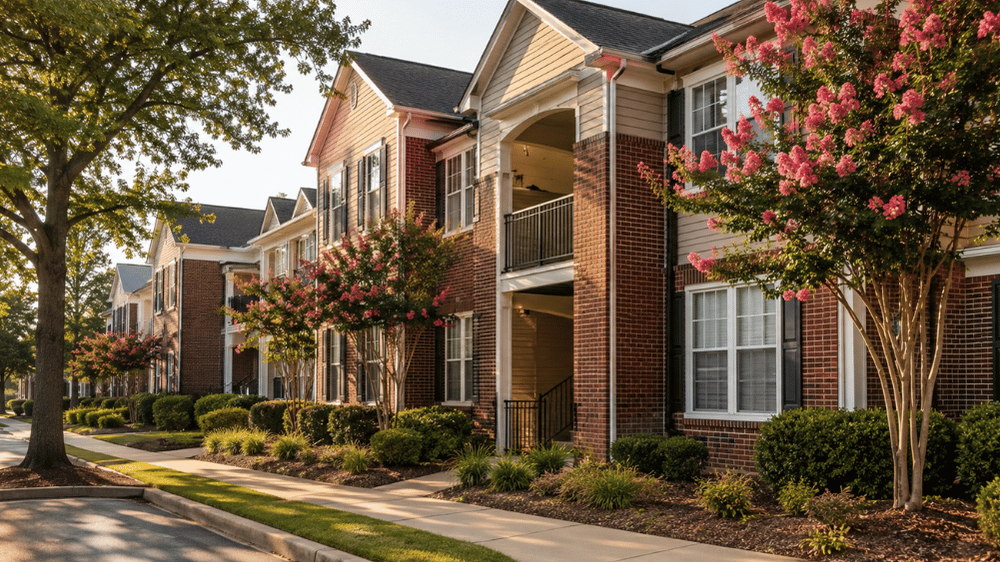
Income-based homes in Charlotte, NC set your rent at approximately 30% of your gross monthly income, following the HUD affordability standard. Charlotte has multiple programs that work differently, and most renters confuse them. This guide covers the four main program types, current income limits by household size, how to qualify, and where to apply first. If your household earns below 80% of the Area Median Income for the Charlotte-Concord-Gastonia region, at least one program likely applies to you.
Income-based housing is rental housing where the amount you pay each month is calculated as a percentage of your household's gross income, typically 30%. Area Median Income (AMI) is the midpoint income for households in the Charlotte-Concord-Gastonia region, as calculated annually by HUD, and is used to determine eligibility for most income-based housing programs. If you earn $2,000/month gross, your rent in a true income-based unit would be approximately $600/month (as of Q3 2026).
One distinction matters more than any other: not all affordable housing in Charlotte is income-based. Some programs adjust your rent to match your income. Others cap rent at a fixed affordable rate regardless of what you earn. Confusing the two is the most common mistake renters make when applying.
brightplace tracks available apartments across Charlotte, including income-restricted communities. Search current listings at app.brightplace.ai.
Charlotte has four primary program types. The critical difference is how rent is set.
Housing Choice Voucher (Section 8): The Housing Choice Voucher program, commonly called Section 8, is a federal rental assistance program that pays a portion of a qualifying renter's monthly rent directly to a private landlord. Rent is set at 30% of your adjusted gross income. Managed by INLIVIAN. Typical income cap: below 50% AMI (as of Q3 2026).
INLIVIAN Public Housing: INLIVIAN is Charlotte's public housing authority (formerly the Charlotte Housing Authority) and manages both public housing properties and the city's Housing Choice Voucher program. Rent is set at 30% of your adjusted gross income. Typical income cap: below 80% AMI (as of Q3 2026).
LIHTC / Tax Credit Apartments: Low-Income Housing Tax Credit (LIHTC) properties are privately owned apartment communities that receive federal tax credits in exchange for capping rents at levels affordable to households earning 50-60% of AMI. Rent is a fixed amount based on the AMI formula, not your actual income. This is a key distinction: if your income drops, your LIHTC rent stays the same. Typical income cap: 50-60% AMI (as of Q3 2026).
City-Funded Affordable Housing: These are developments funded through the Charlotte Housing Trust Fund, which has contributed more than $231 million to support over 11,000 affordable housing units since 2001 (as of 2022 data). Rent structures vary by development agreement. Income caps range from 30-80% AMI (as of Q3 2026).
The difference between LIHTC and true income-based rent is the most practically important distinction in Charlotte's affordable housing system. An income-restricted apartment has a maximum income limit for eligibility, but rent is set at a fixed amount based on AMI percentages, not adjusted to your specific income. A renter earning $1,500/month pays about $450/month in a true income-based unit (Section 8 or public housing). The same renter in a 60% AMI LIHTC unit might pay $1,100/month regardless of their income.
brightplace shows apartments across Charlotte's neighborhoods, including income-restricted and affordable communities. See what is available at app.brightplace.ai.
HUD updates these figures annually. Here are the current income limits for the Charlotte-Concord-Gastonia MSA (as of FY 2026, released May 2026):
50% AMI (Very Low Income):
1 person: $41,100/year. 2 persons: $47,000/year. 3 persons: $52,850/year. 4 persons: $58,700/year. 5 persons: $63,400/year. 6 persons: $68,100/year.
80% AMI (Low Income):
1 person: $65,750/year. 2 persons: $75,150/year. 3 persons: $84,550/year. 4 persons: $93,900/year. 5 persons: $101,450/year. 6 persons: $108,950/year.
If your household earns below 50% AMI, you may qualify for the Housing Choice Voucher waitlist and most LIHTC properties. If below 80% AMI, many LIHTC properties, INLIVIAN public housing, and city-funded affordable developments may accept your application (as of Q3 2026). For more on what to ask before signing any lease, see brightplace's guide to questions to ask when touring an apartment.
Eligibility depends on the program, but most share the same core requirements.
Income documentation: Pay stubs (last 30-60 days), tax returns, Social Security award letters, or other proof of household income. Every adult household member's income counts.
Household size verification: Birth certificates, Social Security cards, or government-issued IDs for all household members.
Citizenship or immigration status: HUD-funded programs require U.S. citizenship or eligible immigration status for at least one household member.
Background screening: Criminal background checks vary by program. INLIVIAN and most LIHTC properties run background checks, but disqualifying offenses differ. Drug-related and violent felony convictions within the past 3-5 years are the most common disqualifiers (as of Q3 2026).
Requirements differ by program, which is why applying to multiple programs simultaneously is the most practical strategy.
If you are starting from scratch, apply to these three channels in order:
1. INLIVIAN (Housing Choice Voucher and public housing). Contact INLIVIAN at 400 East Boulevard, Charlotte, NC 28203. Phone: 704-336-5183. Note: the Housing Choice Voucher waitlist opens and closes periodically. When it is closed, you cannot submit an application. Check INLIVIAN's waitlist page regularly for openings. Individual INLIVIAN properties maintain separate waitlists, some of which accept applications online.
2. LIHTC/income-restricted properties (direct application). Apply directly at the leasing office of individual LIHTC communities. These properties often have shorter waitlists than public programs because each community manages its own applications independently. This is often the fastest path to an affordable unit. For a walkthrough of the application process, see brightplace's guide to renting an apartment.
3. City-funded affordable housing. Charlotte Housing Trust Fund-supported developments can be found through the Charlotte Housing and Neighborhoods portal.
Additional resources: Dial 2-1-1 (NC 211) for referrals to housing assistance programs across Mecklenburg County. For emergency rental assistance, contact Crisis Assistance Ministry at 500-A Spratt Street, Charlotte, NC 28206. Phone: 704-371-3001.
For a complete breakdown of costs beyond base rent, see brightplace's guide to your true monthly cost as a renter.
The Housing Choice Voucher waitlist in Charlotte currently has more than 6,000 households in line, and wait times typically range from 3 to 8 years (as of Q3 2026). The waitlist opens and closes periodically; INLIVIAN most recently reopened its affordable housing waitlists in January 2026 after being closed for an extended period. When the waitlist does open, it fills quickly.
Even after receiving a voucher, finding a landlord who accepts it is a separate challenge. Renters have 180 days to find a participating landlord, and approximately 1 in 5 voucher holders return their vouchers unused because they cannot find a willing landlord in time (as of Q3 2026). Charlotte's source-of-income protection ordinance, passed in 2022, only covers city-subsidized developments, not the broader private market.
INLIVIAN's individual property waitlists vary. Some accept applications online. Others are closed entirely. Multiple INLIVIAN properties are currently listed as "Not Accepting Applications" (as of Q3 2026). Check each property's status individually rather than assuming one application covers everything.
The most practical strategy: apply to INLIVIAN for the voucher waitlist when it opens, apply directly to several LIHTC properties (which tend to have shorter waits), and check back monthly for changes. Do not wait on a single program. Apply to everything you qualify for simultaneously.
Charlotte also has income-based pathways for homeownership. Two programs serve households in the moderate-income range:
Habitat for Humanity Charlotte Region serves households earning $45,000-$93,900 (below 80% AMI, varies by household size) and periodically has move-in ready homes available (as of Q3 2026).
The House Charlotte Program, administered by DreamKey Partners, offers up to $30,000 in down payment assistance for eligible first-time homebuyers earning up to 110% AMI (as of Q3 2026). The program requires an 8-hour homebuyer education course and HUD-approved counseling before closing.
You qualify by earning below the income limits set by HUD for the Charlotte-Concord-Gastonia MSA. Most programs require income below 50-80% of the Area Median Income, U.S. citizenship or eligible immigration status, and a completed application with income documentation. Requirements vary by program, so apply to multiple programs simultaneously (as of Q3 2026).
North Carolina residents earning below 80% of their area's median income generally qualify for at least one affordable housing program. In Charlotte, a single person earning under $65,750/year or a family of four earning under $93,900/year meets the 80% AMI threshold for most city-funded and LIHTC properties (as of FY 2026).
Contact INLIVIAN at 704-336-5183 for Housing Choice Voucher and public housing applications. Apply directly at LIHTC property leasing offices for income-restricted apartments. Dial 2-1-1 (NC 211) for referrals to additional programs. Apply to multiple programs at the same time rather than waiting on one.
Some LIHTC and city-funded affordable communities have immediate or short-wait availability, though this changes frequently. INLIVIAN's voucher and public housing programs almost always have waitlists. The fastest path to an affordable unit is applying directly to individual LIHTC properties, which maintain their own shorter waitlists (as of Q3 2026).
Income-based housing sets your rent at 30% of your actual gross income; if your income drops, your rent drops. Income-restricted housing (LIHTC) sets rent at a fixed affordable rate from AMI percentages; your actual income does not change what you pay. Only income-based programs adjust rent to match your earnings.
The Housing Choice Voucher (Section 8) program in Charlotte generally requires household income below 50% of AMI. For FY 2026, that means a single person must earn under $41,100/year and a family of four must earn under $58,700/year. INLIVIAN administers the program locally and sets final eligibility criteria.
Some LIHTC and city-funded developments in Charlotte include townhome-style units alongside traditional apartments. Availability varies by community and changes frequently. Contact individual properties directly or search on brightplace to filter by unit type and neighborhood. Townhome inventory in affordable programs is limited compared to apartment units (as of Q3 2026).
The Charlotte-Concord-Gastonia MSA Area Median Income for a 4-person household is used as the baseline for program eligibility. For FY 2026, the 50% AMI limit for a 4-person household is $58,700/year and the 80% AMI limit is $93,900/year. HUD updates these figures annually, typically in April or May.
Ready to see what is currently available in Charlotte? brightplace shows apartments across Charlotte's neighborhoods, including income-restricted and affordable communities. Start your search at app.brightplace.ai.
We'll find a place that you'll actually love