Off-Campus Apartments Near UF
Where to Live Near the University of Florida in Gainesville
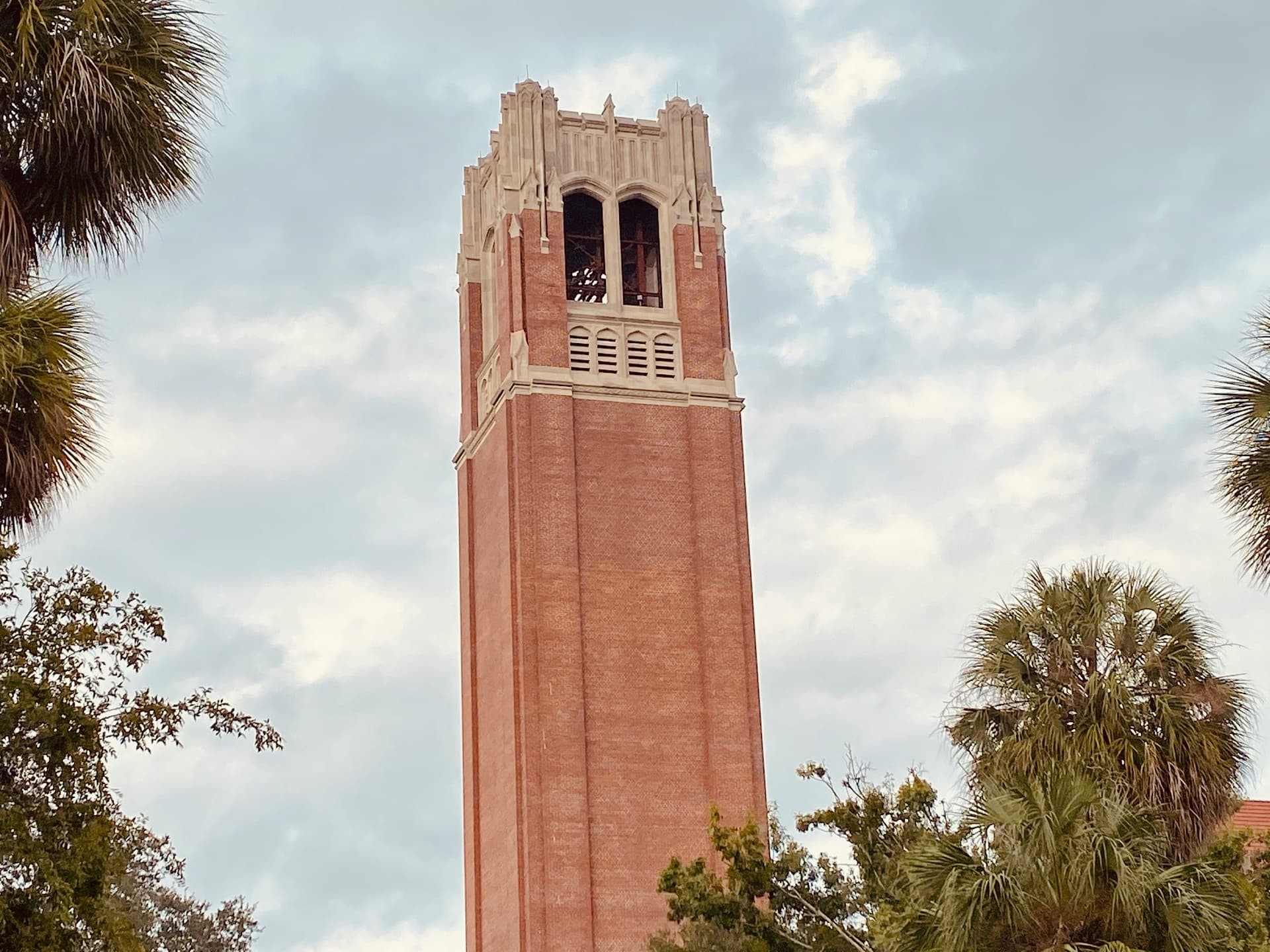
Where to Live Near the University of Florida in Gainesville
Moving off campus at UF is when Gainesville starts to feel like your city rather than just your school. The dorms served their purpose, but the jump to your own apartment changes how you eat, how you study, where you spend your weekends, and how much of Gainesville you actually experience. The problem is that the off-campus housing market in Gainesville is enormous, confusing, and designed to get you to sign a lease before you understand what you are signing.
Gainesville has more than 60 off-campus apartment communities targeting UF students. Most rent by the room, which means you are signing an individual lease for your bedroom and sharing common spaces with roommates you may or may not have chosen. Rents range from around $550 per room in a 4x4 thirty minutes from campus by bus to $1,300 or more per room in a new luxury build steps from the stadium. The spread is wide enough that the same monthly payment can get you a very different living experience depending on where you look and what tradeoffs you are willing to make.
The leasing cycle in Gainesville moves fast. Most students sign leases in the fall for the following August, and by spring the best floor plans in the most popular buildings are already taken. If you are reading this and it is already February or March, you still have options, but the window is narrowing. Subleases are common over summer, and student Facebook groups are the best places to find them.
This guide covers the neighborhoods and areas where UF students actually live off campus, what each one costs, the bus routes that connect them to campus, and three properties worth looking at. Every apartment in Gainesville will tell you they are the best. This guide will tell you what is actually different about each option and what the tradeoffs are.
| Area | Per Room | Best For | Tradeoff | Campus Access |
|---|---|---|---|---|
| Midtown | $1,000–$1,300 | Walking to class, nightlife, game days | Noisy, expensive, thin walls | Walk: 3–10 min |
| South & Sorority Row | $900–$1,200 | Greek life, UF Health, Innovation Hub | Game day traffic, limited nightlife | Walk/bike: 5–15 min |
| Downtown / Duckpond | $700–$1,000 | Grad students, character homes, quieter | Fewer amenities, older stock | Bike: 10–15 min |
| Archer Road / SW | $550–$800 | Budget-friendly, shopping access | Bus commute 20–30 min, car helpful | Bus: 20–30 min |
| West / NW Gainesville | $600–$900 | Quiet, affordable, grad-friendly | Farthest from campus, car recommended | Bus/car: 15–25 min |
In this guide
- Midtown
- South & Sorority Row
- Downtown / Duckpond
- Archer Road / SW Gainesville
- West / NW Gainesville
- Know Before You Sign
- The Case for Living Off Campus at UF
Midtown
Per room: $1,000–$1,300 | Walk to campus: 3–10 min | Nightlife: yes
Midtown is the center of off-campus student life at UF. It sits directly north of campus along University Avenue and extends up to about 8th Avenue, with the commercial strip running along West University. If you want to roll out of bed and walk to class in under ten minutes, eat lunch at home between lectures, and be within walking distance of bars and restaurants on a Friday night, Midtown is where you end up.
The housing stock is almost entirely purpose-built student apartments: newer mid-rise buildings with by-the-room leasing, furnished units, resort-style pools, rooftop lounges, fitness centers, and study rooms. The Standard, Sweetwater, Stadium House, and Hub on University are all in this zone. The buildings compete aggressively on amenities because the location is the same for all of them.
The tradeoff is cost and construction quality. Midtown is the most expensive student area in Gainesville, and forum sentiment is consistent on one point: most of these buildings look luxury on the outside but have thin walls, cheap finishes behind the surface materials, and noise levels that make studying in your apartment difficult on weekends. Fire alarms going off, hallway noise, and party activity are common complaints across almost every Midtown property. If you are a light sleeper or need quiet study space at home, this will be a real issue.
The honest case for Midtown is convenience and social life. You will not need a car. You will be in the middle of everything. Game days are at your doorstep. If those things matter more to you than quiet and value, Midtown delivers.
The Standard (Gainesville)
Studios to 6-bedroom floor plans | Landmark Properties | From ~$1,200/room
- Landmark Properties is a vertically integrated student housing developer and operator known for upscale, amenity-heavy communities near flagship universities.
- The Standard is Landmark's flagship brand, and the Gainesville location is one of their premier properties.
- Rooftop pool, fitness center, study lounges, parking available.
- Landmark builds, owns, and manages their properties directly, which tends to produce more consistent maintenance and leasing than third-party management.
- The 'standard' reputation is earned: solid across the board, not the flashiest or cheapest, but reliable.
South & Sorority Row
Per room: $900–$1,200 | Walk/bike to campus: 5–15 min | Greek life adjacent
The area south of University Avenue and extending toward Archer Road includes Sorority Row, the Innovation District, and the neighborhoods surrounding UF Health Shands Hospital. This is where students in Greek life, health sciences, and the innovation/entrepreneurship programs tend to cluster. The proximity to the medical campus makes it a natural fit for students doing clinical rotations or working at Shands.
The housing here is a mix of newer student apartment complexes and some older townhouse-style communities. The Griffin, Theory Gainesville, and UFORA are newer builds in this zone that offer modern finishes and amenity packages. The area is walkable to the south side of campus and bikeable to most of the rest. Game day traffic is real, and parking on football Saturdays requires planning.
The Innovation District adds something the other student areas do not: proximity to UF’s Innovation Hub, Opus Coffee, and a cluster of startup activity that makes this area feel more professionally oriented than Midtown. If you are the kind of student who is building something outside of class, the Innovation District puts you closer to that ecosystem.
Theory Gainesville
Studios and shared floor plans | Peak Made Real Estate | From ~$1,000/room
Downtown / Duckpond
Per room: $700–$1,000 | Bike to campus: 10–15 min | Quieter, character homes
Downtown Gainesville and the adjacent Duckpond neighborhood sit east of campus and offer a fundamentally different living experience than the purpose-built student complexes in Midtown. Duckpond is one of Gainesville’s oldest neighborhoods, with tree-lined streets, historic homes from the early 1900s, and a quieter residential energy. Many students in this area rent rooms in shared houses rather than signing individual leases in apartment complexes.
The appeal is character and cost. A room in a shared house in Duckpond can run $700 to $900, meaningfully cheaper than Midtown, with more space and more personality. Downtown Gainesville adds Bo Diddley Plaza, local restaurants, coffee shops, and the Santa Fe College downtown campus. The Hippodrome Theatre and the weekly farmers market give the area a cultural texture that the student apartment corridors lack.
The tradeoff is distance and infrastructure. You are bikeable to campus but not walkable in the way Midtown is. The housing stock is older, which means fewer amenities (no pools, no fitness centers, no study lounges) and more variability in quality. Maintenance depends on your specific landlord rather than a corporate management team. Grad students and upper-level undergrads tend to gravitate here because the quieter pace and lower cost match a different stage of college life.
Archer Road / SW Gainesville
Per room: $550–$800 | Bus to campus: 20–30 min via RTS | Budget pick
The Archer Road corridor running southwest from campus is where the budget math works best for students who are willing to trade proximity for savings. This area is anchored by Butler Plaza and Celebration Pointe, which means you have every chain restaurant, grocery store, and retail option within driving distance. The housing stock is a mix of student apartment communities that are a few years older and competitively priced because they are farther from campus.
Lexington Crossing, Hideaway, Canopy, and Gainesville Place are all in this zone. Rents run $550 to $800 per room for a 3x3 or 4x4, which is roughly half what you would pay in Midtown for a similar bed-and-bath configuration. The RTS bus system connects this area to campus, with direct routes that run regularly during the academic year. The bus ride is 20 to 30 minutes depending on your stop and the time of day.
The honest tradeoff is that you are commuting. The bus is free with your Gator 1 card, but a 30-minute ride each way changes how you use your day. Spontaneous trips back to your apartment between classes are not practical. The area is car-friendly but not walkable to campus. If your budget is tight and you are comfortable with the commute, SW Gainesville delivers the most space for the least money.
Hideaway Gainesville
2x2, 3x3, and 4x4 floor plans | Coastal Ridge Real Estate | From ~$650/room
West / NW Gainesville
Per room: $600–$900 | Bus/car: 15–25 min | Quiet, grad-friendly
The western and northwestern parts of Gainesville extend toward Newberry and Haile Village and attract a different kind of student: graduate students, professional students, and those who work at UF but want separation between campus life and home life. Haile Village in particular has a small-town feel with a farmers market, walkable commercial strip, and well-maintained townhomes that feel nothing like the student apartment corridor along University Avenue.
Rents run $600 to $900 per room, or $1,000 to $1,400 for a full one-bedroom apartment. The area is quiet, the housing stock tends to be better maintained than the high-turnover student complexes, and parking is free and plentiful. The tradeoff is distance: you are 15 to 25 minutes from campus by car or bus, and the social energy of campus life is something you drive to rather than walk into.
For students in graduate or professional programs who value quiet, space, and a lower price point over proximity and social scene, West Gainesville is the best answer in the market. The Cooperative Living Organization (CLO), located across the street from campus, is also worth noting: $470 per month with meals included for students who want communal living at the lowest possible cost.
Gainesville’s electric utility
Gainesville Regional Utilities (GRU) provides electricity. Bills can be higher than expected, especially in summer when AC runs constantly. Budget $80 to $150 per month for electricity depending on your unit size and usage. Some all-inclusive lease packages include utilities; if yours does not, factor this into your total monthly cost.
Know Before You Sign
By-the-room leasing is the norm
You sign an individual lease for your bedroom and bathroom, and the management company assigns roommates for the shared living space if you do not bring your own. This means your rent obligation is independent of your roommates, which protects you if someone moves out, but it also means you may be living with people you did not choose. Ask how the roommate matching process works before you sign.
Parking costs extra
Parking costs extra at almost every property near campus and can add $150 to $350 per month depending on the building. Some Midtown properties do not allow residents to get neighborhood parking passes, which means you are paying for garage parking or finding street parking twenty minutes away. If you have a car, confirm the parking situation before you sign.
RTS bus system
The RTS bus system is free for UF students with a Gator 1 card. Routes 20, 21, and 34 are the most common for students commuting from SW Gainesville. The bus is reliable during the academic year but service drops significantly during breaks and summer. If you are staying for summer, plan for reduced bus frequency.
Subleasing is common
If you need housing for summer only, or if you need to leave a lease early, student Facebook groups are the primary marketplace. Summer subleases often go for 30 to 50 percent below the lease rate because students are trying to avoid paying rent on an empty room.
Leases run August to July
Most students sign in the fall for the following year. By February and March, the most popular floor plans in the best-located buildings are taken. If you are an incoming freshman or transfer student admitted in spring, act quickly and consider subleasing as a bridge if your preferred building is full.
The Case for Living Off Campus at UF
Off-campus housing at UF is not just cheaper than the dorms. It is a fundamentally different way to experience college. You learn to manage a lease, split utilities, navigate a city, and build a daily routine that is yours rather than one that is structured for you. Gainesville’s off-campus market is large enough that options exist at every budget level, from $550 per room in a 4x4 on Archer Road to $1,300 in a luxury build steps from the stadium.
The best advice from students who have been through it: prioritize location relative to your actual daily routine, not the amenity list in the marketing brochure. A rooftop pool matters less than whether you can walk to your 8 a.m. lecture. A jumbotron screen matters less than whether the walls are thick enough to study in your room. Free parking matters less if you never drive to campus. Match the apartment to how you actually live, not how the leasing office wants you to imagine living.
Gainesville is a college town in the best sense: the city is organized around the university, the bus system is built for students, the restaurant and bar scene caters to a young population, and the natural environment (Paynes Prairie, freshwater springs, the Hawthorne Trail) adds an outdoor dimension that most college towns cannot match. The apartment you choose determines how much of that you actually access. Choose well.
Trying to figure out which of these actually fits how you want to live?
brightplace is building a better way to find your next apartment.
Explore more neighborhoods at brightplace.ai
Frequently Asked Questions About UF Student Housing in Gainesville
How much does off-campus housing near UF cost?
Off-campus rents near UF start around $550 per room in a 4x4 thirty minutes from campus by bus and reach $1,300 or more per room in a new luxury build steps from the stadium. Midtown runs $1,000 to $1,300 per room, while Archer Road and SW Gainesville run $550 to $800.
When should I sign a lease for off-campus housing at UF?
Most UF students sign leases in the fall for the following August, and leases run August to July. By February and March, the most popular floor plans in the best-located buildings are taken. Students admitted in spring should act quickly and consider a sublease as a bridge if their preferred building is full.
What is the best area to live near UF if I want to walk to class?
Midtown is the best area for walking to class, with most buildings 3 to 10 minutes from campus on foot. It sits directly north of campus along University Avenue, with bars and restaurants nearby. It is also the most expensive student area, and residents commonly report thin walls and weekend noise.
What is the cheapest place to live near the University of Florida?
Archer Road and SW Gainesville are the budget pick, with rooms running $550 to $800 in a 3x3 or 4x4, roughly half of Midtown prices. The tradeoff is a 20 to 30 minute RTS bus ride. The Cooperative Living Organization across from campus costs $470 per month with meals included.
Is the bus free for UF students in Gainesville?
Yes, the RTS bus system is free for UF students with a Gator 1 card. Routes 20, 21 and 34 are the most common for students commuting from SW Gainesville. The bus is reliable during the academic year, but service drops significantly during breaks and summer, so plan for reduced frequency if you stay.
How much does parking cost at apartments near UF?
Parking costs extra at almost every property near campus and can add $150 to $350 per month depending on the building. Some Midtown properties do not allow residents to get neighborhood parking passes, leaving garage parking or distant street parking. If you have a car, confirm the parking situation before signing a lease.
Where do UF graduate students live in Gainesville?
Many UF graduate students choose Downtown and Duckpond or West and NW Gainesville. Duckpond offers rooms in shared historic houses for $700 to $900 and is bikeable to campus. West Gainesville, including Haile Village, runs $600 to $900 per room, with free parking and a quieter pace, but sits 15 to 25 minutes away.
How much are utilities for students in Gainesville?
Gainesville Regional Utilities provides electricity, and bills can run higher than expected in summer when air conditioning runs constantly. Budget $80 to $150 per month for electricity depending on your unit size and usage. Some all-inclusive lease packages include utilities. If yours does not, factor electricity into your total monthly cost.
Prices and availability change. Verify all details directly with the property before making a decision.
brightplace student housing guide | gainesville, fl | 2026
How this article was made: brightplace used AI tools to help research, draft and update this article.