Tampa: A Renter's Orientation
Tampa: A Renter's Orientation
Tampa is not Miami. That distinction matters, and people who arrive without understanding it often end up either disappointed or pleasantly surprised for the wrong reasons. Miami is expensive, internationally oriented, and feels like a separate country from the rest of Florida. Tampa is something else: a mid-sized Southern city with a genuinely distinct Latin heritage, an exploding food and arts scene, and an outdoor lifestyle built around water rather than mountains.
The Tampa-St. Pete-Clearwater metro holds around 3.34 million people. After absorbing extraordinary migration in 2020 through 2023, the pace slowed considerably in 2024, with roughly 10,000 new arrivals versus more than 30,000 the prior year. That slowdown means the rental market has softened and conditions for renters are better now than two years ago. The city also weathered Hurricanes Helene and Milton in 2024, events that clarified the insurance and flood zone conversation for anyone thinking about putting down roots here.
One more thing to say upfront, because honest Tampa transplants say it consistently: Florida has a way of wearing off. The first summer is exciting. The second is an adjustment. By year three, the heat and humidity are just part of life in a way that requires genuine acclimatization. Go in with that expectation rather than the tourist version of Florida.
| Neighborhood | 1BR Rent Range | Best For | Tradeoff | Transit |
|---|---|---|---|---|
| Downtown / Water Street | $2,500 to $3,000+ | Young professionals, walkability | Highest rents, still building out | Streetcar, Riverwalk |
| Seminole Heights | $1,600 to $2,000 | Creatives, food scene, character | Some transitional blocks | Car recommended |
| Ybor City | $1,500 to $1,900 | Culture, nightlife, history | Weekend noise on 7th Ave | Streetcar to downtown |
| South Tampa / Hyde Park | $1,950 to $2,700+ | Families, Bayshore, walkable strip | Premium pricing, limited inventory | Bus, bikeable |
| Tampa Heights | $1,800 to $2,600 | Arts, proximity to downtown | Mid-transition, mixed blocks | Walkable to downtown |
| Suburbs (Wesley Chapel, Brandon) | $1,400 to $1,900 | Space, schools, new construction | Car-dependent, far from core | Car required |
In this guide
- The Mental Map
- Downtown and Water Street
- Seminole Heights
- Ybor City
- South Tampa / Hyde Park
- Tampa Heights and Armature Works
- Suburban Hillsborough County
- Know Before You Sign
The Mental Map
Tampa proper sits at the top of Tampa Bay, with the Hillsborough River cutting through downtown. The city is loosely organized into distinct zones: Downtown and the Channel District on the waterfront, Ybor City to the northeast, Seminole Heights and Tampa Heights north of downtown, South Tampa extending southwest toward MacDill Air Force Base, and suburban sprawl reaching north and east across Hillsborough County.
St. Petersburg sits across the bay on the Pinellas Peninsula and is a genuinely different city with a different character. St. Pete has a more established arts scene, better walkability in its core, and a stronger independent restaurant culture. Many transplants treat the two as interchangeable because both get marketed as Tampa Bay. They are not interchangeable. If you are drawn to St. Pete specifically, treat it as its own search.
Clearwater and the beach communities in Pinellas County are a third zone. Clearwater Beach is about 25 miles from downtown Tampa, typically 35 to 45 minutes in normal traffic. The beaches are a genuine amenity but not a commute-friendly distance from most Tampa employment centers, and this geography matters for how you experience the city day-to-day.
Downtown and Water Street / Channel District
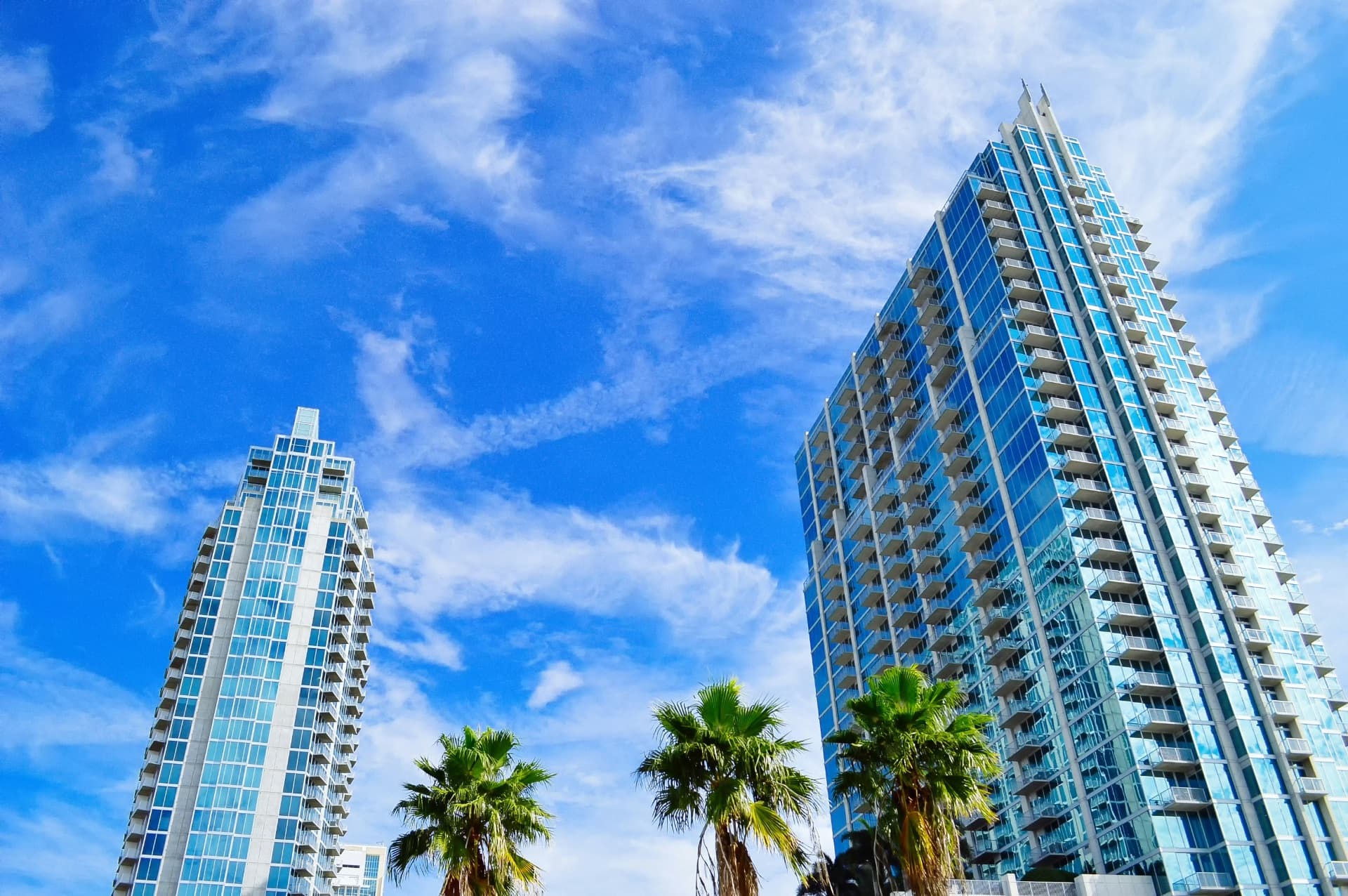
Tampa’s downtown has been transformed by the Water Street Tampa development, a multi-billion dollar mixed-use project that added residential towers, restaurants, and retail to what was previously underutilized waterfront. The Tampa Riverwalk runs along the Hillsborough River and connects the downtown core to Armature Works, a converted 1920s streetcar facility and food hall that functions as one of the better casual dining destinations in the city. Walkability and transit access are the strongest they have ever been. One-bedrooms in newer downtown towers run $2,500 to $3,000 or more, making it the most expensive part of the city.
Seminole Heights
Seminole Heights is where Tampa’s creative class landed, and the result is the city’s most interesting neighborhood for food. The 1920s bungalows, giant live oaks, and walkable stretch of North Florida Avenue have produced an independent restaurant and brewery culture that punches well above Tampa’s weight: Ella’s Americana Folk Art Cafe, Rooster & the Till, Ichicoro Ramen, and Independent Bar are among the anchors. It is artsy, dog-friendly, and genuinely neighborhood-feeling in a way that new construction corridors are not. One-bedrooms run roughly $1,600 to $2,000 depending on unit type. Some blocks on the edges are still transitional, so street-level context matters when evaluating specific listings.
Evelyn City Lofts
Managed by: RangeWater Real Estate | Starting from: From approximately $1,700/month
- Studios, 1-bedroom, and 2-bedroom apartments (245 units)
- First fully amenitized, institutional-quality apartment community in Seminole Heights
- Brand new construction with open-concept layouts and elevated finishes
- Pool, fitness center, clubhouse, business center, covered parking garage
Ybor City
Ybor City was founded in the 1880s as a cigar manufacturing hub by Cuban, Spanish, and Italian immigrant workers, and its brick streets, shotgun houses, and food traditions carry that history visibly. Seventh Avenue is the main commercial spine and doubles as Tampa’s nightlife corridor on weekends. Columbia Restaurant, the oldest continuously operating restaurant in Florida, has been in the same building since 1905. The neighborhood is genuinely diverse with a longstanding LGBTQ+ presence. For renters who want urban character, accessible nightlife, and price points below downtown, Ybor is worth serious consideration. The weekend noise on 7th Avenue is real Thursday through Saturday, which matters if you keep early hours.
South Tampa / Hyde Park
South Tampa is the city’s most established residential corridor, running from Hyde Park Village south along Bayshore Boulevard toward MacDill Air Force Base. Hyde Park Village is a walkable outdoor shopping and dining district with restaurants and independent retail within genuine walking distance of surrounding apartments. Bayshore Boulevard, a long waterfront sidewalk along Hillsborough Bay, is a genuine amenity for runners and cyclists. South Tampa skews older and more expensive. One-bedrooms in Hyde Park proper can reach or exceed $2,700. The military presence around MacDill brings steady demand to the southern peninsula.
MAA Hyde Park
Managed by: MAA | Starting from: From approximately $1,950/month
- 1-bedroom, 2-bedroom, and 3-bedroom apartments, townhomes, and carriage homes (474 units)
- Consistently well-reviewed by residents
- Two pools, 24-hour fitness center, EV charging stations
- Dog park with no breed or weight restrictions, on-site car care center
- Smart home technology, walk-in closets, upgraded kitchen options with granite countertops
- Walk to Hyde Park Village dining and retail; short drive or bike to Bayshore Boulevard
Tampa Heights and Armature Works
Tampa Heights sits directly north of downtown and has been the beneficiary of the Water Street investment ripple, with renovated Victorians, new apartment buildings, and the Armature Works food hall as a neighborhood anchor. It is still mid-transition, with long-time residents and new construction side by side. Proximity to downtown is genuine and for renters who want to be close to the core without paying downtown prices, it is a credible option. One-bedrooms tend to run $1,800 to $2,600.
Suburban Hillsborough County
Wesley Chapel, Brandon, Westchase, and New Tampa are where you go when you prioritize square footage, school quality, and newer construction over neighborhood walkability and energy. These areas absorbed the highest unit growth and offer lower rents per square foot than the urban core. They are also entirely car-dependent. If you have children and school quality is the first criterion, they make sense. If you are a young professional who wants to be able to walk somewhere after work, the tradeoff will be felt immediately.
Bainbridge Wesley Chapel
Managed by: Bainbridge Companies | Starting from: From approximately $1,800/month
- 1-bedroom, 2-bedroom, and 3-bedroom apartments (411 units, 858 to 1,466 sq ft)
- Highly rated by residents for maintenance responsiveness and staff quality
- Brand new (completed 2025), resort-style pool, fitness center, coworking spaces
- Dog park, EV charging, elevators
- Chef-inspired kitchens with quartz countertops, smart thermostats, keyless entry, in-unit washer/dryer
- Located near I-75 with access to Moffitt Cancer Center campus and Wesley Chapel commercial corridor
Know Before You Sign
The Rent Picture
Tampa rents have softened from their 2022 peak. City-wide one-bedroom averages range from around $1,335 to $1,700 depending on the data source and unit type, with downtown high-rises pulling the upper end considerably higher. The practical range for most renters in established neighborhoods is $1,600 to $2,000 for a one-bedroom, with Seminole Heights and Ybor at the lower end and downtown and South Tampa at the higher end.
New supply is still coming. Developers completed more than 12,000 units in 2024 with additional units projected through 2025. That supply pressure has created concession availability in some newer buildings, particularly in suburban corridors and downtown towers competing with new product. Renters willing to ask about move-in specials in large complexes may find meaningful savings off the listed rent.
Tampa is not cheap in the way people expect when they are moving from the Northeast. The cost of living gap is real compared to New York or Boston, but Tampa wages often do not match northeastern salaries either, especially outside of finance, tech, and professional services. If you are carrying a remote job with northeastern pay, the value calculus works clearly in your favor. If you are taking a local job, price out the full picture before assuming affordability.
Getting Around
Tampa is a driving city. You will need a car. I-275 and Dale Mabry Highway are the main arteries, and traffic on both can be significant during rush hours. Locals learn quickly which routes to avoid and when. The TECO streetcar runs through Ybor and downtown and is useful for those specific neighborhoods. Hillsborough Area Regional Transit runs buses, but they are not a primary transportation system for most residents.
The upside is access. Clearwater Beach is about 25 miles west. St. Pete Beach is 30 miles. The Gulf water is warm from April through October. For renters used to landlocked cities, the proximity of actual swimmable ocean as a weekend option is a genuine quality of life variable that shows up over and over.
Heat, Humidity, and the Summer Adjustment
Tampa summers require genuine acclimatization. June through September brings daily highs in the low to mid 90s with humidity that pushes the heat index closer to 100 to 105. Afternoon thunderstorms are a near-daily occurrence during summer and they provide the only natural relief the afternoons offer. The storms are typically brief and dramatic. The practical reality is that outdoor plans in summer happen in the morning or early evening. People who have lived here a long time structure their lives around this rhythm naturally.
Winters are genuinely mild, with average highs in the 60s and low 70s from November through March. This is the best version of Tampa: outdoor dining, beach days in February, and a quality of life that is difficult to find elsewhere in the continental US at this price point. The seasonal trade is real and knowing it in advance helps.
Tampa Is Not a Beach City
This is the thing many people discover after signing a lease. Tampa is a bay city, not a beach city. The Gulf beaches are real, accessible, and genuinely beautiful. But they are 25 to 35 miles from most Tampa neighborhoods, which makes them a destination rather than a daily walk. If proximity to the beach is your primary motivation for moving to Florida, St. Pete and Pinellas County are meaningfully better positioned than Tampa proper. If you want urban neighborhood infrastructure and do not mind the beach being a 40-minute drive, Tampa makes sense on its own terms.
Flood Zones, Storm Surge, and Hurricane Season
Hurricanes Helene and Milton in 2024 were a clarifying event for how many people think about Tampa geography. For renters, the direct financial liability is lower than for homeowners since you are not carrying the insurance and repair costs. But belongings can be destroyed and evacuation orders are real. Before signing a lease, check whether the address sits in FEMA Flood Zone AE or VE rather than the lower-risk X zone. Many homes in South Tampa along the bay and in low-lying parts of Ybor sit in higher-risk zones. Standard renters insurance does not cover flood damage to contents. Contents-only flood coverage through the NFIP is available to renters and worth pricing before you sign.
The NFIP has a 30-day waiting period before coverage activates. You cannot buy protection once a storm is already approaching. If you are in a flood-adjacent area, get covered before June 1 when hurricane season opens.
Hurricane season runs June 1 through November 30. Most residents live through the majority of seasons without a direct hit on Tampa specifically. But the cycle of watching storm tracks and making contingency plans for several months each year carries real psychological weight that honest Tampa transplants describe clearly. It is not just the storms themselves. It is the months of monitoring that precede and follow them. For people coming from regions with no equivalent experience, this is worth factoring in genuinely rather than dismissing.
If you are renting now but planning to buy eventually, factor in Florida’s homeowners insurance market, which averages around $2,625 per year and is rising in coastal zones.
The Food and Culture Case
Tampa’s food scene is genuinely good and consistently underrated nationally. The Cuban sandwich tradition is real and has been a point of local identity for over a century. Columbia Restaurant in Ybor has been running flamenco shows since 1905. Seminole Heights has built an independent restaurant density that rivals cities twice Tampa’s size. The Armature Works food hall consolidates a range of quality options in a single converted space. Gasparilla, the annual pirate festival running January through March, draws over 400,000 attendees and functions as the city’s signature cultural event. If food culture and civic identity matter to your daily life, Tampa will consistently surprise you.
Trying to figure out which of these actually fits how you want to live?
brightplace is building a better way to find your next apartment.
Explore more neighborhoods at brightplace.ai
Frequently Asked Questions About Renting in Tampa
How much is rent in Tampa?
Citywide one-bedroom averages in Tampa run around $1,335 to $1,700 depending on the data source and unit type, and rents have softened from their 2022 peak. The practical range in established neighborhoods is $1,600 to $2,000, with Seminole Heights and Ybor at the lower end and downtown and South Tampa higher.
What are the best neighborhoods in Tampa for renters?
Tampa's main rental areas are Downtown and Water Street, Seminole Heights, Ybor City, South Tampa and Hyde Park, and Tampa Heights. Suburban Hillsborough County options such as Wesley Chapel and Brandon offer more space and newer construction but are car-dependent. Each area trades off rent, walkability and distance from the urban core differently.
Do you need a car in Tampa?
Yes, Tampa is a driving city and most renters will need a car. I-275 and Dale Mabry Highway are the main arteries, and rush-hour traffic on both can be significant. The TECO streetcar is useful in Ybor and downtown, and Hillsborough Area Regional Transit runs buses, but they are not a primary transportation system for most residents.
How far is Tampa from the beach?
Tampa is a bay city, not a beach city. Clearwater Beach is about 25 miles from downtown Tampa, typically 35 to 45 minutes in normal traffic, and St. Pete Beach is about 30 miles away. That makes the Gulf beaches a destination rather than a daily walk. St. Pete and Pinellas County sit closer to the beaches.
Do renters in Tampa need flood insurance?
Tampa renters should price flood coverage, because standard renters insurance does not cover flood damage to contents. Contents-only coverage through the NFIP is available to renters and has a 30-day waiting period, so buy it before June 1 when hurricane season opens. Before signing, check whether the address sits in FEMA Flood Zone AE or VE.
Which Tampa neighborhood is best for food?
Seminole Heights is Tampa's most interesting neighborhood for food, with an independent restaurant and brewery culture along a walkable stretch of North Florida Avenue. It has 1920s bungalows and giant live oaks, and one-bedrooms run roughly $1,600 to $2,000 depending on unit type. Some blocks on the edges are still transitional.
What is the most expensive neighborhood to rent in Tampa?
Downtown Tampa, including the Water Street area, is the most expensive part of the city, with one-bedrooms in newer towers running $2,500 to $3,000 or more. The Tampa Riverwalk connects the downtown core to Armature Works, and walkability and transit access are the strongest they have ever been. Hyde Park one-bedrooms can also reach or exceed $2,700.
What is the weather like in Tampa?
Tampa summers, June through September, bring daily highs in the low to mid 90s and a heat index closer to 100 to 105, with near-daily afternoon thunderstorms. Outdoor plans shift to mornings and early evenings. Winters are mild, with average highs in the 60s and low 70s from November through March.
Prices and availability change. Verify all details directly with the property before making a decision.
brightplace neighborhood guide | tampa, fl | 2026
How this article was made: brightplace used AI tools to help research, draft and update this article.