Salt Lake City: A Renter's Orientation
A city built around the mountains, with rents that haven't caught up to the access
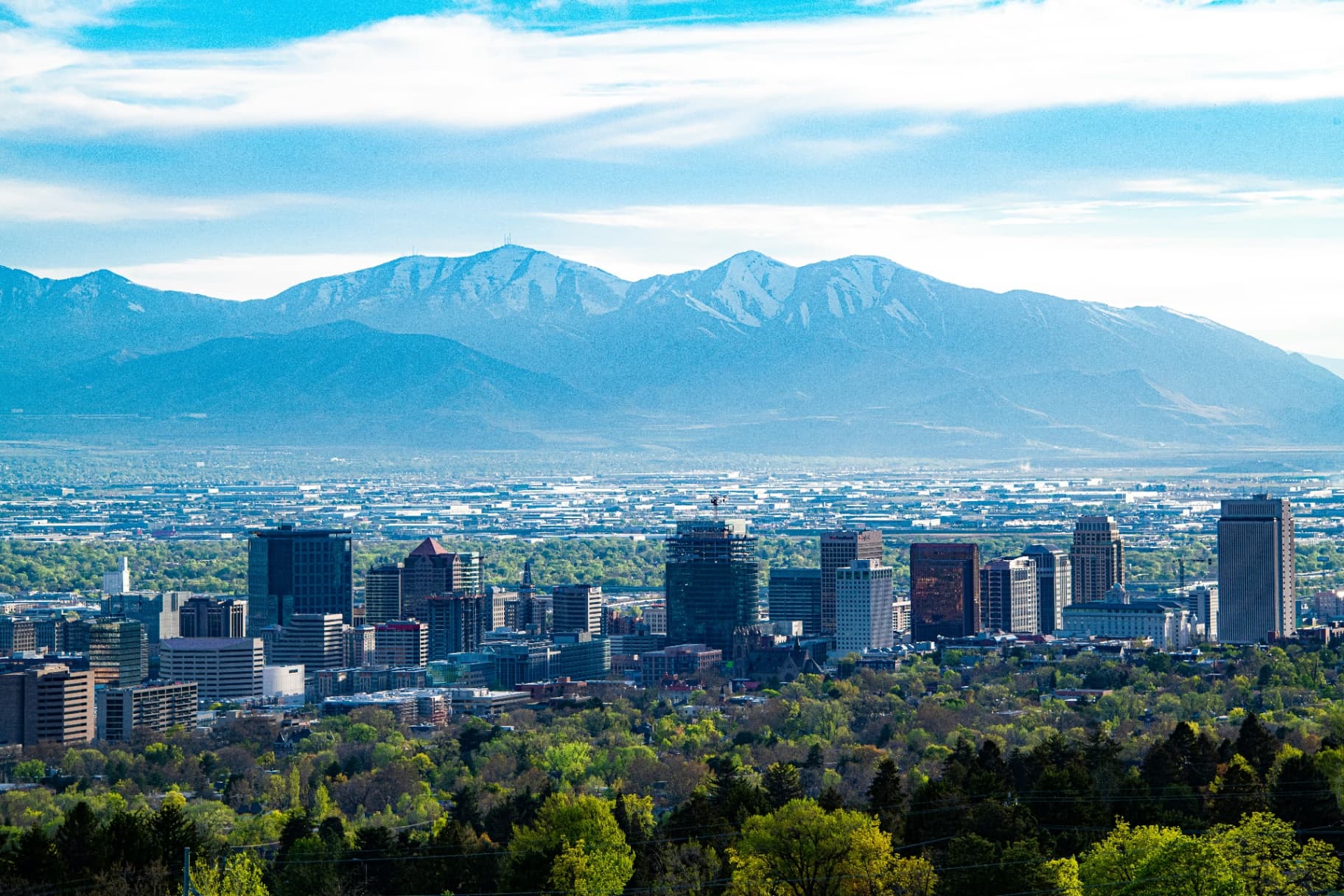
A city built around the mountains, with rents that haven’t caught up to the access
Salt Lake City is one of the most misunderstood cities in the American West. Outsiders arrive with a mental image built on Temple Square and ski tourism. Neither captures what it’s actually like to live here. The city has been absorbing a wave of California and Pacific Northwest transplants drawn by outdoor access, the growing tech sector, and rents that remain meaningfully lower than Denver or Seattle, even if they’re no longer the bargain they once were. The metro has reached 1.23 million people and is still growing.
There is also a version of this conversation that is honest about who SLC works for and who it doesn’t. The people who love it most tend to say the same thing: if outdoor recreation is a genuine priority in your life, Salt Lake has almost no peer in the contiguous US. If it isn’t, the city can feel quieter and more constrained than its growth narrative suggests. This orientation gives you enough to calibrate which version applies to you.
The Mental Map
Salt Lake City proper sits in a valley flanked by the Wasatch Mountains to the east and the Oquirrh Mountains to the west. The city runs on a grid system with addresses numbered from Temple Square outward in all four directions. This makes navigation simple once you learn it. Nearly everything meaningful for renters falls in a compact zone east of I-15 and south of the Capitol.
The neighborhoods most people ask about cluster within a few miles of each other: Downtown, Sugar House, the Avenues, 9th & 9th, and Central 9th. Further out, Millcreek and Holladay feel suburban but sit within Salt Lake County and offer a wider variety of dining, nightlife, and independent retail. Draper, Sandy, and South Jordan are family-oriented and increasingly distant from the cultural core. If walkable social infrastructure, diverse dining, and independent retail matter to you, start your search in the city proper and Salt Lake County neighborhoods rather than the outer suburbs to the south.
| Neighborhood | Best For | 1BR Rent Range | Walkability | Vibe |
|---|---|---|---|---|
| Downtown / Central 9th | Young professionals, walkability | $1,600 - $2,000 | Highest in SLC | Breweries, arts district, TRAX access |
| Sugar House | Character, park access, restaurants | $1,400 - $1,700 | High | Tree-lined, Craftsman bungalows, local shops |
| The Avenues | Historic charm, hillside views | $1,400 - $1,700 | Moderate to high | Victorian homes, educated, progressive |
| 9th & 9th / East Central | Creatives, walkable retail strip | $1,400 - $1,700 | High | Art-house cinema, boutiques, neighborhood identity |
| Rose Park / West Side | Budget-conscious, value-oriented | $1,100 - $1,200 | Low | Affordable, culturally rich, independent businesses |
| Suburbs (Sandy, Draper, Millcreek) | Families, space, school quality | $1,200 - $1,500 | Low | Car-dependent, family-oriented suburban |
In this guide
- The Mental Map
- Downtown and Central 9th
- Sugar House
- The Avenues
- 9th & 9th and East Central
- Rose Park and the West Side
- Suburban Salt Lake County
- Know Before You Sign
Downtown and Central 9th
Downtown Salt Lake has transformed considerably over the past decade. The Granary District and Central 9th have attracted breweries, independent restaurants, and creative businesses into previously industrial blocks. The Blocks arts district runs cultural programming year-round along Main Street. It’s walkable by SLC standards, with a walk score in the low 80s and TRAX light rail connecting to the airport and the University of Utah. One-bedrooms in newer downtown high-rises run $1,600 to $2,000 depending on building and finishes.
Sugar House
Sugar House is the neighborhood most transplants hear about first, and the reputation holds. Tree-lined streets, a mix of Craftsman bungalows and newer apartments, Sugar House Park, and a commercial strip with independent coffee shops, bookstores, and restaurants within walking distance. It has more character per block than most SLC neighborhoods. One-bedrooms average $1,400 to $1,700 depending on unit type and age. The downside is that popularity has pushed rents toward the upper end of the city range and parking near the commercial core can be tight.
The Avenues
The Avenues, north of downtown and climbing the hillside below the Capitol, is SLC’s most historic neighborhood. Victorian and Craftsman homes line steep streets with mountain views. Walkable to Memory Grove Park and City Creek Canyon trails. The community skews educated and progressive, with a strong independent and creative identity. Avenues Proper, Publik Coffee, and Avenues Bistro anchor the local food and drink scene. Rents are similar to Sugar House, with variation by unit age and elevation.
9th & 9th and East Central
The intersection of 900 East and 900 South anchors one of the most walkable retail strips in the city, with independent restaurants, Tower Theatre (a historic art-house cinema), boutiques, and coffee. The surrounding neighborhood feels more urban and creative than suburban. Popular with young professionals and long-time Salt Lakers who want neighborhood identity. Inventory is smaller since it’s primarily a residential district with a commercial node, but available units rent quickly.
Rose Park and the West Side
If you’re working remotely and your primary concern is keeping rent under $1,200 for a one-bedroom, the West Side is where to look. Rose Park, Glendale, and Jordan Meadows are the most affordable neighborhoods in Salt Lake County and have a culturally rich, neighborhood-first character with strong independent food options. The tradeoff is distance from the coffee-shop-and-brewery cultural core, and these neighborhoods are car-dependent in ways that Sugar House and the Avenues are not.
Suburban Salt Lake County
Millcreek, Holladay, and Cottonwood Heights offer a wider range of dining and retail options and feel closer to the cultural core. Sandy and Draper are further south, more suburban, and have less walkable social infrastructure. For families prioritizing school quality and space per dollar, these areas make sense. For young singles or professionals looking for walkable nightlife and a dense social scene, most end up in city neighborhoods eventually regardless.
Know Before You Sign
The Rent Picture
The practical range for well-located apartments in desirable city neighborhoods is $1,400 to $1,800, with Sugar House and 9th & 9th at the higher end and West Side neighborhoods in the $1,100 to $1,200 range. Supply increased significantly since 2022, with a wave of new construction across downtown and suburban corridors. That has created concession availability in some buildings, particularly larger complexes. If you’re flexible on exact location, asking about move-in specials can produce real savings off the asking rent.
The city is meaningfully more affordable than Denver, Seattle, or the Bay Area. Remote workers with West Coast salaries notice the difference quickly. But local wages have not kept pace with housing costs for people in local employment, so the affordability calculation looks different depending on your income source.
Getting Around
Salt Lake City is a car city in practice. TRAX light rail runs from downtown through Sugar House, out to Sandy and South Jordan, and up to the University of Utah and the airport. For renters near a TRAX line with downtown jobs, it’s genuinely usable. For everyone else, a car is required. Parking is available and less painful than in coastal cities, but urban core neighborhoods fill street parking on evenings and weekends.
The practical upside: Big Cottonwood and Little Cottonwood canyons, Snowbird, Alta, Brighton, and Solitude ski resorts are all within 30 to 45 minutes of most SLC neighborhoods on a normal day. The 2034 Winter Olympics are coming to Utah, with infrastructure investment already underway in the canyons.
Outdoor Access
This is the primary thing people move here for, and it delivers. Eleven world-class ski resorts sit within an hour of downtown. The Wasatch Range offers hiking and mountain biking from early spring through late fall. Liberty Park functions as the city’s Central Park equivalent. Millcreek Canyon and City Creek Canyon are accessible from city neighborhoods without a car. For people for whom outdoor recreation is a genuine priority, Salt Lake City’s access is almost unmatched among American cities of its size.
The Outdoor Question
People who’ve lived in SLC and then left are fairly direct about this: if outdoor recreation is central to your life, Salt Lake has almost no peer. If it isn’t, the city can feel quieter and more constrained than its growth narrative suggests. There is a downtown food and bar scene, there are arts institutions, there is a music scene. But the most honest version of living here for transplants is that social infrastructure is built primarily around the outdoors. Skiing, mountain biking, hiking, climbing, and running are how many people meet people. If none of those apply to you, building a social life requires more intentional effort than in a city with more alternative social infrastructure.
Cultural Context
Salt Lake City has a distinct culture that’s worth understanding before you move. The city proper is progressive, diverse, and home to a growing transplant community. The neighborhoods in this guide, Sugar House, the Avenues, 9th & 9th, Central 9th, and Downtown, are where independent restaurants, creative businesses, and nightlife are most concentrated. You can live a full life in SLC with walkable access to culture, food, and social life.
That said, transplants consistently note that building a social network in SLC rewards initiative. The outdoor community is the fastest on-ramp: joining a ski group, a running club, or a cycling team connects you quickly. Professional networking tends to move through personal relationships rather than formal events, which means it builds slower but often deeper. For singles, the dating scene is smaller than in Portland or Denver but active, particularly in the city neighborhoods covered in this guide.
Liquor laws are genuinely unusual. Utah has state-controlled liquor stores, restrictions on bar hours, and legacy regulations that confuse most newcomers. The laws have relaxed over the years but remain distinctive compared to most states. You adjust.
Air Quality and Weather
Salt Lake’s valley geography means air quality varies by season in ways worth knowing before you sign a lease. Winter inversions, where cold air gets trapped in the valley below a warmer layer, can reduce air quality for stretches of days at a time, typically between December and January. The flip side: a short drive up the canyon puts you above it, and most winter days are sunny and clear. Long-term residents keep an eye on air.utah.gov and plan accordingly.
Late summer can bring wildfire smoke from neighboring states into the valley, though the severity varies year to year. And the Great Salt Lake’s receding shoreline is an environmental issue the state is actively working to address.
The practical takeaway for renters: a portable air purifier is a common SLC apartment accessory, and checking the AQI before outdoor plans is a habit most residents pick up quickly. None of this stops people from living active outdoor lives here. It’s context, not a dealbreaker.
Trying to figure out which of these actually fits how you want to live?
brightplace is building a better way to find your next apartment.
Explore more neighborhoods at brightplace.ai
Frequently Asked Questions About Salt Lake City Neighborhoods for Renters
What are the best neighborhoods in Salt Lake City for renters?
The Salt Lake City neighborhoods renters ask about most are Downtown and Central 9th, Sugar House, the Avenues, 9th & 9th, and Rose Park and the West Side. Most sit within a few miles of each other east of I-15. Renters who want walkable dining and independent retail should start in the city proper rather than the outer southern suburbs.
How much is rent in Salt Lake City?
Well-located apartments in desirable Salt Lake City neighborhoods practically run $1,400 to $1,800, based on market estimates as of September 2026. One-bedrooms in newer downtown high-rises run $1,600 to $2,000, while West Side neighborhoods run about $1,100 to $1,200. New construction since 2022 has created move-in concessions in some larger buildings.
Do you need a car in Salt Lake City?
Most renters need a car, since Salt Lake City is a car city in practice. TRAX light rail runs from downtown through Sugar House, out to Sandy and South Jordan, and up to the University of Utah and the airport, so it works for renters near a line with downtown jobs. Parking is less painful than in coastal cities.
What is the most walkable neighborhood in Salt Lake City?
Downtown and Central 9th have the highest walkability in Salt Lake City, with a walk score in the low 80s. The Granary District and Central 9th have breweries, independent restaurants and creative businesses, and TRAX light rail connects downtown to the airport and the University of Utah. Sugar House and 9th & 9th also rate high.
What is the cheapest neighborhood to rent in Salt Lake City?
Rose Park, Glendale and Jordan Meadows on the West Side are the most affordable neighborhoods in Salt Lake County, with one-bedrooms around $1,100 to $1,200. They have a neighborhood-first character with strong independent food options. The tradeoff is car dependence and distance from the coffee-shop-and-brewery core around Sugar House and the Avenues.
What is Sugar House like for renters?
Sugar House is the Salt Lake City neighborhood most transplants hear about first, with tree-lined streets, Craftsman bungalows, newer apartments and Sugar House Park. Its commercial strip has independent coffee shops, bookstores and restaurants within walking distance. One-bedrooms average $1,400 to $1,700, and parking near the commercial core can be tight.
How close are ski resorts to Salt Lake City?
Snowbird, Alta, Brighton and Solitude are all within 30 to 45 minutes of most Salt Lake City neighborhoods on a normal day, and eleven ski resorts sit within an hour of downtown. Big Cottonwood and Little Cottonwood canyons are close by, and Millcreek Canyon and City Creek Canyon are reachable from city neighborhoods without a car.
How is the air quality in Salt Lake City?
Air quality in Salt Lake City varies by season. Winter inversions trap cold air in the valley and can reduce air quality for days at a time, typically between December and January, and late summer can bring wildfire smoke. Many residents keep a portable air purifier and check air.utah.gov or the AQI before outdoor plans.
Rent data reflects market estimates as of September 2026 and is subject to change. Verify current availability directly with each community.
brightplace neighborhood guide | salt lake city, ut | 2026
How this article was made: brightplace used AI tools to help research, draft and update this article.