Lexington: Student Neighborhoods Near UK
Lexington: Student Neighborhoods Near UK
(per person)
Moving off campus at the University of Kentucky is one of the first real decisions you make as a student, and it is more consequential than it looks. UK has broken enrollment records every year since 2019 and now has more than 37,800 students. The university is adding people faster than it is adding beds, and the pressure lands squarely on the neighborhoods around campus. The rental market near UK is competitive in ways that catch first-time renters off guard. Lexington rewards proximity in ways that do not show up in the monthly rent figure. A unit that is $100 cheaper but a mile from class can easily cost you more once you factor in the UK commuter parking permit ($42 per month), the campus bus schedule, and the daily friction of a commute you will repeat twice a day in every variation of Kentucky weather.
There is also the grocery problem. Students living south of campus, in the purpose-built complexes along South Broadway and Red Mile Road, report a 30 to 45-minute walk to the nearest grocery store. That means Instacart fees or 15,000 steps on a Tuesday, neither of which you budgeted for.
This guide covers five areas where UK students actually land, what each one delivers, what it costs you beyond the rent line, and specific properties worth knowing in each area.
| Neighborhood | Distance to Campus | Rent (per person/mo) | Best For | Tradeoff |
|---|---|---|---|---|
| Woodland Ave / South Hill | 4 to 8 blocks | $700 to $900 | Eliminating commute friction entirely | Tightest availability, lease early |
| Chevy Chase | Bike or short bus | $800 to $1,100 | Neighborhood character, space, settled feel | Need bike or bus for campus commute |
| Downtown / Periphery | Under 15 min walk | $1,100 to $1,500 | Urban living, independence from campus | Quiet late at night, higher price point |
| Aylesford | Walkable | $750 to $1,000 | Calm, study-friendly, stable availability | Fewer neighborhood anchors |
| South Broadway corridor | 10+ min walk, bus or car | $1,000 to $1,400 | Furnished units, amenity packages, social scene | Grocery access, parking costs, total cost math |
In this guide
Woodland Avenue / South Hill
The closest off-campus option to UK’s academic core, the Woodland Avenue corridor and South Hill historic district sit within four to eight blocks of the William T. Young Library and most undergraduate colleges. This is the neighborhood that leases up before spring break every year, often before the new year, because students who have already lived here tell incoming students to move fast.
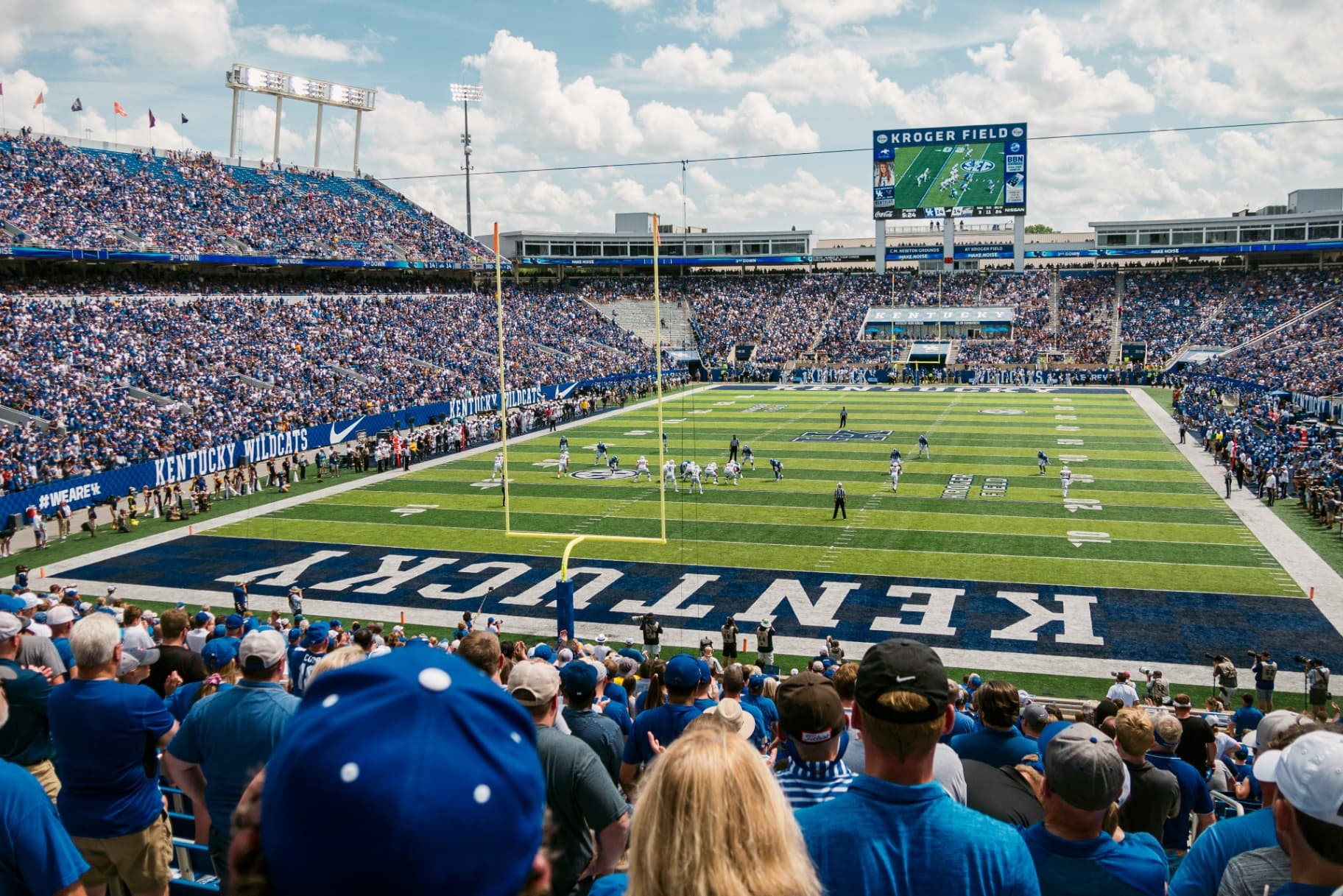
Woodland Avenue works well for students at UK because it eliminates commute friction entirely. You walk to class, you walk to the Kroger in Chevy Chase for groceries, and you walk to games at Kroger Field when the season starts. Rents run roughly $700 to $900 per month for a shared unit, which compares favorably to on-campus rates, and unlike the dorms, off-campus rents on Woodland typically include parking, which removes the commuter permit expense from the equation entirely. The housing stock here skews toward older, character-filled buildings: brick apartments, converted houses, high ceilings, some vintage quirks. You are not getting resort amenities. You are getting a walkable address that most upperclassmen wish they had taken earlier. The tradeoff is availability. This is the tightest rental market at UK, and the best units go to students who start looking in October or November of the prior year. If you are searching in February, expect limited selection.
Best for: Students who want to eliminate commute friction entirely and are willing to start their search early to get it.
Wassmer Properties
Managed by: Wassmer Properties | Starting from: $700 to $900/month for shared units (per person)
- Studios, 1-bedroom apartments, 3-bedroom houses, and townhomes
- Parking included at no extra cost
- Full kitchens, dishwashers, private bedrooms
- 100% fully leased every year
- Slightly older building stock with character
Hub Limestone
Managed by: Core Spaces | Starting from: From approximately $1,195/month (per person)
- 2-bedroom to 4-bedroom furnished suites
- Modern furnished units with in-unit washer/dryer, granite countertops
- Rooftop pool and sundeck, 24-hour fitness center, study lounges
- Hub Limestone has a Target on the ground floor
- Directly across from campus on S Limestone
Chevy Chase
Chevy Chase sits a comfortable bike ride or short bus trip from campus, close enough to be practical, far enough that it feels like a real neighborhood rather than an extension of campus life. It is the tree-lined, early-20th-century area east of UK that local students describe as the spot you take out-of-town friends to show them what Lexington actually looks like.
Chevy Chase works well for students who want to feel settled in a place rather than just housed near school. Woodland Park is the neighborhood anchor: tennis courts, a skate park, a community garden, and a pool that draws the neighborhood together in warmer months. The Chevy Chase Farmers Market runs seasonally. There are real coffee shops and restaurants within walking distance, Brevede Coffee, Josie’s for breakfast, Bourbon n’ Toulouse for dinner, that do not cater exclusively to students. One-bedroom rents average around $1,000 to $1,100 per month, with shared units making the area significantly more accessible.
The main tradeoff is that you will want a bike or reliable campus bus access. The CATS campus bus system covers this corridor, and UK loans bicycles to enrolled students at no charge, which makes Chevy Chase considerably more practical than its distance suggests. Check the specific route and schedule before signing a lease.
Best for: Students who want a neighborhood with real character and are willing to trade a short commute for more space and a better living environment.
Downtown / Periphery of Downtown
Downtown Lexington is closer to UK’s campus than most students realize. The northern edge of campus borders the downtown core, and the walk from South Hill or Gratz Park to most academic buildings is under 15 minutes. Students who have lived near campus for a year or two and want to feel more like a city resident than a college student often land here, particularly in the areas just off campus but away from the immediate student housing cluster.
The periphery-of-downtown framing is more useful than “downtown” as a broad category. The streets just north and northwest of campus offer a mix of loft-style units in converted buildings and newer apartment development, with rents that can be competitive if you are willing to look beyond the purpose-built student complexes. You will have walkable access to the Lexington Opera House, Rupp Arena, and a restaurant scene that has nothing to do with campus.
Worth knowing: East Maxwell Street is adding significant new student housing supply through 2027. Two developments totaling 556 apartments and 1,450 bedrooms are under construction or awaiting final approval on adjacent blocks between Lexington Avenue and Martin Luther King Jr. Boulevard. The first is expected to open in fall 2027. New supply in this corridor will likely soften rents over time, which makes the downtown-adjacent area increasingly worth watching for students willing to plan a semester or two ahead.
The main tradeoff is that downtown Lexington quiets down late at night in ways that can surprise students coming from larger cities. It is active during the day and early evening. It is not a late-night neighborhood.
Best for: Upperclassmen or transfer students who want to live in a real urban environment and are less interested in campus social proximity.
Gateway Lofts Lexington
Managed by: Coastal Ridge Real Estate | Starting from: Studios from approximately $1,350/month; 1-bedrooms from approximately $1,480/month
- Studios, 1-bedroom, and 2-bedroom apartments
- Brand new construction (opened 2024)
- Stainless steel appliances, quartz countertops, wood-style plank floors, in-unit washer/dryer
- Pet-friendly with private garage parking available
- Located on the Virginia Ave corridor with walkable access to both campus and downtown
- Not a traditional student complex; draws a mix of students, medical center staff, and young professionals
Aylesford
Aylesford sits between Woodland Avenue, downtown, and Chevy Chase, which means it functions as a quieter alternative to all three without fully committing to any of them. It is a walkable residential neighborhood with commercial corners, tree-lined streets, and a more settled character than the Woodland Avenue corridor. Students who find the blocks closest to campus too loud or too transient often move here for their junior and senior years.
Aylesford works well for students who want walkability without the full energy of the South Hill scene, a place to actually study and sleep, not just a staging area between campus and the weekend. Rents are modestly lower than Chevy Chase and availability is more stable than Woodland Avenue, which makes it a reasonable fallback for students who missed the early leasing window on the closer neighborhoods.
The main tradeoff is that Aylesford does not have the same neighborhood anchors. No Woodland Park, no Chevy Chase commercial strip. It is residential, which is its appeal and its limitation.
Best for: Upperclassmen who want a calm, walkable location and have moved past optimizing for social proximity.
The Further-Out Complexes: What to Know Before You Sign
A number of purpose-built student apartment complexes sit along South Broadway, Red Mile Road, and Angliana Avenue, furnished, amenity-heavy, and priced to look competitive. They are not a bad option, but they come with real costs that the rent figure does not show.
UK’s own housing guidance notes that none of these complexes are under a 10-minute walk to the academic core. Students living south of campus report 30 to 45 minutes on foot to the nearest grocery store. That is either Instacart fees or 15,000 steps added to your day, and it compounds. Add the commuter parking permit if you are driving ($42 per month on top of rent), and the math on that “cheaper” unit starts to change.
The honest question to ask before signing is: what is my actual total monthly cost, including parking and transportation, and what does a Tuesday in December look like from this address? Some students find the amenities and social environment of a purpose-built complex worth it. Others regret it by mid-semester. The decision is easier when you have done the arithmetic first.
If you are considering this corridor, here are two of the larger institutionally managed options:
Newtown Crossing
Managed by: American Campus Communities | Starting from: From approximately $1,000/month (per person, varies by unit type)
- Efficiency, 1-bedroom, 3-bedroom, and 4-bedroom furnished apartments and townhomes
- Individual liability leases with roommate matching via RoomSync
- 24-hour fitness center, academic success center with free printing, pool, and volleyball
- Resident walkway to campus
- Professional on-site management
- Townhomes at Newtown Crossing offer more space and a townhome layout
Royal Lexington
Managed by: American Campus Communities | Starting from: Per-person pricing (3-bedroom and 4-bedroom only)
- 3-bedroom and 4-bedroom furnished apartments
- Individual liability leases
- Pool with sun deck, 24-hour fitness center, academic success center with iMacs and free printing
- Hardwood-style flooring, stainless steel appliances, washer/dryer included
- On-site surface parking available
- Walk to Memorial Coliseum, Commonwealth Stadium, and Rupp Arena
You will also see The Lex (521 S Broadway) and The Wyatt (497 Angliana Ave), both managed by CLS Living. These are purpose-built student complexes on the South Broadway and Angliana corridor with furnished units and amenity packages similar to the ACC properties above.
Lexington is a manageable city once you understand how it is laid out around campus. The neighborhoods that work best for students are not always the ones marketed most aggressively. They are the ones close enough to make daily life simple and far enough to feel like somewhere you actually live. brightplace can help you search by what matters: distance to campus, price per person, and the kind of neighborhood you actually want to come home to.
Trying to figure out which of these actually fits how you want to live?
brightplace is building a better way to find your next apartment.
Explore more neighborhoods at brightplace.ai
Frequently Asked Questions About Off-Campus Student Housing Near the University of Kentucky
Where do University of Kentucky students live off campus?
UK students who move off campus mostly land in five areas: Woodland Avenue and South Hill, Chevy Chase, downtown and its periphery, Aylesford, and the purpose-built complexes along the South Broadway corridor. Each differs in distance to campus, per-person rent and daily convenience, so the right fit depends on commute tolerance, budget and how early you start looking.
How much does off-campus housing near UK cost?
Per-person rent near the University of Kentucky runs about $700 to $1,500 a month depending on the area. Woodland Avenue and South Hill run $700 to $900, Aylesford $750 to $1,000, Chevy Chase $800 to $1,100, the South Broadway corridor $1,000 to $1,400, and downtown and its periphery $1,100 to $1,500.
What is the closest off-campus housing to the University of Kentucky?
The Woodland Avenue corridor and South Hill historic district are the closest off-campus options, within four to eight blocks of the William T. Young Library and most undergraduate colleges. Shared units run roughly $700 to $900 per person, and off-campus rents on Woodland typically include parking. It is also the tightest rental market near UK.
When should I start looking for off-campus housing at UK?
Start looking in October or November of the prior year, especially for Woodland Avenue and South Hill. That market often leases up before spring break and sometimes before the new year. Students searching in February or March will find limited options in the closest neighborhoods and may end up in a further-out complex by default.
Is Chevy Chase a good neighborhood for UK students?
Chevy Chase works well for UK students who want neighborhood character and are willing to bike or bus to campus. Woodland Park offers tennis courts, a skate park, a community garden and a pool. One-bedroom rents average around $1,000 to $1,100, the CATS campus bus covers the corridor, and UK loans bicycles to enrolled students at no charge.
What hidden costs come with student complexes on South Broadway in Lexington?
Complexes along South Broadway, Red Mile Road and Angliana Avenue carry costs the rent figure does not show. UK's housing guidance notes none are under a 10-minute walk to the academic core, students report a 30 to 45-minute walk to the nearest grocery store, and a UK commuter parking permit adds $42 per month.
Is downtown Lexington a good place for UK students to live?
Downtown Lexington suits upperclassmen and transfer students who want an urban setting, since the walk from the downtown edge to most academic buildings is under 15 minutes. Rents run $1,100 to $1,500 per person. Downtown is active during the day and early evening but quiets down late at night.
What is a quieter off-campus neighborhood near UK?
Aylesford is a quieter, walkable residential neighborhood between Woodland Avenue, downtown and Chevy Chase, popular with juniors and seniors who want a place to study and sleep. Per-person rents run $750 to $1,000, modestly lower than Chevy Chase, with more stable availability than Woodland Avenue. It lacks anchors like Woodland Park or a commercial strip.
Prices and availability change. Verify all details directly with the property before making a decision.
brightplace neighborhood guide | lexington, ky | 2026
How this article was made: brightplace used AI tools to help research, draft and update this article.