Knoxville: Where Young Professionals Are Renting
A college town that grew up, with rents that still make the math work
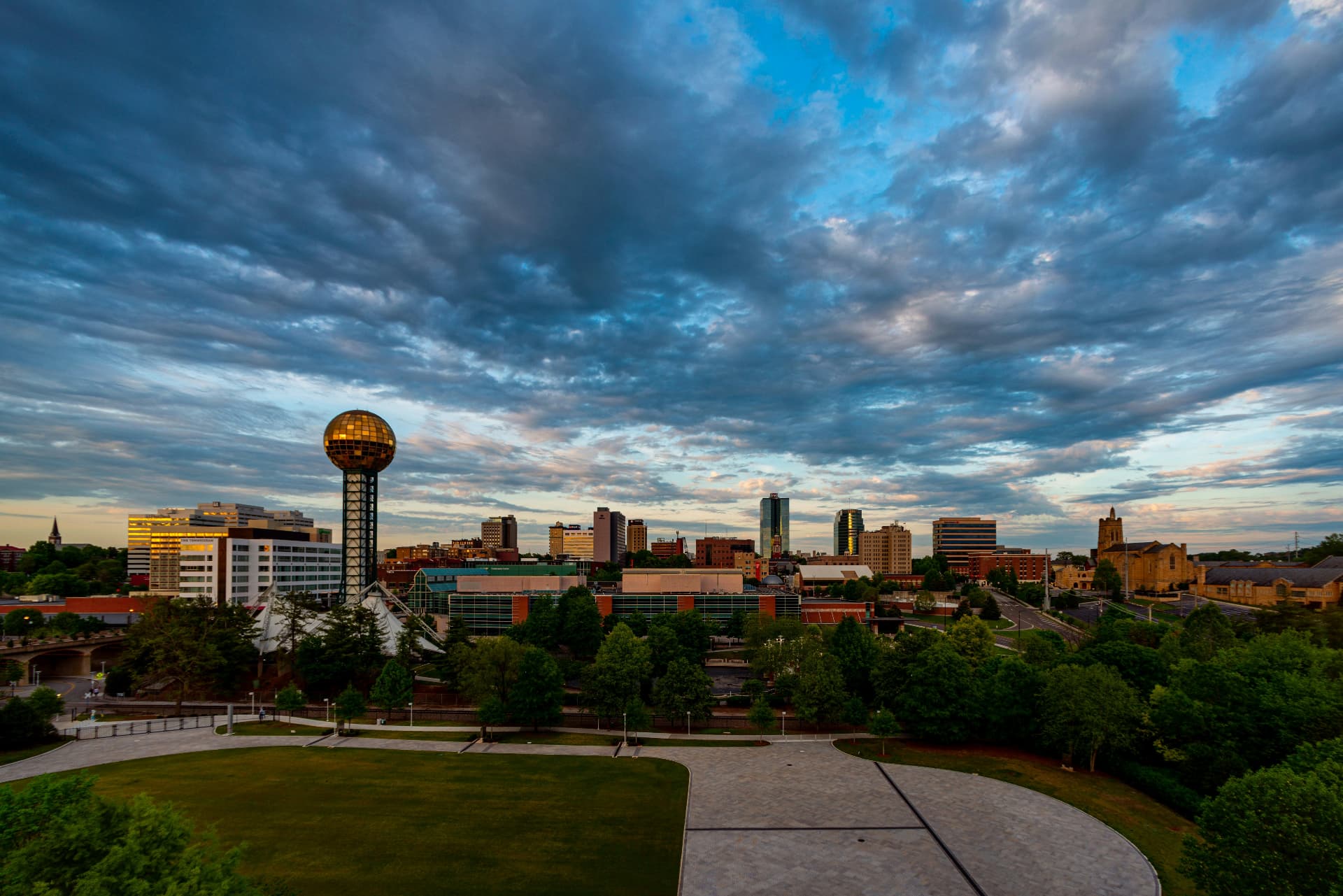
A college town that grew up, with rents that still make the math work
Most people think Knoxville and think Tennessee football. The people who live here know better. Behind the orange and white is a city that has quietly built a real economy around healthcare (UT Medical Center is the region’s largest employer), energy research (Oak Ridge National Laboratory is 30 minutes west), and a growing tech and logistics sector that keeps pulling young professionals who came for school and realized they didn’t need to leave.
The median one-bedroom rent sits around $1,080, which is roughly half of what you’d pay in Nashville for a comparable apartment and a third of what you’d pay in DC. The job market isn’t Nashville’s, but the cost-of-living math is aggressively in your favor, and the quality of life, particularly for anyone who values outdoor access to the Smokies, a walkable downtown, and a genuine food scene, is hard to beat at this price point.
This guide covers five neighborhoods where young professionals are actually renting, with properties from operators who have strong resident track records.
| Neighborhood | Operator / Property | Starting Rent | Best For | Key Draw |
|---|---|---|---|---|
| Downtown / Market Square | Bristol-Dover / Church + Henley | Studios ~$1,549 | Walkability, nightlife, urban energy | Market Square steps away, walkable downtown core |
| Bearden | Multiple options | 1BR ~$1,200 | Balance of access and affordability | Own walkable strip, Kingston Pike access |
| South Knoxville | The Adelade | 1BR ~$1,299 | Outdoor access, brewery scene, value | Urban Wilderness, river proximity |
| North Knoxville | Multiple options | 1BR ~$1,000 - $1,200 | House experience without buying | Happy Holler, Old North Knox, historic character |
| West Knoxville | RAM Partners / Greystone Pointe | 1BR ~$1,900 | Luxury, Smoky views, commuters | Turkey Creek shopping, mountain views |
In this guide
- Downtown / Market Square
- Bearden
- South Knoxville
- North Knoxville
- West Knoxville / Turkey Creek
- Worth Knowing About
- The Knoxville Case in One Number
Downtown / Market Square
Downtown Knoxville has had a genuine revival, and Market Square is the center of it. The outdoor concerts, farmers markets, and the density of restaurants and bars along Gay Street and Market Square itself have created the kind of walkable urban core that most mid-size Southern cities talk about but haven’t actually built. For young professionals, it’s the neighborhood where you can walk to work if your office is downtown, walk to dinner on a Tuesday, and walk home after a show at the Bijou Theatre or the Tennessee Theatre.
The residential stock downtown skews toward converted historic buildings and newer luxury apartments. Rents are the highest in the city, with one-bedrooms starting around $1,750 downtown. The tradeoff is that you’re paying for the walkability premium, and the noise from weekend events can carry through older buildings that weren’t designed with modern soundproofing.
Church + Henley
Managed by: Bristol Development Group / Dover Signature Properties | Starting from: Studios from ~$1,549/mo (as of September 2026); one-bedrooms from ~$1,750/mo
- Downtown location with walking distance to Market Square, Gay Street, and UT campus
- Resort-style pool, 24-hour Technogym fitness center, hydromassage room, and meditation room
- On-site Marketplace for essentials, lending room, and adult crafts room
- Garaged parking available
- Pet-friendly with dog spa on site
- Consistently strong resident reviews for staff responsiveness and building quality
Bearden
Bearden is the neighborhood that young professionals who have lived in Knoxville for a year or two tend to migrate toward. It sits just west of UT’s campus along Kingston Pike and has its own walkable strip of restaurants, coffee shops, and retail that gives it a neighborhood identity separate from downtown. Homegrown, a popular brunch spot, and the concentration of local businesses along Sutherland Avenue and Kingston Pike create the kind of daily-life infrastructure that makes a neighborhood feel like home rather than just a place to sleep.
For renters, Bearden offers the balance: close enough to downtown and UT to feel connected, far enough to pay less and live quieter. One-bedrooms start around $1,200, and the neighborhood’s proximity to I-40 and I-75 makes it practical for commuters heading west toward Oak Ridge or north toward the tech corridor.
The tradeoff is that Bearden doesn’t have the walkable density of downtown, and Kingston Pike traffic can be frustrating during rush hours. But for the renter who wants to be close to everything without paying downtown prices, it’s consistently one of the most recommended neighborhoods in local conversations.
Best for: young professionals who want a neighborhood with its own identity, proximity to both downtown and West Knox, and rents that leave room in the budget.
South Knoxville
South Knoxville, locally known as SoKno, is separated from downtown by the Tennessee River and connected by the Gay Street Bridge. Five years ago it was an afterthought. Today it has a legitimate brewery and restaurant scene (Alliance Brewing, Hi-Wire Brewing, South Coast Pizza), a growing residential population, and the Urban Wilderness: over 1,000 acres of connected parkland anchored by IJAMS Nature Center, with 50+ miles of multi-use trails for hiking, mountain biking, rock climbing, and paddleboarding. Navitat, a treetop adventure course inside the Urban Wilderness, is the kind of thing that sounds like a tourist trap but locals actually use. The South Waterfront greenway runs along the river and connects to the broader Knoxville trail system.
For young professionals who want outdoor access baked into their daily routine, South Knoxville is the strongest option. The proximity to the Smoky Mountain foothills means trailheads are a short drive south. Rents are among the most accessible in neighborhoods that still feel connected to the city’s core, and the area’s growth over the past few years has been genuine rather than speculative.
The Adelade
Managed by: RAM Partners | Starting from: Studios from ~$1,275/mo; one-bedrooms from ~$1,299/mo (as of September 2026)
- Located in the heart of South Knoxville near the brewery corridor
- Near downtown and the University of Tennessee
- Recently renovated units with modern finishes
- Pool, gym, and pet-friendly community
- Strong resident reviews for maintenance and management
- Well below downtown pricing with genuine neighborhood character
North Knoxville
North Knoxville has been quietly emerging as one of the more interesting parts of the city for young professionals. The Happy Holler and Old North Knox neighborhoods have walkable streets, locally owned shops, and proximity to both downtown and the Old City. The area has a mix of historic homes and newer development, and it draws renters who want character without the downtown price tag.
Greystar’s newest Knoxville community sits in this corridor, offering a build-to-rent format that’s distinct from the typical apartment complex.
West Knoxville / Turkey Creek
West Knoxville is where Knoxville meets the suburbs, and Turkey Creek is its commercial anchor: a large retail and dining development along I-40 that has most of what daily life requires. For young professionals who commute west toward Oak Ridge or whose jobs are in the western part of the metro, Turkey Creek offers newer construction, strong amenity packages, and retail convenience at prices that compete with neighborhoods closer to the core.
The tradeoff is real: this is suburban living. There is no walkable downtown, no neighborhood bar you stumble to. Kingston Pike traffic heading east toward downtown is a consistent complaint from West Knox residents, and the distance to downtown makes nights out less spontaneous. What there is: a short commute to Oak Ridge National Laboratory, easy I-40 access, and an apartment that was built in the last few years rather than the last few decades.
Greystone Pointe
Managed by: RAM Partners | Starting from: One-bedrooms from ~$1,900/mo (as of September 2026)
- Luxury community with one, two, and three-bedroom floor plans
- Resort-style pool, nursery room, car care center, and pet park with canoe/kayak storage
- Smoky Mountain views from select units
- Minutes from Turkey Creek shopping and I-40
- 20 minutes to downtown Knoxville and the airport
- Consistently strong resident reviews praising staff, community feel, and maintenance responsiveness
Worth Knowing About
A few neighborhoods that didn’t make the property showcase but kept surfacing in local conversations:
Sequoyah Hills is the aspirational pick. Cherokee Boulevard has a tree-lined greenway running down the center median, the neighborhood borders a 90-acre riverfront park, and the community includes a mix of UT professors, medical professionals, and established families. Rents and home prices are the highest in the city outside of downtown, but for renters who can stretch the budget, it’s one of the most beautiful places to live in Knoxville. Walking your dog on Cherokee Boulevard on a fall evening is the kind of thing that sells a city.
4th and Gill / Old North Knoxville is the historic neighborhood that young professionals who’ve lived in larger cities tend to gravitate toward. Walkable streets, locally owned shops, and proximity to both downtown and the Old City make it feel like an actual urban neighborhood rather than a college-town extension. Housing stock is older, which means character and also maintenance considerations.
Old City sits northeast of downtown and is home to Knoxville’s newest galleries, breweries, distilleries, and music venues, all inside repurposed historic buildings. The new Smokies baseball stadium has accelerated development in the area. It’s quickly becoming one of the more desirable (and expensive) pockets of the city for young professionals.
The Knoxville case in one number
The median one-bedroom rent in Knoxville sits around $1,080. In Nashville, that same apartment costs roughly $1,500. In Austin, $1,600. In DC, $2,200. The Knoxville job market isn’t competing with those cities on raw volume, but for the young professional in healthcare, energy research, logistics, or tech, the career opportunities are real and the cost-of-living gap is wide enough to change your financial trajectory. The Smoky Mountains are 45 minutes away. The city has a genuine downtown. And the rent lets you actually save money in your 20s, which is increasingly rare.
Trying to figure out which of these actually fits how you want to live?
brightplace is building a better way to find your next apartment.
Explore more neighborhoods at brightplace.ai
Frequently Asked Questions About Knoxville Neighborhoods for Professionals
What are the best neighborhoods in Knoxville for professionals?
Downtown/Market Square, Bearden, South Knoxville, North Knoxville and West Knoxville/Turkey Creek are five Knoxville neighborhoods where professionals rent. Downtown offers the most walkability, Bearden balances access and affordability, South Knoxville offers outdoor access, North Knoxville offers historic character, and West Knoxville offers newer construction near Oak Ridge commutes.
How much is rent in Knoxville?
The median one-bedroom rent in Knoxville sits around $1,080, based on market estimates as of September 2026. By comparison, this guide puts a similar apartment at roughly $1,500 in Nashville, $1,600 in Austin and $2,200 in DC. Starting one-bedroom rents in the featured neighborhoods range about $1,000 in North Knoxville up to $1,900 in West Knoxville.
How much does it cost to live in downtown Knoxville?
Downtown Knoxville has the highest rents in the city, with one-bedrooms starting around $1,750. At Church + Henley, studios start around $1,549 per month and one-bedrooms around $1,750 as of September 2026. Renters pay a walkability premium, and noise from weekend events can carry through older buildings without modern soundproofing.
Is downtown Knoxville walkable?
Yes, downtown Knoxville has a walkable urban core centered on Market Square and Gay Street, with outdoor concerts, farmers markets and a dense mix of restaurants and bars. Residents can walk to downtown offices, dinner and shows at the Bijou Theatre or the Tennessee Theatre. Housing skews toward converted historic buildings and newer luxury apartments.
Which Knoxville neighborhood has the best outdoor access?
South Knoxville is the strongest option for outdoor access. It is home to the Urban Wilderness, over 1,000 acres of connected parkland anchored by IJAMS Nature Center with 50+ miles of multi-use trails. The South Waterfront greenway runs along the river, and The Adelade offers one-bedrooms from about $1,299 as of September 2026.
Where should I live in Knoxville if I commute to Oak Ridge?
West Knoxville near Turkey Creek offers a short commute to Oak Ridge National Laboratory, easy I-40 access and newer apartments. Greystone Pointe has one-bedrooms from about $1,900 as of September 2026. Bearden is another option, with proximity to I-40 and I-75, though Kingston Pike traffic can be frustrating during rush hours.
What is Bearden like for renters?
Bearden sits just west of the UT campus along Kingston Pike and has its own walkable strip of restaurants, coffee shops and retail along Sutherland Avenue and Kingston Pike. One-bedrooms start around $1,200. It is close enough to downtown to feel connected while costing less, though it lacks downtown's walkable density.
Rent data reflects market estimates as of September 2026 and is subject to change. Verify current availability directly with each community.
brightplace neighborhood guide | knoxville, tn | 2026
How this article was made: brightplace used AI tools to help research, draft and update this article.