Best Neighborhoods in Kansas City for Young Professionals
Where Young Professionals Actually Live in Kansas City
Where Young Professionals Actually Live in Kansas City
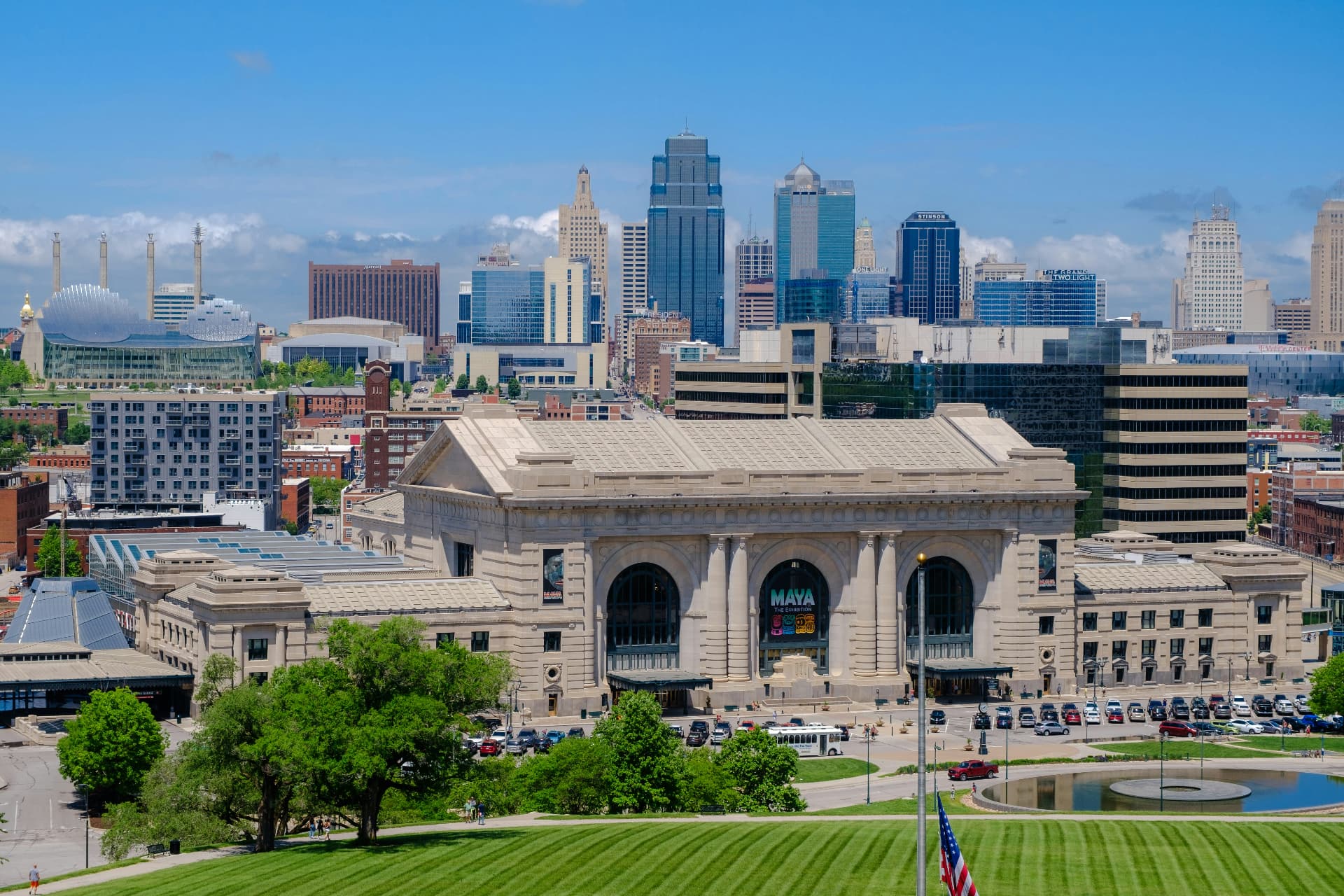
Kansas City is one of the most affordable major metros in the country, and it has spent the last decade adding exactly the kind of urban infrastructure that young professionals shop for: a free streetcar line, an active arts district, a nationally recognized food scene anchored by barbecue but not limited to it, and a downtown core that finally has enough density to feel alive after dark. The metro splits across two states, but the action that matters to renters is concentrated on the Missouri side, roughly within a five-mile radius south of the Missouri River. That corridor runs from River Market through Downtown and the Crossroads, south through Midtown and Westport, and terminates around the Country Club Plaza. The KC Streetcar ties the whole spine together, and its extension from River Market to the Plaza is opening in 2026, making car-optional living genuinely possible along Main Street for the first time.
The city’s cost of living sits well below the national average. A one-bedroom apartment in the urban core rents for roughly $1,100 to $1,650 depending on neighborhood, and even the most expensive pockets stay under $2,300. For anyone relocating from a coastal market, that arithmetic changes everything.
| Neighborhood | 1BR Rent Range | Streetcar | Nightlife | Vibe |
|---|---|---|---|---|
| Crossroads | $1,400 - $1,700 | On the line | High | Creative, gallery-driven |
| River Market | $1,400 - $1,650 | Northern terminus | Moderate | Loft district, compact |
| Westport / 39th | $1,050 - $1,400 | 2-block walk | Very high | Bar-forward, energetic |
| Midtown | $800 - $1,200 | Near Main St | Low-moderate | Porch culture, historic |
| Waldo | $900 - $1,200 | None (drive) | Low | Village feel, eclectic |
| Union Hill / QH | $800 - $1,700 | Walk to line | Low | Quiet urban, professional |
In this guide
- Crossroads Arts District
- River Market
- Westport and 39th Street
- Midtown: Hyde Park, Volker, and Valentine
- Waldo
- Union Hill and Quality Hill
- Cars, Streetcar, and Getting Around
- What to Know Before You Sign
Crossroads Arts District
If Kansas City has a single neighborhood that defines its creative identity, the Crossroads is it. The district sits just south of Downtown between the railroad tracks and the freeway, anchored by Main Street and centered roughly on 19th and 20th Streets. Art galleries, muralist studios, independent restaurants, and small-batch breweries fill converted warehouse spaces. On First Fridays, galleries open their doors and the streets fill with food trucks, live music, and foot traffic that spills from block to block.
For young professionals, the Crossroads delivers a walkable, streetcar-connected lifestyle with a creative edge. You are within walking distance of the Kauffman Center for the Performing Arts, T-Mobile Center, and the restaurants and rooftop bars that have made the district a destination dining neighborhood. The streetcar stops at 19th and Main, putting River Market and Union Station within a ten-minute ride.
Rent here trends higher than the city average. Expect one-bedroom apartments in the $1,400 to $1,700 range for newer buildings. The tradeoff is that you can walk to work if your employer is anywhere in the Downtown core, and you are living in the part of the city with the most energy after 6 p.m.
Good fit if: you want walkability, nightlife, art and dining within a few blocks, and a creative-professional atmosphere.
Tradeoff: higher rents for the market, parking can be expensive ($150 to $200 per month in garages), and weekend foot traffic can be heavy around First Fridays.
Piper Lofts
Loft-style apartments | Dalmark Management Group | From ~$1,545/month (as of Q3 2026)
River Market
River Market sits just north of Downtown on the south bank of the Missouri River. The neighborhood is compact, roughly four square blocks of walkable streets anchored by the City Market, one of the oldest and largest public farmers markets in the Midwest. On weekends the market fills with produce vendors, artisan goods, and prepared food stalls. The rest of the week, the neighborhood operates as a loft district: converted warehouse apartments, riverfront condos, independent coffee shops, and a handful of bars that draw a mix of residents and Downtown office workers.
The streetcar’s northern terminus is in River Market, so you have free transit access south to Union Station and, once the extension opens, all the way to the Plaza. The Berkley Riverfront park provides green space and river access. The Arabia Steamboat Museum, which houses artifacts from an 1856 steamboat recovered from the Missouri River, is one of the city’s most unusual attractions.
One-bedroom apartments here average around $1,600. Loft-style units in historic conversions are the dominant housing type. The neighborhood is 85 percent renters, so the community turns over regularly and transplants tend to find their footing quickly.
Good fit if: you want loft-style living, walkable daily errands, and a compact neighborhood where you know the barista by name within a month.
Tradeoff: limited grocery options beyond City Market, and weekend market crowds can make parking difficult.
MAA The Station
Studios, 1-bedroom, and 2-bedroom apartments | MAA | From ~$1,333/month (as of Q3 2026)
Westport and 39th Street
Westport is Kansas City’s original nightlife district, and it has not given that title up. The blocks around Westport Road and Pennsylvania Avenue are packed with bars, live music venues, brewpubs, and late-night restaurants. On a Friday or Saturday night, the sidewalks are full. The crowd skews 20s and 30s, with a mix of transplants and locals.
Just north of Westport proper, the 39th Street corridor runs east-west through the Volker neighborhood and adds a different flavor: independent restaurants, a legendary bagel shop, a Mongolian barbecue spot, vintage bookstores, and the kind of neighborhood coffee shops where people work on laptops all afternoon. The two areas overlap enough that most residents treat them as a single zone.
Rent along Westport and 39th Street is more affordable than the Crossroads or River Market. One-bedrooms range from roughly $1,050 to $1,400. Housing stock is a mix of newer mid-rise apartments and renovated historic buildings. The area is walkable for nightlife and dining, and bikeable to Midtown, the Plaza, and Downtown.
Good fit if: you want to walk to bars and restaurants, prefer a lively street-level atmosphere, and want slightly lower rent than the Crossroads.
Tradeoff: weekend noise carries into apartment windows, and street parking is contested on busy nights.
Alton Heights
Studios, 1-bedroom, and 2-bedroom apartments | Avenue5 Residential | From ~$1,100/month (as of Q3 2026)
Formerly known as Westley on Broadway. Positioned along the Broadway corridor with walkable access to Westport nightlife, 39th Street dining, and the Country Club Plaza. Modern construction with amenity packages in one of Kansas City’s most socially active neighborhoods. Close to the streetcar extension route.
Midtown: Hyde Park, Volker, and Valentine
Midtown is the geographic center of Kansas City’s urban core, stretching roughly from 31st Street to 55th Street between State Line Road and The Paseo. Within that footprint, three smaller neighborhoods matter most for young professionals: Hyde Park, Volker, and Valentine.
Hyde Park
Hyde Park, east of Broadway, is one of the city’s oldest residential neighborhoods. The streets are lined with early 20th-century homes, bungalows, and apartment buildings. The community runs a twice-annual home tour and festival, and the neighborhood has a reputation for residents who take pride in maintaining the historic housing stock. Gillham Park provides green space, and the area is close to the Crossroads and Crown Center.
Volker
Volker, just west of Westport, is centered on 39th Street and sits adjacent to the University of Kansas Medical Center and UMKC. Roanoke Park offers 37 acres of trails, tennis and pickleball courts, and community center programming. The vibe is creative and slightly bohemian, with front-porch culture and independent shops.
Valentine
Valentine fills the space between Westport and the Plaza, a quiet residential pocket with walkable access to both. Together, these Midtown neighborhoods offer the most affordable entry point into urban Kansas City. One-bedrooms range from $800 to $1,200, and the housing stock includes everything from charming historic walk-ups to newer mid-rise buildings along Broadway.
Good fit if: you want affordable rent in a central location, prefer porch culture over rooftop bars, and value proximity to hospitals and universities.
Tradeoff: some blocks feel quieter than walkable, and the neighborhood-to-neighborhood quality can vary.
Waldo
Waldo sits south of Brookside near the Kansas state line. It has the feel of a self-contained village within the city: a walkable strip of restaurants, bars, coffee shops, and local businesses along 75th Street, connected by the Trolley Track Trail that runs north to the Plaza and south into the suburbs.
The neighborhood draws a slightly younger and more eclectic crowd than neighboring Brookside. The restaurant scene punches above its weight, with a craft beer brewery, a well-regarded Thai restaurant, and several pizza spots that locals argue about. The annual Waldo Fall Festival is one of the city’s larger neighborhood events.
Rent in Waldo is among the most affordable in the urban core. One-bedrooms typically fall between $900 and $1,200. The housing stock leans toward smaller apartment complexes and single-family rentals rather than large institutional buildings. The tradeoff is distance: Waldo is a 15- to 20-minute drive from Downtown and the Crossroads, so this is a neighborhood for people who want a quieter home base and are comfortable driving to nightlife.
Good fit if: you want affordable rent, a neighborhood feel, walkable local dining, and access to the Trolley Track Trail.
Tradeoff: farther from Downtown and the Crossroads than other neighborhoods in this guide, and nightlife options are limited to local bars.
Union Hill and Quality Hill
These two neighborhoods bookend Downtown and often get overlooked in favor of the Crossroads and River Market, but they offer distinct advantages for young professionals who want urban proximity at a slightly lower price.
Union Hill
Union Hill sits east of Crown Center, just south of the hospital district. The neighborhood is quiet but genuinely urban: modern townhomes, lofts, and renovated historic houses share blocks with coffee shops, restaurants, and Liberty Park. The area draws medical professionals from the nearby hospitals and young professionals who want a short commute to Downtown without the noise of Westport or the crowds of the Crossroads. Rent runs roughly $1,200 to $1,700 for a one-bedroom.
Quality Hill
Quality Hill occupies the northwest corner of Downtown, overlooking the Kansas River valley. The neighborhood is primarily residential lofts and renovated buildings, with a dog park, jazz clubs, and the Downtown Kansas City Public Library within walking distance. It appeals to white-collar professionals who want to walk to work in the financial district. Street-level retail is limited, so you will rely on the Crossroads and River Market for dining and entertainment. Rent runs roughly $800 to $1,200 for a one-bedroom.
Good fit if: you want urban living with a quieter residential feel and a shorter commute than Midtown or Waldo.
Tradeoff: fewer walkable restaurants and bars than the Crossroads or Westport, and some blocks feel isolated after dark.
Cars, Streetcar, and Getting Around
Kansas City is a car city. That fact has not changed, and if you live anywhere outside the Main Street corridor, you will need a vehicle for grocery runs, commuting, and weekend plans. What has changed is that the streetcar creates a genuine exception along one axis: if your apartment, your office, and your social life all fall within a few blocks of Main Street, you can go days without starting your engine.
The streetcar is free, runs every 10 to 15 minutes, and currently connects River Market to Union Station. The 2026 extension adds stops south through Midtown and Westport to the Country Club Plaza, which roughly doubles the useful corridor. RideKC buses fill some gaps, but headways are long enough that most residents treat them as a backup rather than a daily option.
Biking is practical for fair-weather months. The Trolley Track Trail connects Waldo to the Plaza, and protected bike lanes are expanding along major corridors. Winter riding is possible but not common.
Parking varies by neighborhood. River Market and the Crossroads have the tightest supply. Garage spots in newer apartment buildings run $100 to $200 per month. Midtown and Waldo have free street parking that is rarely contested.
Kansas City’s cost of living sits well below the national average. A one-bedroom apartment in the urban core rents for roughly $1,100 to $1,650 depending on neighborhood, and even the most expensive pockets stay under $2,300. For anyone relocating from a coastal market, that arithmetic changes everything. Parking costs ($100 to $200/month in garages) should be factored into your total budget when comparing neighborhoods.
What to Know Before You Sign
Two-state metro
Kansas City straddles the Missouri-Kansas border. Most of the nightlife, arts, and urban apartment inventory is on the Missouri side. The Kansas side (Overland Park, Olathe, Shawnee) is largely suburban. Make sure you know which state your apartment is in before signing, because tax rates, vehicle registration, and even insurance differ.
Parking costs add up
In the Crossroads, River Market, and Downtown, covered parking runs $100 to $200 per month on top of rent. Factor that into your budget if you are comparing a $1,400 Crossroads apartment to a $1,100 Midtown apartment with free street parking.
Tornado season is real
Kansas City sits at the edge of tornado alley. Severe weather season runs roughly from April through June. Most modern apartment buildings have designated shelter areas. Ask about severe weather plans during your tour.
Summers are hot and humid
July and August regularly hit the mid-90s with high humidity. Confirm that your apartment has central air conditioning, not just window units. Most newer buildings do, but older Midtown and Hyde Park walk-ups may not.
The Chiefs and Royals matter
Kansas City is a sports town. Arrowhead Stadium (Chiefs) and Kauffman Stadium (Royals) sit together in the Truman Sports Complex east of the city. Game-day traffic affects downtown and highway routes. It is also a reliable way to make friends. Watching a Chiefs game at a Westport or Crossroads bar is one of the fastest on-ramps to the local social scene.
Leasing timeline
The Kansas City rental market is less competitive than coastal cities. You can typically find availability with 30 to 45 days of lead time. Summer is the busiest turnover period. Newer buildings in the Crossroads and River Market fill fastest.
Trying to figure out which of these actually fits how you want to live?
brightplace is building a better way to find your next apartment.
Explore more neighborhoods at brightplace.ai
Frequently Asked Questions About Kansas City Neighborhoods for Young Professionals
What are the best neighborhoods in Kansas City for young professionals?
The top areas are the Crossroads Arts District, River Market, Westport and 39th Street, Midtown (Hyde Park, Volker and Valentine), Waldo, and Union Hill and Quality Hill. Most sit on the Missouri side within roughly five miles south of the Missouri River, along the corridor connected by the KC Streetcar.
How much is a one-bedroom apartment in Kansas City?
A one-bedroom in Kansas City's urban core rents for roughly $1,100 to $1,650 depending on neighborhood, and even the most expensive pockets stay under $2,300. Midtown is the most affordable entry point at $800 to $1,200, while newer Crossroads buildings run $1,400 to $1,700. Verify current pricing directly with each property.
Is the KC Streetcar free?
Yes. The KC Streetcar is free, runs every 10 to 15 minutes and currently connects River Market to Union Station. Its 2026 extension adds stops south through Midtown and Westport to the Country Club Plaza, roughly doubling the useful corridor and making car-optional living possible along Main Street.
Do I need a car in Kansas City?
Mostly yes. Kansas City is a car city, and anywhere outside the Main Street corridor you will need a vehicle for grocery runs, commuting and weekend plans. If your apartment, office and social life all sit within a few blocks of Main Street, the free streetcar can let you go days without driving.
Should I live on the Missouri or Kansas side of Kansas City?
Most of the nightlife, arts and urban apartment inventory is on the Missouri side, while the Kansas side, including Overland Park, Olathe and Shawnee, is largely suburban. Confirm which state your apartment is in before signing, because tax rates, vehicle registration and insurance differ between the two states.
What is the best Kansas City neighborhood for nightlife?
Westport is Kansas City's original nightlife district, with bars, live music venues, brewpubs and late-night restaurants around Westport Road and Pennsylvania Avenue. One-bedrooms run roughly $1,050 to $1,400, below Crossroads rents. The tradeoffs are weekend noise carrying into apartment windows and contested street parking on busy nights.
How much does apartment parking cost in Kansas City?
Garage parking in newer Kansas City apartment buildings runs $100 to $200 a month, and River Market and the Crossroads have the tightest supply. Midtown and Waldo have free street parking that is rarely contested, so factor parking into your total budget when comparing a Crossroads apartment with one in Midtown.
How far ahead should I look for an apartment in Kansas City?
You can typically find availability in Kansas City with 30 to 45 days of lead time, since the rental market is less competitive than in coastal cities. Summer is the busiest turnover period, and newer buildings in the Crossroads and River Market fill fastest, so start earlier for those neighborhoods.
Prices and availability change. Verify all details directly with the property before making a decision.
brightplace neighborhood guide | kansas city, mo | 2026
How this article was made: brightplace used AI tools to help research, draft and update this article.